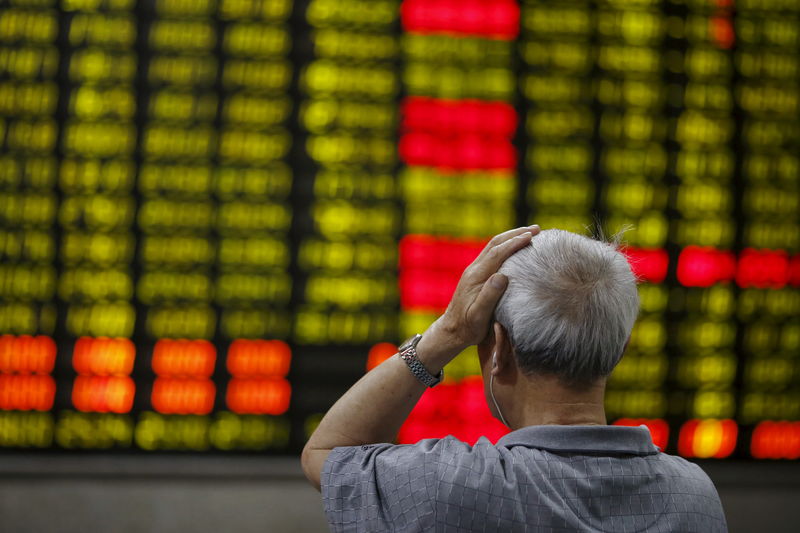
Asian stock markets, led by Hong Kong's Hang Seng and mainland Chinese indices, experienced a broad decline following renewed U.S.-China trade tensions. This downturn was triggered by former President Trump's threat of 100% tariffs on all Chinese exports to the U.S. and new export controls, prompting China's Commerce Ministry to warn of "appropriate countermeasures." The re-escalation of trade war fears undermined investor confidence and heightened concerns about a slowdown in regional exports, compounding existing worries over weak Chinese economic data and global monetary policy tightening.
Asian stock markets experienced a broad-based decline on Monday, driven by renewed U.S.-China trade tensions. Hong Kong's Hang Seng index tumbled 2.3%, with the Hang Seng TECH index dropping over 2%, notably impacting heavyweights like Alibaba and Tencent. Mainland Chinese markets, including the CSI 300 and Shanghai Composite, also fell by nearly 1%.
The downturn was triggered by former President Trump's announced plan for an additional 100% tariff on all China's U.S.-bound exports and new export controls on critical U.S.-made software. China's Commerce Ministry responded by warning of "appropriate countermeasures," escalating fears of a trade war amidst existing concerns over weak Chinese economic data and global monetary policy tightening. This generated a strongly negative sentiment and bearish tone across markets.
While U.S. stock futures briefly lifted on Trump's softening rhetoric, regional equities remained under pressure, reflecting a high market impact score of 0.8. Other Asian markets like South Korea's KOSPI (-1.3%) and Australia's S&P/ASX 200 (-0.6%) also declined, though Japan's Nikkei 225 futures rose 1.5% due to yen weakening linked to domestic political uncertainty.
AI-powered research, real-time alerts, and portfolio analytics for institutional investors.
Overall Sentiment
strongly negative
Sentiment Score
-0.70
Ticker Sentiment
