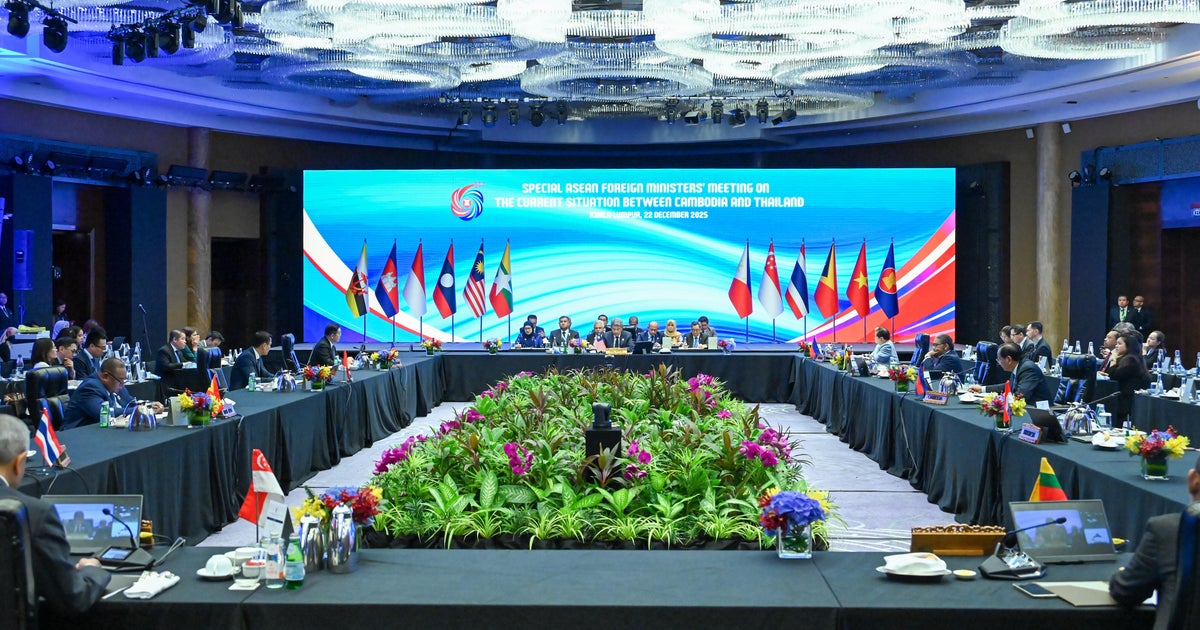
Thailand and Cambodia signed a joint statement establishing an immediate ceasefire effective 12:00 noon on 27 December 2025, pledging to halt all types of weapons fire, freeze troop movements and permit civilians to return home after weeks of clashes that have killed at least 47 people and displaced around one million. The agreement includes cooperation on demining and combating cybercrime and follows regional diplomacy led by ASEAN with pressure from the U.S., China and Malaysia; the deal reduces near-term geopolitical risk in the border provinces but remains fragile given a prior short-lived truce in July.
Market structure: The ceasefire materially lowers political-risk premia for Thailand/Cambodia adjacency and Southeast Asian border hotspots; expect a 1–3% near-term rally in Thailand-sensitive equities and a 10–30bp tightening in Thai sovereign spreads as tourists and capital slowly return over 4–12 weeks. Cybersecurity and demining/infrastructure services gain durable demand (higher procurement and aid flows) while short-term losers include specialist emergency suppliers and frontier-risk premia products that had priced in sustained conflict.
Risk assessment: Tail risks include a renewed flare within 2–6 weeks if local commanders ignore agreements (10–20% probability) or a broader regionalization if third-party powers escalate (low single-digit probability but high impact). Hidden dependencies: humanitarian funding flows, ASEAN diplomatic enforcement, and Chinese/US mediation matter — shifts there can swing FX by ±2–5% and sovereign spreads by 20–60bps. Key catalysts: UN/ASEAN patrols, troop withdrawals (confirm within 7–21 days), and demining schedules.
Trade implications: Tactical long in Southeast Asian cyclicals and selective cyber/defense names; prefer liquid plays to illiquid Cambodian exposure. Use short-dated FX/local rate plays to capture rate/FX repricing (target 1–3% move in THB) and 1–3 month call spreads on cybersecurity stocks to express increased cyber/defense procurement without large delta exposure.
Contrarian angles: Market may underprice persistent reconstruction and demining contracts that lift specific engineering/infra contractors over 12–36 months; conversely, the initial relief rally could be overdone if investor flows revert to larger EM themes. Historical parallels (localized ceasefires) show a 3–9 month window where real recovery lags headlines — favor staged entries and size into signals (border reopening, tourist arrivals).
AI-powered research, real-time alerts, and portfolio analytics for institutional investors.
Request DemoOverall Sentiment
mildly positive
Sentiment Score
0.25
