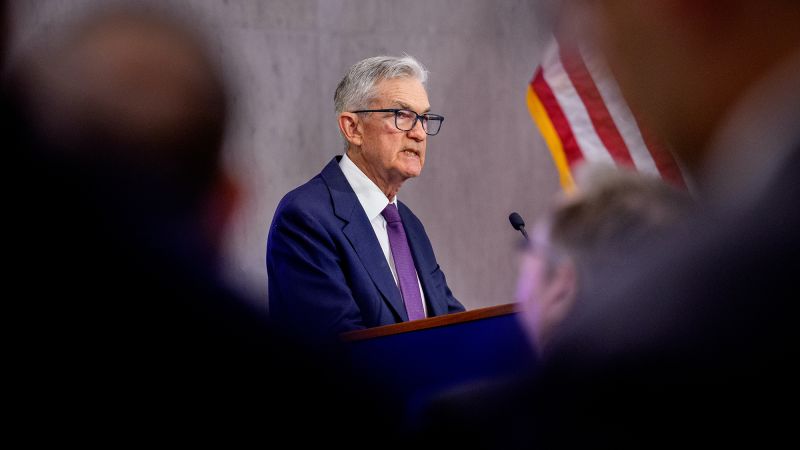
Powell’s eight-year Fed chairmanship ended with the central bank having navigated the COVID-19 shock, a 14.8% unemployment peak in April 2020, and the highest inflation in over 40 years before launching the most aggressive rate-hiking cycle since the 1980s in March 2022. The article emphasizes both the Fed’s rapid emergency response and its delayed reaction to inflation, while highlighting an intense political battle over Fed independence as Kevin Warsh takes over. Market impact is high because the piece centers on Fed leadership, monetary policy, and the institutional independence of US rate-setting.
Powell’s real legacy for markets is not the headline rate path, but the normalization of the Fed as a crisis backstop with credible inflation-fighting scars. That matters because the incoming chair inherits a central bank whose reaction function is now more politically salient than usual: any hint of easing will be read through the lens of fiscal dominance, which should keep the term premium embedded even if front-end cuts eventually arrive. The second-order effect is a steeper and more volatile curve regime, where duration rallies get sold faster and financial conditions loosen less than the policy rate implies. The bigger market implication is that the “Powell put” has likely been replaced by a credibility premium. If the new chair is perceived as more pliable, breakevens can reaccelerate before nominal yields fully catch up, especially if growth stays resilient and labor markets do not weaken meaningfully. That is a bad setup for long duration, large-cap defensives, and any asset priced off a clean disinflation path; it is relatively better for banks and cyclicals that benefit from a higher-for-longer nominal backdrop and a less aggressive terminal cut cycle. The contrarian view is that the market may be overpricing political interference risk in the near term but underpricing institutional inertia. The Fed’s committee structure and staff apparatus make abrupt policy capitulation unlikely over days to a few months, so any knee-jerk steepening may mean-revert unless inflation data reaccelerate. The cleaner catalyst remains inflation persistence rather than governance drama; if wage-sensitive services inflation stalls, the curve can bull-steepen even with noisy headlines. Until then, the path of least resistance is a modestly higher equity risk premium and more dispersion across rate-sensitive sectors.
AI-powered research, real-time alerts, and portfolio analytics for institutional investors.
Overall Sentiment
neutral
Sentiment Score
-0.05
