
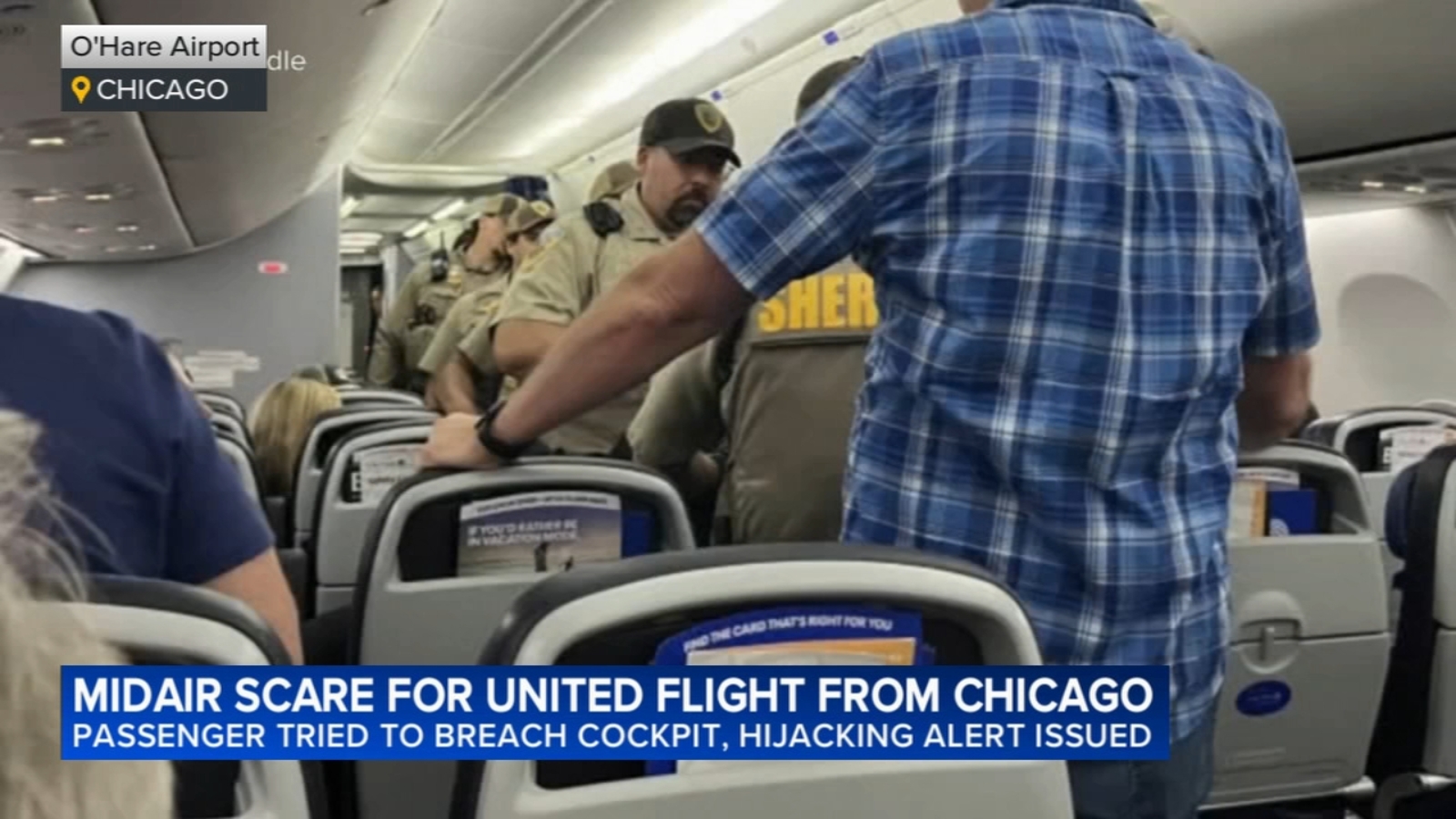
A United flight with 147 passengers and 6 crew diverted to Dane County, Wisconsin after a 75-year-old man allegedly tried multiple times to breach the cockpit, triggering a hijacking alert. No injuries were reported, passengers resumed their trip after security checks, and the FBI said no charges will be pursued. The incident highlights operational and safety risks for airlines, but it appears to be an isolated event with limited market impact.
This is a headline risk event for BA more than a direct earnings event: the aircraft and passengers were ultimately fine, so the immediate financial damage is likely limited to minor delay costs and a small probability of claim noise. The bigger issue is brand trust at the margin—aviation incidents that trigger cockpit-breach language tend to get amplified in booking behavior for a few days, but the effect usually fades quickly unless there is evidence of a systemic security gap or a fleet-wide operational problem.
Second-order, the more important read-through is to airport operators and airlines exposed to tight turnaround economics. If security protocols become more conservative after this incident, even a modest increase in gate holds, onboard law-enforcement intervention, or post-landing inspections can shave a few basis points off dispatch reliability, which matters most for carriers with higher utilization and thinner schedule buffers. That argues for a relative-value lens: the event is more likely to pressure high-multiple airline names than it is to alter the long-run narrative for Boeing itself.
For BA specifically, this is not a structural thesis changer. The stock is already priced for execution risk, and isolated headline shocks like this often create better entries for longer-dated investors because they do not alter order books, certification timelines, or factory throughput. The contrarian miss may be that the market will over-assign probability to a security/regulatory overhang when the actual takeaway is that cabin crew and onboard law enforcement contained the situation without injury, limiting any legal tail to low single digits in dollar terms.
Catalyst-wise, the risk window is days to a couple of weeks, not months, unless the investigation uncovers procedural failures or the incident is followed by additional disruptive events. Reversal would come from clean FBI closure, no FAA escalation, and management commentary that no extra inspection burden or cockpit security changes are being imposed. In that case, the event should decay into noise and BA should trade back on its own delivery and cash-flow drivers.
AI-powered research, real-time alerts, and portfolio analytics for institutional investors.
Request TrialOverall Sentiment
mildly negative
Sentiment Score
-0.20
Ticker Sentiment
