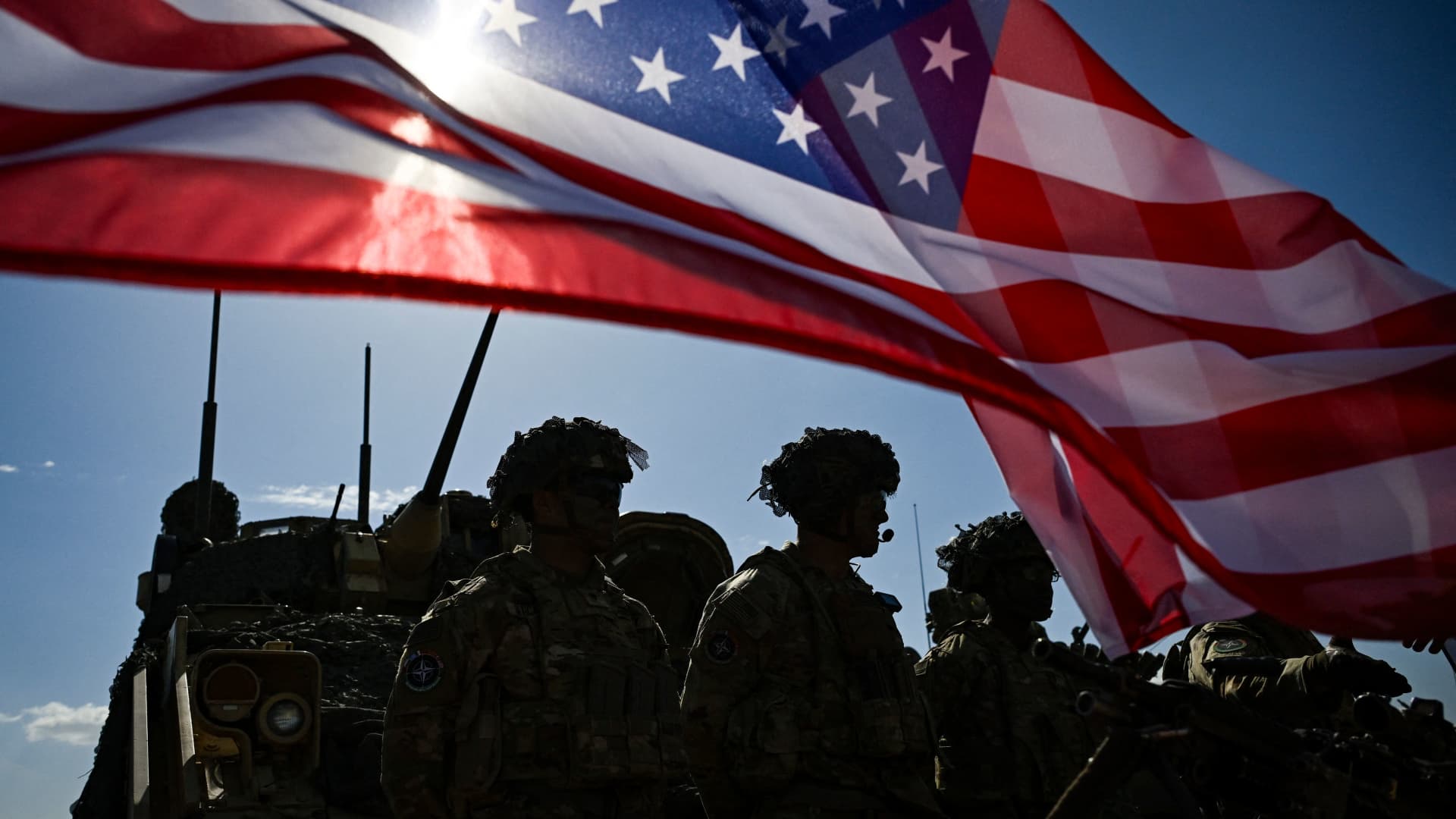
NATO defense ministers are discussing a potential increase in defense spending targets to 5% of member nations' GDP, driven by calls from the U.S. and the need to address threats from Russia, China, Iran and North Korea. While some nations like Poland, Estonia, and the U.S. already exceed the current 2% target, others, including Canada, Spain, and Italy, lag behind, creating potential friction as the alliance aims to reach a consensus at the upcoming June summit. The proposed 5% target includes 3.5% for defense and 1.5% for security-related infrastructure, but commitment timelines remain a key issue for some members.
NATO is actively considering a substantial increase in its defense spending target for member nations to 5% of their individual GDPs, a significant jump from the current 2% requirement, with a decision anticipated at the upcoming June summit. This initiative, strongly advocated by U.S. officials such as Defense Secretary Pete Hegseth and reflecting demands previously made by former U.S. President Donald Trump, aims to bolster collective defense capabilities—including air and missile defenses, long-range weapons, and ground forces—in response to perceived threats from Russia, China, Iran, and North Korea. The proposed 5% target comprises 3.5% for 'pure' defense and 1.5% for security-related infrastructure like cyber warfare capabilities and intelligence. While defense expenditure has notably increased since 2018, with 23 of the member states reaching the 2% threshold by 2024 compared to only six previously, significant disparities persist; Poland, Estonia, the U.S., Latvia, and Greece are noted for exceeding targets, whereas major economies like Canada (1.3% of GDP on defense in 2024), Spain, and Italy have lagged. Although the U.K. and Germany have indicated intentions to increase spending—Germany now reportedly backing the 5% hike—the timelines for achieving such targets remain a critical point of discussion, with Spain and Italy viewed as potential holdouts against the 5% goal after only committing to reach 2% by 2025. The 'determined' tone from proponents, aiming to 'lock in' these commitments, underscores the perceived urgency for a more robust defense posture across the alliance, carrying a 'mildly positive' sentiment possibly due to enhanced security prospects and stimulus for the defense sector, despite fiscal challenges for some members.
AI-powered research, real-time alerts, and portfolio analytics for institutional investors.
Request DemoOverall Sentiment
mildly positive
Sentiment Score
0.35
