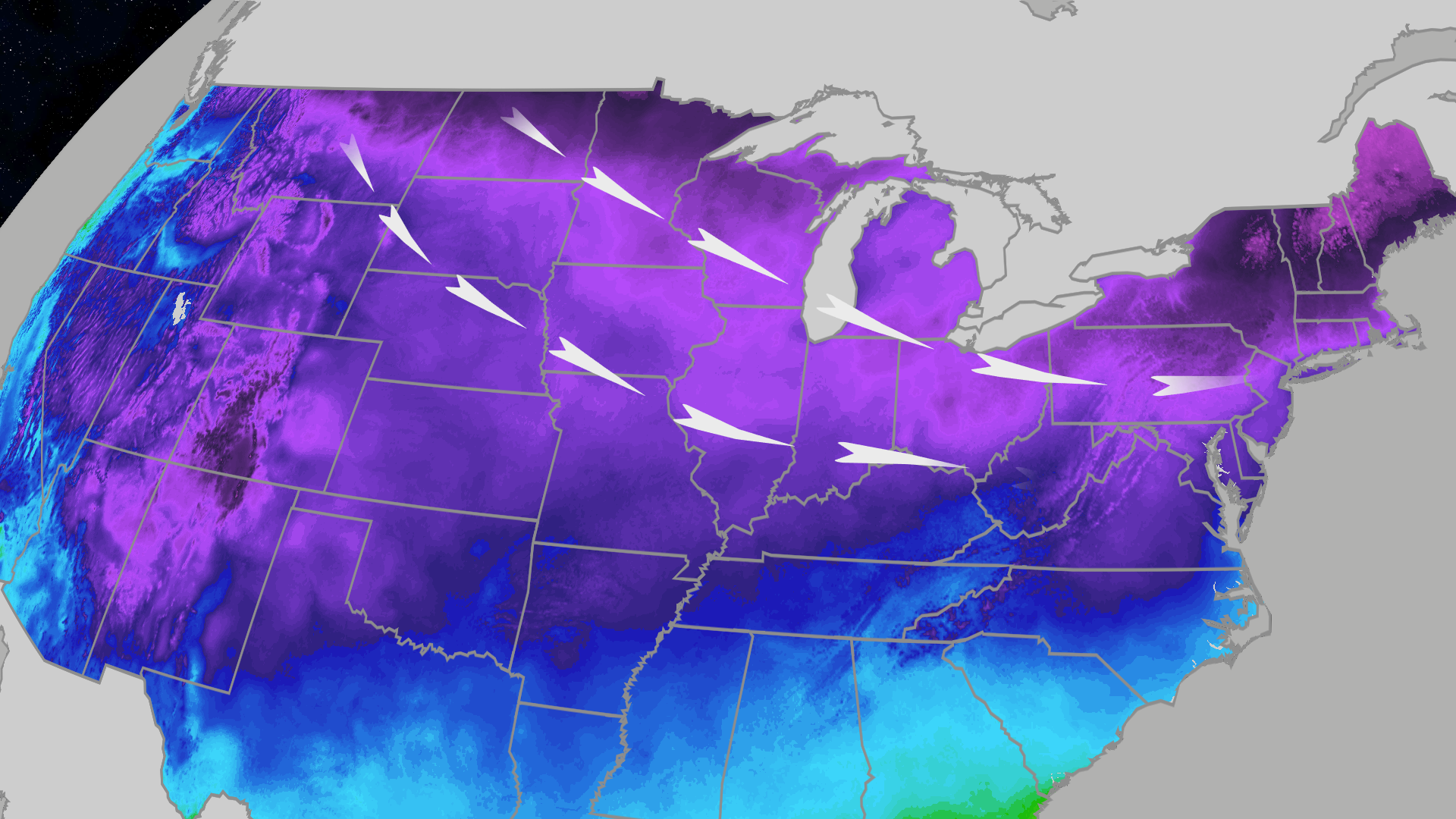
An arctic blast will move into the Northern Plains and Upper Midwest beginning Wednesday, producing dozens of daily record lows Thursday–Friday with widespread subzero morning temperatures (teens below zero in parts of Iowa) and afternoon highs only in the teens or low 20s across much of the Midwest and Northeast. Light snow and a wintry mix are possible in the extreme northern tier, Ohio Valley, interior Northeast and mid‑Atlantic Thursday night into Friday, and a secondary, reinforcing cold shot Saturday will keep highs in the single digits in parts of the Dakotas and upper Midwest. A rapid, short‑lived warmup is forecast for parts of the Plains and West early next week (Rapid City/Denver near 50–60°F), suggesting near‑term upside for heating demand and potential localized transport disruptions while broader market impacts are likely limited.
Market structure: The Arctic blasts are a short, high-intensity demand shock concentrated in the Midwest/Northeast. Immediate winners are spot natural gas, regional heating oil/propane suppliers, and gas-fired power generators (PJM, ISO-NE); losers are airlines, regional logistics, and discretionary retail in affected metros. Expect spot Henry Hub volatility of +/-15-30% intraday and RTO real-time power price spikes in the Northeast (PJM/ISO-NE) for 48–120 hours.
Risk assessment: Tail risks include localized grid stress/rolling outages (operational) and forced price caps or emergency regulatory interventions if scarcity pricing spikes >3x typical peak; these are low-probability but high-impact over 48–96 hours. Time horizons: immediate (days) for spot fuel and power, short-term (weeks) for producer equity moves, and limited long-term structural effects unless repeated cold events occur. Hidden dependencies: pipeline constraints, LNG export flows, and current working gas storage levels (EIA weekly) will magnify or mute price moves.
Trade implications: Favor short-dated, directional natural gas exposure and regional utility/midstream longs while avoiding long-duration commodity exposure due to likely post-spike mean reversion. Use options to cap downside (30–45 day call spreads on UNG or calls on large producers), size trades small (0.5–3% portfolio) and set explicit profit targets/stops tied to Henry Hub and EIA releases. Short opportunistic exposure to Northeast-focused airlines/regionals for a 1–2 week window on elevated cancellation risk.
Contrarian view: Consensus will bid spot gas/ETF aggressively but underprice contango and rapid mean reversion after brief cold snaps — UNG often loses to roll costs. Historical parallels (severe single-snap cold events in 2013–2018) show 2–6 week rebounds; therefore prefer short-dated options or equities over physical ETFs and avoid being long into warmer forecasts or storage builds. Key unintended consequence: a warm rebound (Plains to +50–60°F) can erase >50% of spike gains within 7–14 days.
AI-powered research, real-time alerts, and portfolio analytics for institutional investors.
Request DemoOverall Sentiment
neutral
Sentiment Score
0.00
