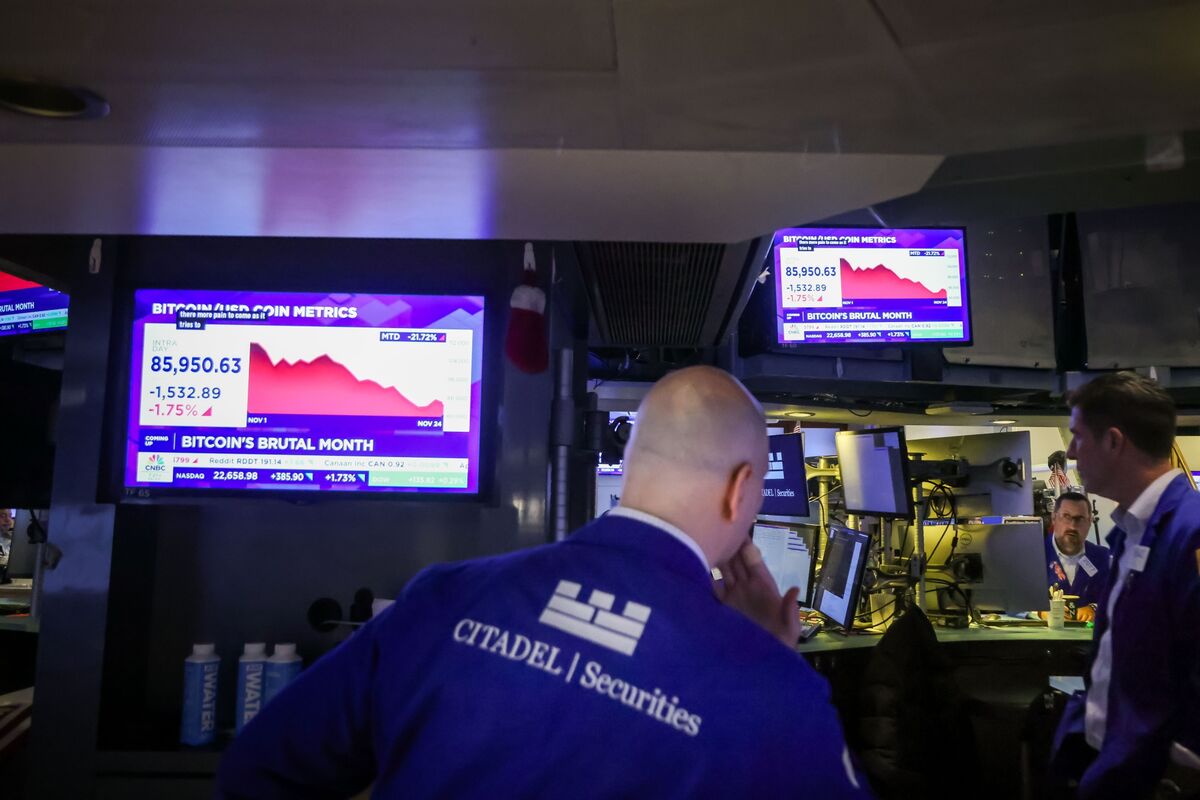
Crypto markets have suffered an estimated $1 trillion wipeout as Bitcoin, after a post-2020 election rally, is on track for its worst month since 2022 and smaller tokens are experiencing similar sharp declines. The drop highlights renewed retail trader losses and heightened holiday-season volatility, suggesting increased risk aversion and potential repositioning by leveraged and retail participants across digital-asset markets.
Market structure is shifting toward providers of liquidity and custody: CME-listed futures, institutional OTC desks and regulated custodians gain fee and spread capture as retail/levered volumes evaporate. Smaller on‑ramps, unregulated derivatives venues and high‑beta altcoins will lose market share and face wider bid/ask spreads; negative funding rates and rising implied vols signal sellers are dominating supply in the near term.
Tail risks center on regulatory and counterparty events — an SEC enforcement wave, a major exchange insolvency or a stablecoin depeg could produce >30% additional downside in days and cascade margin calls across venues. Near term (days) expect funding-rate driven squeezes and liquidity gaps; over weeks/months deleveraging should materially reduce open interest, while over quarters institutional adoption or ETF approvals can restore a new higher floor.
Trade implications: skewed vols and richer option premia favor long-vol trades (30–90 day straddles) and tactical shorts into rallies that hit the 50‑day moving average; pair trades that isolate fee‑generating custodians (COIN, FIS) vs native token risk preserve upside from secular custody demand while hedging price action. Rotate risk away from small-cap crypto and consumer retail fintech into duration and gold as a defensive rebalancing while keeping 1–3% nimble dry powder for post‑capitulation opportunities.
Contrarian view: much selling is levered retail capitulation — historical parallels (late‑2018) show 20–40% snapbacks after liquidity normalizes, so current dislocation may be overdone. Watch for concentrated on‑chain accumulation by top wallets and a persistent decline in exchange net flows as signals the buy window is opening; if those show up within 30–90 days, rebalance aggressively into selective altcoins and custody equities.
AI-powered research, real-time alerts, and portfolio analytics for institutional investors.
Request DemoOverall Sentiment
strongly negative
Sentiment Score
-0.70
