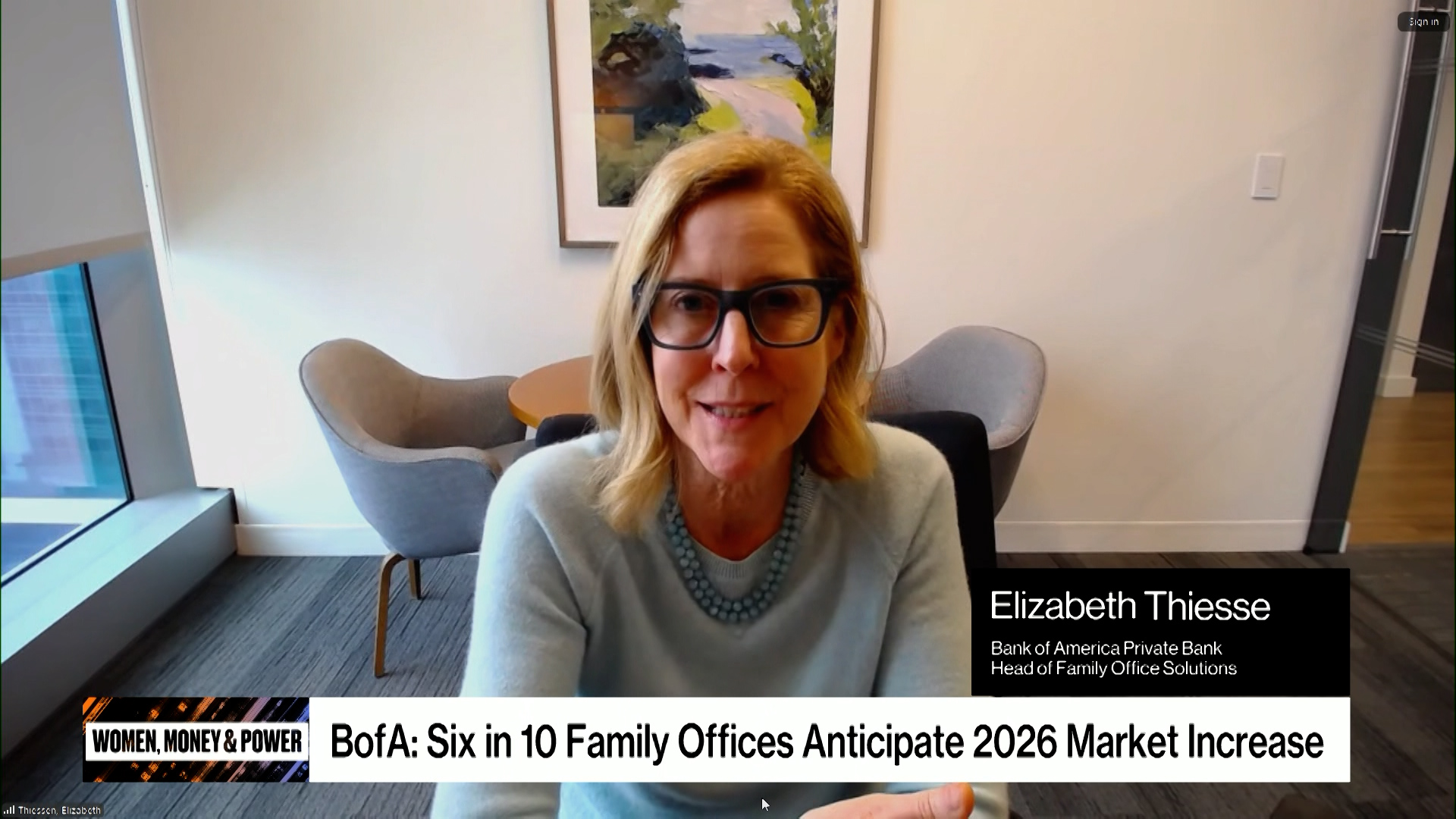
A Bank of America study of 335 family offices (assets under management ranging $25 million to $5+ billion, with >60% above $500 million) finds imminent generational change and a pronounced shift into alternatives: allocations roughly 36% marketable securities vs. 34% alternatives, with private equity ranked top, followed by direct investments and real estate. Eighty-seven percent have not yet transitioned leadership, six-in-ten expect a transfer within 10 years (one-in-three within five), prompting greater emphasis on governance, philanthropy and technology adoption — signaling steady demand for private-market capital and bespoke investment/tech solutions from family offices.
Market structure: Family offices (many with >$500m AUM) shifting ~34% toward alternatives will widen demand for private equity, direct co-investments and real estate over the next 6–36 months. Winners: large alternative asset managers, secondary platforms and custodial/tech providers that enable direct deals; losers: traditional public-equity-only boutiques and some listed REITs facing competition from deep-pocketed private buyers. Expect pricing power in private deal sourcing to tighten returns by ~100–300bp vs. public benchmarks over 1–3 years unless new supply materializes.
Risk assessment: Key tail risks include sudden tax/regulatory changes on carried interest or trust transparency, an interest-rate shock that re-prices leveraged real estate/private credit, and a generational governance break causing fire-sale liquidity events. Near term (0–3 months) the biggest risks are operational (governance/disclosure) and fundraising cycles; medium (3–12 months) is valuation compression in late-cycle deal entry; long (1–5 years) is sustained return erosion in crowded private markets. Hidden dependency: many family offices lack liquidity management — illiquidity mismatch can force asset sales.
trade implications: Allocate to scaled exposure to listed PE/alternative managers (BX, KKR, CG) and fintech/custody tech (SSNC) over 3–12 months while trimming pure-play public-equity managers (TROW/IVZ) by similar amounts. Use options to gain asymmetric upside: buy 9–12 month call spreads on BX/KKR sized 1–3% NAV; buy protective VNQ put spreads sized to 2–4% NAV to hedge RE rate shocks. Rotate portfolio weight ~3–6% from passive large-cap ETFs into private-credit funds or secondary funds with >10% target net IRR expectations.
contrarian angles: Consensus assumes private allocations only lift managers — it underestimates forced liquidity events from generational disputes, which could create 20–40% discounts in secondaries. Also tech adoption by family offices benefits a narrow set of vendors (SSNC, LSEG custody tools) more than broad fintech; exposure to listed REITs may be overbought and mispriced vs. direct core real estate. Historical parallels: 2013–15 private markets crowding led to multiple compression and strong secondary discounts within 12–24 months — similar pattern likely if inflows accelerate without deal supply.
AI-powered research, real-time alerts, and portfolio analytics for institutional investors.
Request DemoOverall Sentiment
mildly positive
Sentiment Score
0.12
Ticker Sentiment
