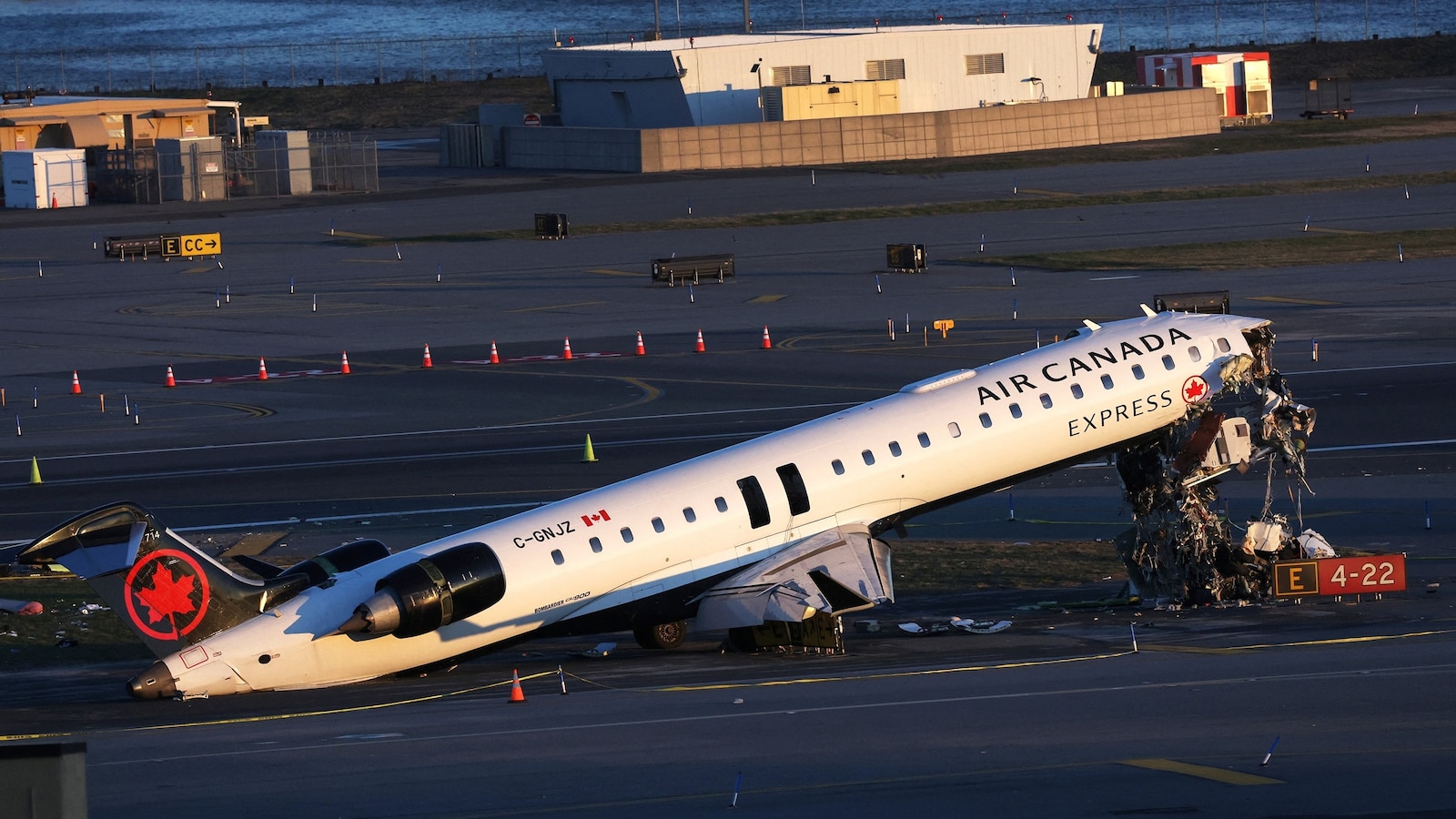
Two pilots were killed after Air Canada Flight 8646 (operated by Jazz Aviation) struck a Port Authority rescue-and-firefighting vehicle at LaGuardia shortly after landing (~11:45 p.m.); one pilot was identified as Antoine Forest. The flight had 4 crew and 72 passengers; preliminary data showed the aircraft impacted the truck at ~93–105 mph and at least 43 people were taken to hospitals. LaGuardia was closed for >12 hours (flights slowly resumed at 2 p.m. Monday) and the affected runway will remain closed until 7 a.m. Friday per the FAA; the NTSB is investigating.
The immediate market consequence will be concentrated reputational, regulatory and liability stress on the carrier-brand linked to the operator rather than broad demand shock to air travel. Expect AC.TO to trade on a stretched multiple compression vector over the next 1–3 months as headlines drive flows, with the larger P&L implications arriving over 6–24 months via insurance re-pricing, litigation reserves and potential contractual disputes with the regional operator.
Operationally, runway/slot disruptions at constrained airports (LaGuardia) create asymmetric short-term winners: incumbents with spare aircraft/crew or non-impacted hubs can capture displaced flows while regional operators face cascading cancellations and lease/crew cost overruns. Over a 2–12 week window this drives incremental unit costs for the affected airline and their contractors; over 6–18 months it can shift routing economics and codeshare renegotiations that favour larger network carriers with deeper fleet flexibility.
Key catalysts to watch: (1) NTSB preliminary findings (30–90 days) that will assign causal liability and shape insurer/litigation outcomes, (2) FAA/Port Authority directives that could impose procedural or access changes at slot-constrained airports (60–180 days), and (3) filings/claims that crystallize reserve needs (3–24 months). The single-event headline risk is large but binary — an exculpatory finding that pins blame on vehicle/operator would materially reduce equity downside while an airline-centric finding would extend negative multiple pressure.
AI-powered research, real-time alerts, and portfolio analytics for institutional investors.
Overall Sentiment
strongly negative
Sentiment Score
-0.80
Ticker Sentiment
