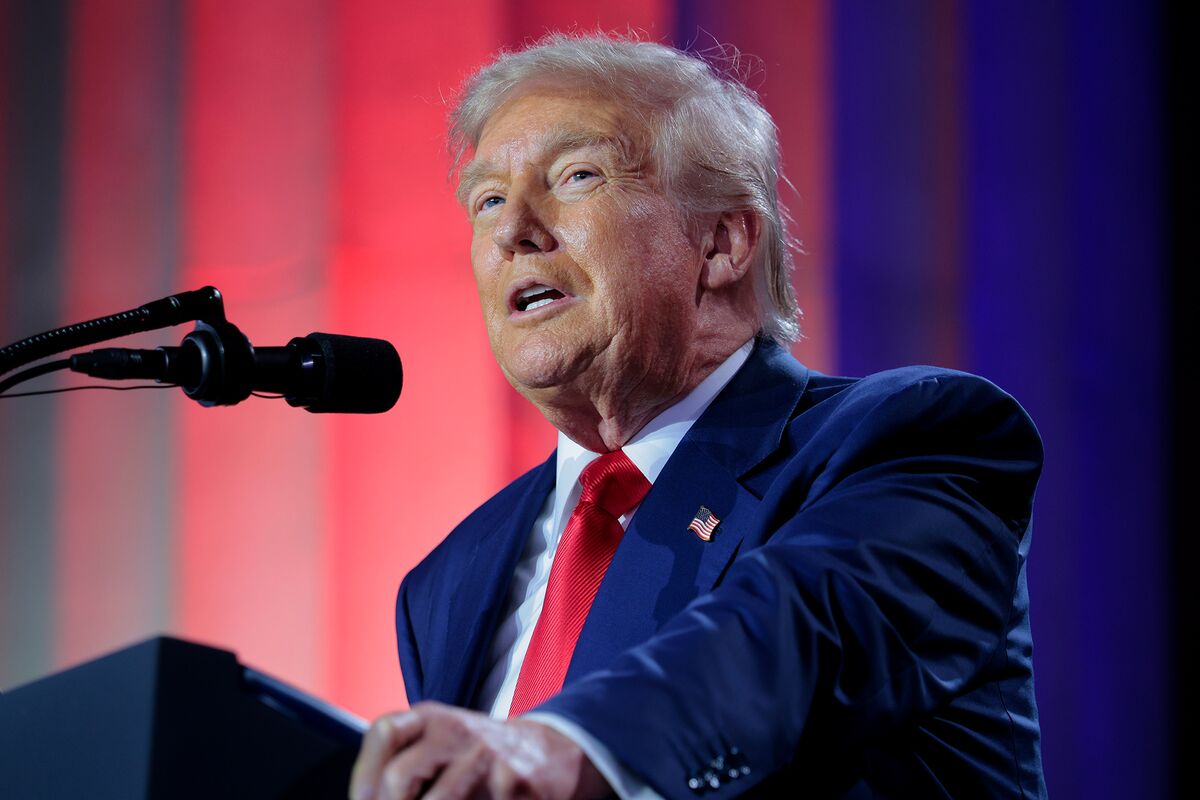
President Trump announced that upcoming "reciprocal" tariffs would span 15% to 50%, signaling a rising floor for new levies ahead of an August 1 deadline. He specified that rates could reach 50% for nations with strained relations, underscoring a continued aggressive stance on trade policy.
Former US President Trump's proposal for a new tariff regime introduces significant uncertainty into the global trade landscape. The specified range of 15% to 50% for so-called "reciprocal" tariffs, with a stated floor of 15%, signals a potential escalation in protectionist trade policy. The assertion that rates could reach 50% for nations with strained relations indicates that these measures would be wielded as a geopolitical tool, heightening risks of retaliatory actions and disrupting international relations. The August 1 deadline serves as a near-term catalyst, likely to increase market volatility as investors price in the potential for disrupted supply chains, higher input costs for manufacturers, and inflationary pressures on consumer goods. The strongly negative sentiment and high market impact score associated with this announcement underscore the market's perception of this hawkish stance as a significant headwind for global economic stability.
AI-powered research, real-time alerts, and portfolio analytics for institutional investors.
Request DemoOverall Sentiment
strongly negative
Sentiment Score
-0.75
