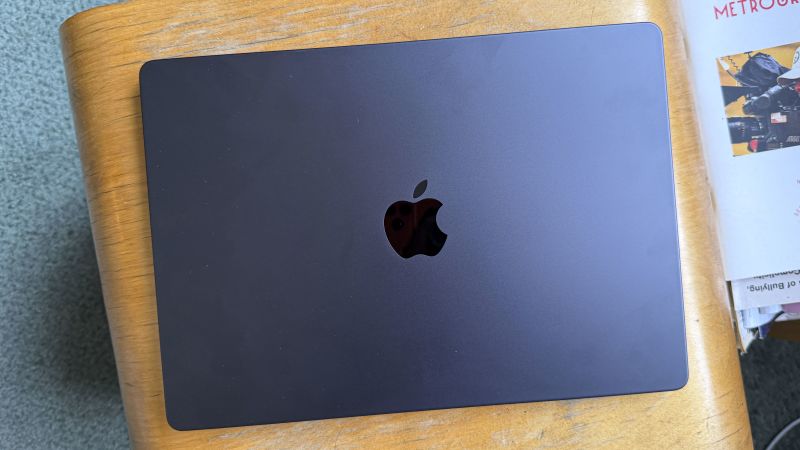
Extensive Black Friday markdowns across laptops, desktops and accessories are delivering all-time or near–all-time lows on a broad set of consumer electronics — examples include a Lenovo IdeaPad 3i Chromebook at $149, an older MacBook Air under $600 at Walmart, MacBook Air M4 and 16-inch M4 Pro at close-to-lowest prices, and a MacBook Pro M5 seeing a rapid post-launch price drop. For investors, the price cuts signal aggressive retailer inventory clearing and promotional intensity for the holiday season that could boost near-term unit sales but compress vendor margins and highlight volatility in post-launch pricing dynamics for premium devices.
Market structure: The Black Friday heavy discounting benefits volume-led retailers (WMT) and OEMs needing inventory turns (DELL, low-end Chromebook vendors) while exerting short-term ASP pressure on premium suppliers (AAPL) of perhaps low-single-digit % on holiday quarter margins. Competitive dynamics favor players with diversified channels and services (Apple’s ecosystem) vs. pure-price players; expect market-share nudges (±1–3pts) within the PC/Chromebook segments over the next 2–3 quarters as consumers trade down/up. Supply/demand: promotions imply healthy inventory and retailer willingness to sacrifice margin for share — not supply shortages — signalling demand is promotional-driven, not structural, for this cycle.
Risk assessment: Tail risks include an inventory glut that forces another round of markdowns (worst case: -200–300bps EBIT for OEMs over 2 quarters), a China/Taiwan supply shock that reverses discounting dynamics, or a US consumer shock (unexpectedly weak Dec payrolls) that collapses holiday comps. Time horizons: immediate (days) see retail sales/volatility spikes; short-term (4–12 weeks) earnings guidance revisions; long-term (4+ quarters) depends on replacement cycles and services monetization. Hidden dependencies: channel inventory levels, trade-in programs, and consumer credit delinquencies will determine whether discounts are transitory or margin-damaging.
Trade implications: Tactical longs: AAPL and DELL — AAPL for services/durable installed base and DELL for enterprise/gaming refresh — sized modestly (1–3% each) with defined stops; short-duration WMT exposure (0.5–1%) around Black Friday to capture volume/volatility, exit on comps release. Options: prefer 3-month AAPL call spreads (5% OTM) sized to 0.3–0.5% portfolio risk to play upside without outright delta exposure; for DELL buy 2–3 month ATM calls or buy stock with 6% stop. Sector rotation: overweight tech hardware and consumer electronics, underweight commodity cyclicals and discretionary luxuries that rely on full-price sales.
Contrarian angles: The market may overstate the negatives of discounting — discounts can expand installed base and services revenue for AAPL, insulating EPS over 2–4 quarters; conversely, consensus may under-appreciate Dell’s gaming tailwind which can deliver double-digit unit growth in the high-margin segment. Historical parallels to 2019–2020 show holiday promos depressed near-term margins but preceded stronger aftermarket services and accessory attach rates; unintended consequence: persistent promo behavior could normalize “wait for discounts,” pressuring full-price sell-through beyond one holiday cycle and creating 1–2 quarter headwinds for margins.
AI-powered research, real-time alerts, and portfolio analytics for institutional investors.
Request DemoOverall Sentiment
moderately positive
Sentiment Score
0.42
Ticker Sentiment
