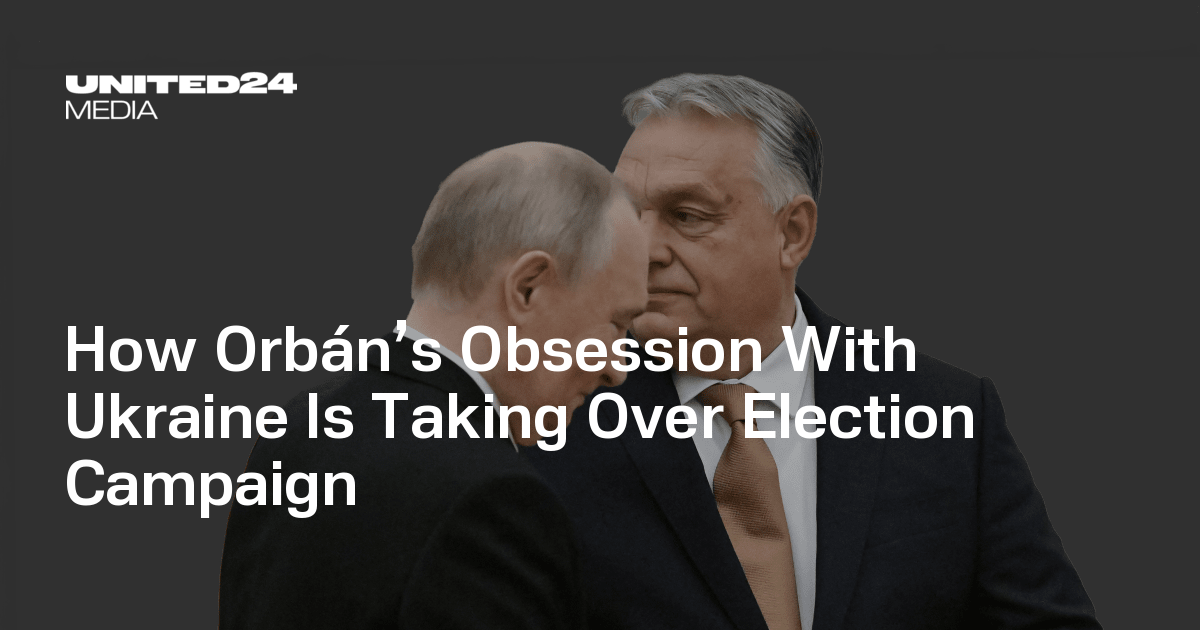
Hungary’s election campaign is increasingly shaped by Orbán’s anti-Ukraine and pro-Russia stance, alongside repeated EU vetoes that have delayed aid and accession steps for Ukraine. The article cites fresh allegations of Moscow coordination, a €90 billion Ukraine loan veto on March 19, and a 2025 leak suggesting Orbán offered Putin assistance "in any way," underscoring rising EU-Hungary friction. The piece also highlights ongoing disputes over Russian gas flows and sanctions, adding geopolitical and energy-market risk.
Hungary is increasingly looking less like a peripheral EU holdout and more like a live test case for how far one member state can monetize veto power before markets force a repricing. The immediate macro loser is the Hungarian state itself: persistent obstruction of EU funding keeps the sovereign trapped in a low-growth/high-deficit loop, which raises refinancing risk at the margin and keeps local rates structurally higher than peers. The second-order effect is that any new government with a plausible mandate will likely move fast to normalize relations with Brussels, creating a binary policy shift that could unwind a meaningful risk premium in Hungarian assets within months.
The bigger market signal is for European policy cohesion and energy optionality. Hungary’s repeated defense of Russian energy exposure is not just political theater; it functions as a brake on EU efforts to reprice Russian molecules out of the system, which prolongs volatility in Central European gas and power spreads. If Budapest loses leverage after the election, the market could see a cleaner path to EU-funded infrastructure, broader LNG/connector buildout, and a gradual narrowing of the Hungary/CEE funding gap versus Poland and Romania.
The contrarian read is that the current narrative may be overestimating the durability of Orbán-style obstruction and underestimating how quickly a pro-EU mandate could unlock balance sheet repair. If Magyar overperforms polling, the repricing could be violent because positioning is likely crowded in the ‘Hungary as permanent outlier’ trade. Conversely, if Orbán survives, the key risk is not just another veto cycle; it is escalating institutional friction that could bleed into sanctions enforcement, cross-border capital flows, and investor willingness to hold Hungarian duration.
Near term, this is a political volatility trade with a 1-6 month catalyst window around polling and coalition math. The cleanest expression is not directionally short Europe, but long the relief trade in Hungary/CEE assets on any credible opposition lead, paired against assets exposed to prolonged EU impasse.
AI-powered research, real-time alerts, and portfolio analytics for institutional investors.
Request DemoOverall Sentiment
moderately negative
Sentiment Score
-0.45
