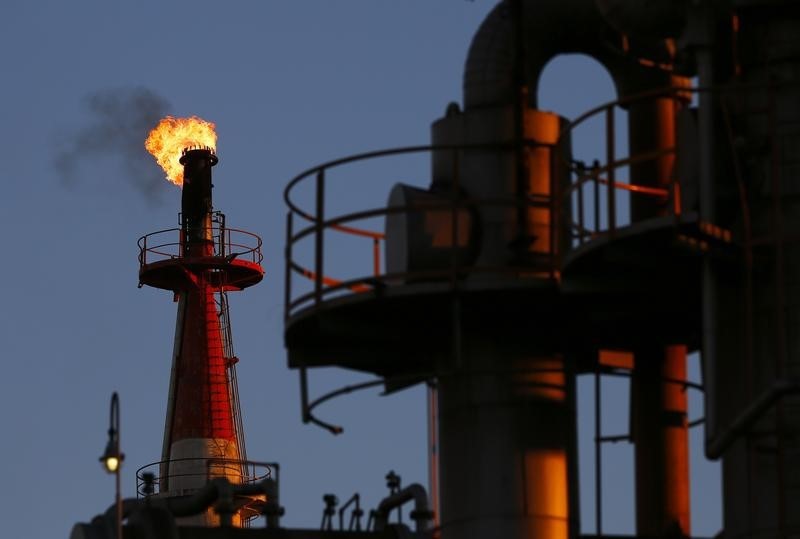
Brent crude rose 1.5% to $119.75/bbl, after briefly touching $120.34, while WTI gained 0.3% to $107.25/bbl as traders reacted to signs of progress toward reopening the Strait of Hormuz. The article highlights ongoing U.S.-Iran conflict risks and shipping disruption through a channel that handles roughly 20% of global oil supply, keeping the energy market on edge. A reported U.S. push for an international coalition to reopen the waterway adds to near-term volatility across oil and shipping markets.
The market is pricing an energy shock, but the more interesting second-order effect is a cross-asset squeeze on logistics-heavy growth and semis rather than a clean oil beta trade. If Hormuz remains constricted, freight, insurance, and working-capital costs rise together, which is a margin tax for hardware supply chains and a hidden headwind for AI capex narratives that depend on stable component pricing and delivery windows. That makes the headline positive for MSFT only to the extent cloud demand is insulated; the real risk is that higher energy and transport costs eventually leak into enterprise IT budgets and delay non-critical spending. For MSFT, the near-term read-through is still supportive because cloud and AI are exposed more to capex confidence than to jet fuel. But if this energy move persists for several weeks, hyperscalers could see power procurement and data-center build costs move higher, compressing return thresholds on incremental AI capacity. The market is underestimating the lag: the first impact is sentiment and multiple compression in high-duration names, while the earnings impact arrives 1-2 quarters later through margin guidance and deferred deployment schedules. SMCI and APP are more vulnerable than MSFT on a relative basis because they trade on momentum, financing conditions, and the assumption of uninterrupted spending acceleration. A prolonged oil shock would not hit their end demand immediately, but it can cool risk appetite, widen spreads, and make investors more selective on hardware beneficiaries with thinner margins and higher operating leverage. The contrarian view is that this may be less about absolute energy prices and more about the market overpaying for a geopolitical tail risk that could mean-revert quickly if naval/coalition chatter becomes credible; that argues for selling upside convexity in the most crowded beneficiaries rather than chasing the move.
AI-powered research, real-time alerts, and portfolio analytics for institutional investors.
Overall Sentiment
mildly positive
Sentiment Score
0.25
Ticker Sentiment
