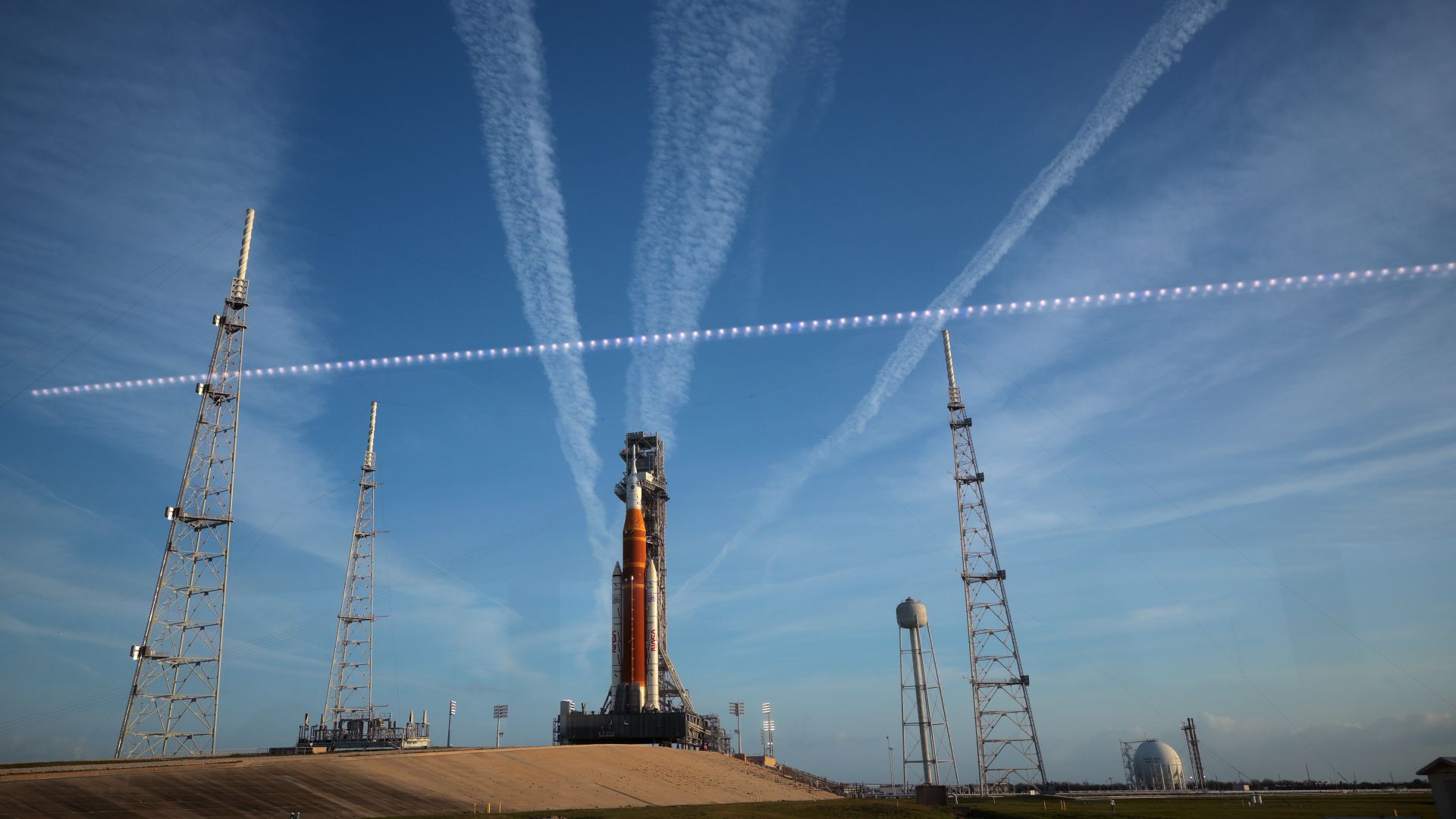
80%: NASA forecasts an 80% chance of favorable ground weather for the Artemis II April 1 launch, with high ground winds the primary concern. NASA says yesterday's X1.4 solar flare (NOAA/ SWPC issued a G2 watch for March 31 and G1 watches for April 1–2) is being monitored but is not currently expected to prevent launch; mission managers report no technical issues and the vehicle and team are ready to fly.
The survivorship and sustainment phase of human lunar missions creates concentrated follow-on revenue opportunities for propulsion, avionics and radiation-hard component suppliers over the next 12–36 months — smaller-cap suppliers capture a disproportionate share of upside because they sell mission-critical, recurring hardware and services where switching costs are high. Expect a two-tier market reaction: large primes will see muted multiple expansion (already priced for baseline defense tailwinds), while vendors that supply RS-25-equivalent engines, reaction control systems, and spacecraft subsystems can re-rate by 20–60% on contract momentum and faster cash conversion.
Space-weather events increase optionality value in geosynchronous and deep-space satellite servicing and rad-hard component names; investors should watch order flow for shielding, hardened electronics, and radiation forecasting services over the next 3–9 months as agencies accelerate resilience spending. Insurers and re-insurers that underwrite launch/space risk face a near-term repricing window — a visible uptick in premiums or capacity withdrawal would be an early signal that private capital costs for launches are rising.
Tail risks that would reverse the reflation trade include a mission-level anomaly or a protracted campaign of delays that trigger program reviews and congressional scrutiny, which could compress small-cap valuations by 30–50% within days. Key catalysts to monitor: two-week telemetry/mission health post-launch, formal award announcements from NASA in the next 3–9 months, and any insurer commentary on capacity/pricing changes.
Consensus currently underweights execution and contracting asymmetry: success materially re-allocates future awards to niche suppliers, but failure compounds reputational and programmatic risk concentrated in the same names. That asymmetry favors option-style exposure to the niche suppliers and selective, duration-limited equity exposure to primes rather than outright long large-cap defense names.
AI-powered research, real-time alerts, and portfolio analytics for institutional investors.
Request DemoOverall Sentiment
mildly positive
Sentiment Score
0.20
