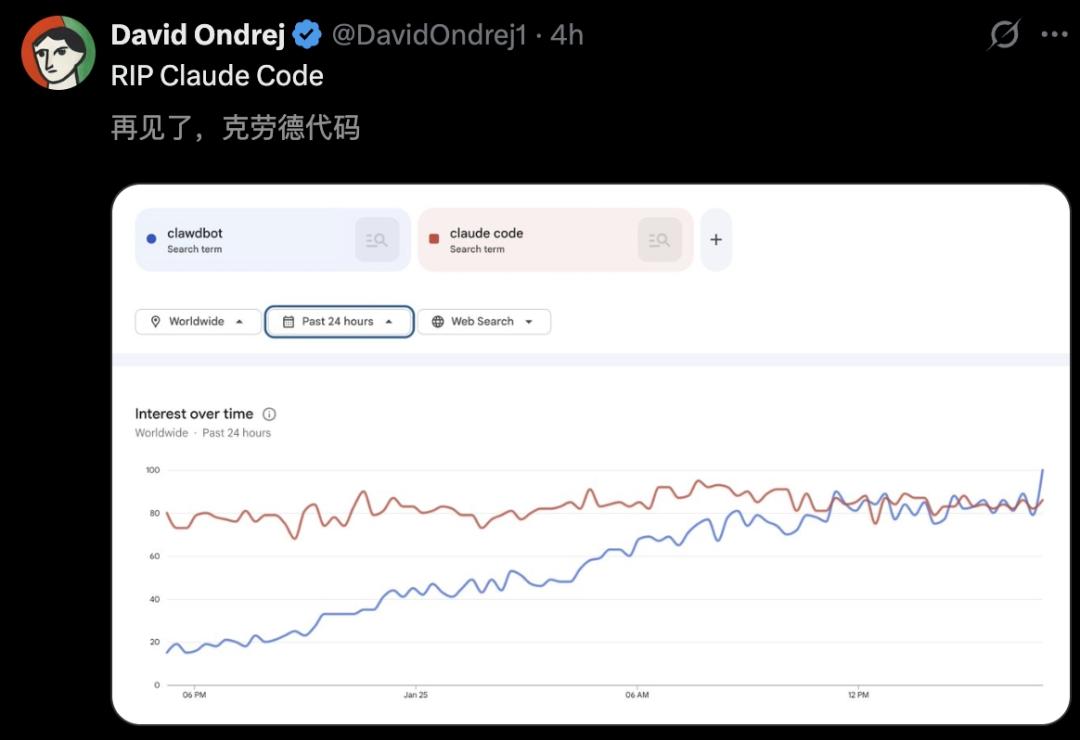
Clawdbot, an open-source, local-first AI agent that links chat apps (WhatsApp, Telegram, iMessage) to a gateway on users' Macs/Windows/Linux machines and can call Anthropic/OpenAI or local models, went viral in Silicon Valley with a reported GitHub surge of ~20,700 stars in a day and 262 issues / 89 PRs. The agent claims persistent memory, self-evolving skill creation, and large productivity gains (examples: organizing files in ~10 seconds; summarizing hour-long reads into five minutes; extracting addresses from 20 PDFs in ~2 minutes), prompting developer frenzy and heightened demand for Mac minis. Key implications for investors include potential upside in demand for local compute/hardware, elevated importance for LLM providers and security/privacy tooling, and rapid open-source-driven distribution that could accelerate software automation adoption.
Market structure: Clawdbot’s viral, local-first agent model creates near-term winners in endpoint hardware (Mac mini/AAPL) and endpoint software/security vendors while posing a longer-run margin pressure risk to cloud-ML monetization (AWS/MSFT/GCP). Expect a transient consumer/device demand spike (weeks) and durable enterprise opportunity for endpoint security and management (quarters) rather than immediate large-scale cloud revenue loss; pricing power shifts are gradual (6–24 months) as firms adopt hybrid on-device + cloud models.
Risk assessment: Tail risks include a major security incident (agent-enabled lateral breaches) or regulator intervention (bans/strict controls on autonomous agents) — both could wipe out adoption and trigger 20–40% de-rating in exposed consumer/device and AI-integration stocks within 3–6 months. Hidden dependencies: Clawdbot’s reliance on third‑party LLM APIs (Claude/OpenAI) and developer community momentum; a shift to local models would reduce API spend but increase hardware/software sales. Key catalysts: enterprise POCs, publicized breaches, or Apple supply constraints; monitor GitHub activity, Mac mini sell-through, and API traffic metrics weekly.
Trade implications: Tactical, high-conviction plays are small, event-driven positions: long endpoint security (CrowdStrike CRWD) and selective consumer hardware (AAPL) vs modest hedges on cloud infra (AMZN, MSFT) if usage trends roll over. Use options to size asymmetric risk: 3-month call spreads to capture device demand, 6–12 month LEAPS or buy-writes for security names to ride durable secular demand. Entry windows: act on 5–10% pullbacks or validated sell-through >15% WoW for device-related longs; tighten stops on any regulatory headlines.
Contrarian angles: Consensus treats this as pure consumer hype; the deeper read is enterprise adoption of autonomous agents will reallocate spend from centralized cloud compute to edge orchestration and security — a multi-year rebalancing, not a one-day event. Reaction could be underdone in cybersecurity stocks (beneficiaries) and overdone in short-term pump in small-cap Mac accessories; historical parallels: PC-era client-server shifts took 1–3 years to materially re-rate incumbents. Unintended consequence: rapid open-source adoption could commoditize aggregator platforms, pressuring API providers’ margins if they fail to offer differentiated, compliant enterprise APIs.
AI-powered research, real-time alerts, and portfolio analytics for institutional investors.
Request DemoOverall Sentiment
moderately positive
Sentiment Score
0.55
Ticker Sentiment
