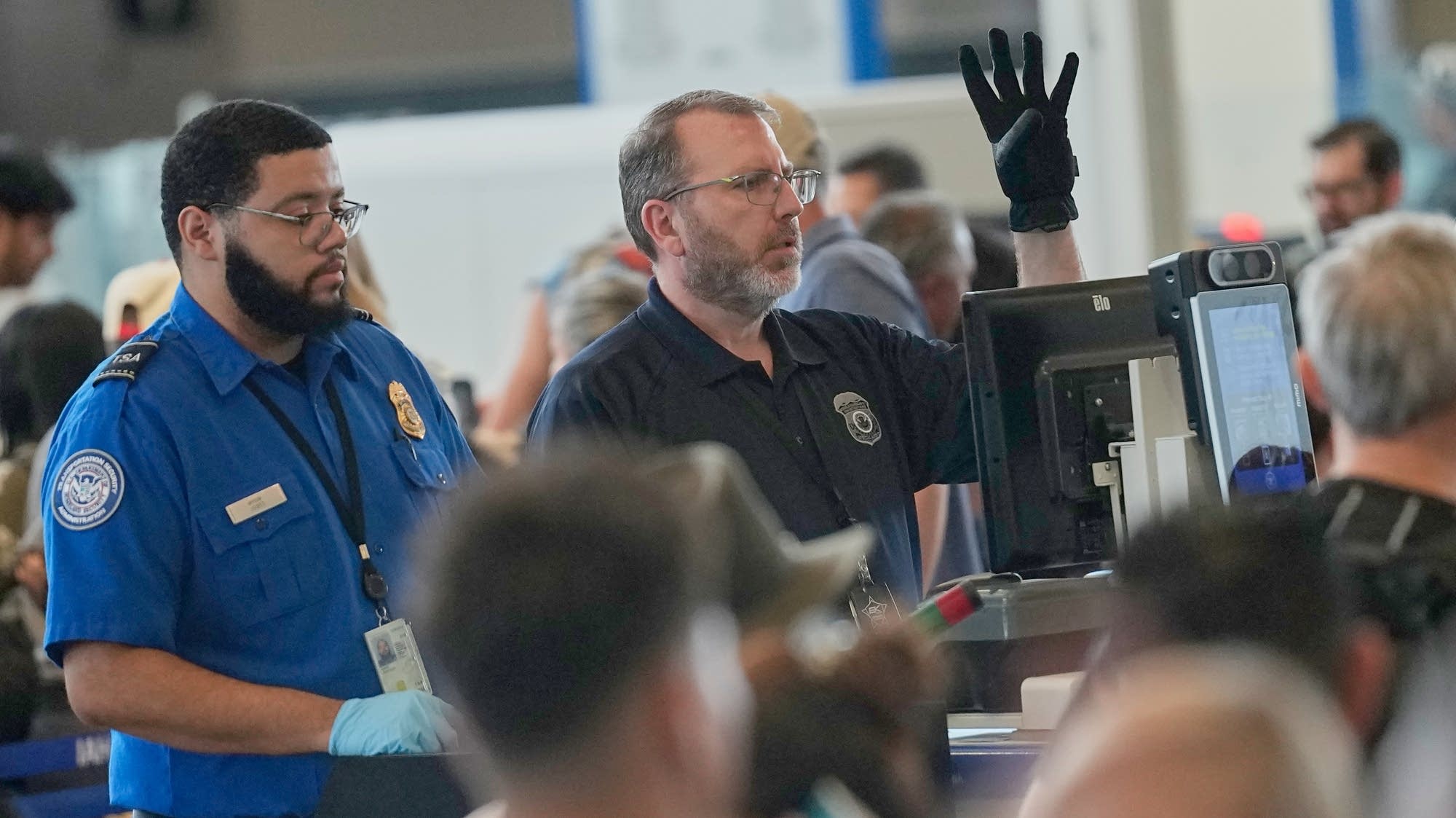
Bills to guarantee pay for FAA and TSA workers during federal shutdowns have stalled in Congress, raising the prospect that front‑line aviation staff could be unpaid during a shutdown. That increases the risk of staffing disruptions and traveler delays if a shutdown occurs, and reflects ongoing political deadlock on budget and continuity measures. Market implications are limited near term but escalate if a prolonged shutdown materializes, creating operational and reputational risks for airlines and airports.
Near-term winners and losers are defined by operational elasticity more than headline politics. Airlines with tightly scheduled, hub-and-spoke networks and high fixed-cost breakevens (legacy carriers) are most exposed to the incremental cost of disruptions: each mass delay/cancellation cluster generates thousands in rebooking and crew-costs per flight and compounds into lower aircraft utilization for days. Second-order winners include ride-hailing and ground transportation providers (modal substitution), some travel-insurance underwriters (short-term spike in claims), and private staffing/security vendors who could be contracted to backfill gaps — these can capture margin at short notice.
Time horizon and catalysts cluster around federal funding deadlines (days–weeks) and seasonal travel peaks (months). A short, targeted legislative fix for FAA/TSA pay is the highest-probability single reversal and would materially compress implied volatility in airline equities within 48–72 hours of passage; a prolonged funding impasse lasting multiple weeks risks capacity cuts and durable demand erosion (business travel repricing) into the peak travel season. Tail risk: a drawn-out standoff forces carriers to pre-emptively cut schedules (logical response when crew pools are uncertain), creating a 1–3 month revenue gap and potential unit revenue downside of low- to mid-single-digit percentage points for domestically focused carriers.
Structurally, the market is underpricing the cross-sectional dispersion: low-margin, high-leverage carriers will need to burn cash or access expensive short-term financing if disruptions persist, while well-capitalized carriers and platform mobility names can buy share or pricing power. Airport concession revenues are sticky but suffer when passenger counts drop; vendors with diversified government contracts face lower idiosyncratic risk. Watch the policy path: a targeted appropriations vote is the binary catalyst that will compress risk premia rapidly and is more likely close to a funding cliff than the headlines imply.
AI-powered research, real-time alerts, and portfolio analytics for institutional investors.
Request DemoOverall Sentiment
mildly negative
Sentiment Score
-0.20
