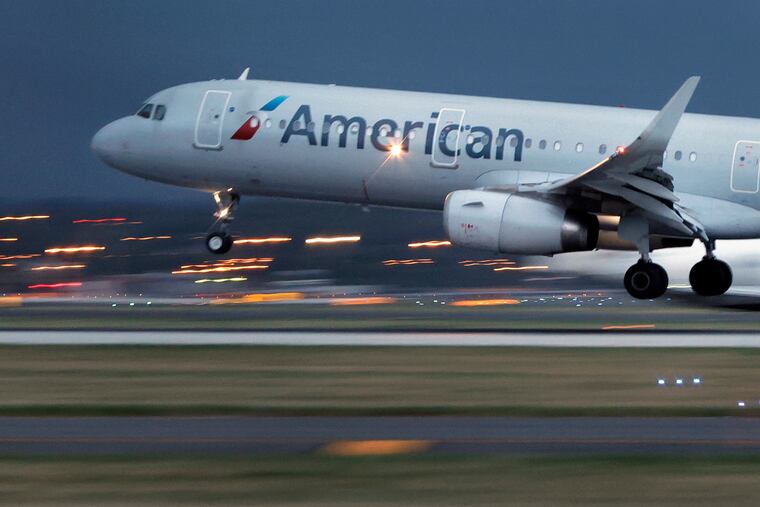
American Airlines is facing mounting governance and operational risk after unions representing pilots and 28,000 flight attendants issued a vote of no confidence in CEO Robert Isom amid employee protests at its Fort Worth headquarters; the airline canceled roughly 10,000 flights during Winter Storm Fern and saw on-time arrivals of about 73% through November 2025. Financially the carrier reported just $111 million in net profit last year, an 87% decline from the prior year and a fraction of peers such as Delta, while customer rankings and satisfaction (including a last-place J.D. Power ranking in premium cabins) remain weak — factors that threaten revenue, reputation, and near-term investor confidence despite management’s push for network, product and reliability improvements in 2026.
Market structure: American (AAL) weakness is a direct win for well-run network peers (DAL, UAL) and price-sensitive ULCCs (Frontier, ticker ULCC) at routes where AAL’s service collapses — expect near-term leisure market share to shift 200–500 bps on heavily AAL-served routes (Philadelphia, DFW) if cancellations persist. Pricing power compresses for AAL as loyalty erosion forces targeted fare promotions; competitors with better on-time performance can selectively lift fares on premium routes and steal corporate customers over 6–12 months.
Risk assessment: Tail risks include a coordinated labor stoppage, DOT penalties or a CEO removal that triggers >25% intraday volatility and ratings downgrades; operational recurrence from storms represents a 5–15% hit to quarterly revenue if hubs remain disrupted. Immediate (days) volatility will be headline-driven; short-term (1–3 months) earnings and loyalty metrics are the deciding factor; long-term (2–4 quarters) brand damage could depress unit revenue by 3–7% absent structural fixes.
Trade implications: Implement defined-risk short exposure to AAL and long exposure to DAL/UAL over 3–9 months: use 3-month put spreads on AAL (buy 25% OTM, sell 10% OTM) sized to 2–3% portfolio risk, paired with a 2–3% long position in DAL (ticker DAL) financed by the short. Add a 1–2% long in ULCC (ticker ULCC) to capture route share gains; if AAL on-time arrivals improve >5 percentage points in one quarter or CEO departs, tighten stops and trim positions.
Contrarian angle: Consensus discounts AAL’s turnaround potential — if management executes network and premium product changes and 2026 reliability improves as guided, upside of 30–50% is possible; this makes small, asymmetric long-call exposure sensible. Avoid naked shorts: size shorts relative to balance-sheet risk and keep option-defined risk because weather and macro shocks can lift all carriers simultaneously.
AI-powered research, real-time alerts, and portfolio analytics for institutional investors.
Request DemoOverall Sentiment
moderately negative
Sentiment Score
-0.60
Ticker Sentiment
