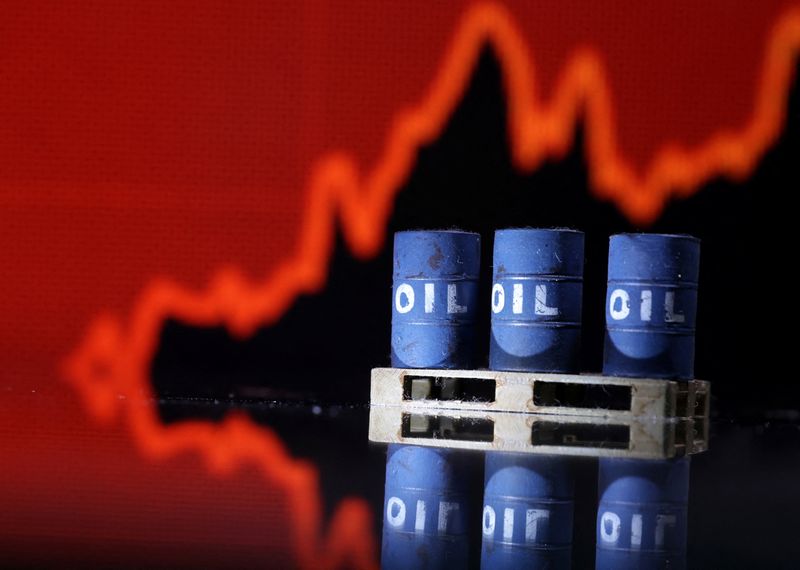
Brent futures rose to $63.13/bbl and WTI to $59.27/bbl after OPEC+ reiterated a pause on production increases through Q1 and maintained voluntary cuts of roughly 3.24 million b/d, while agreeing to assess members’ max capacities for Jan–Sep 2026 to set 2027 baselines. Market upside was reinforced by geopolitical supply risks — US rhetoric toward Venezuela (which exports about 800k b/d largely to China) and weekend attacks on Russian energy infrastructure that forced the Caspian Pipeline Consortium to suspend loadings after drone damage at Novorossiysk; CPC shipments have averaged ~1.48m b/d this year, up ~200k b/d. The combination of deliberate supply restraint and fresh disruption risk is supporting oil prices and warrants continued close monitoring by macro and energy-focused funds.
Market structure: OPEC+’s pause (voluntary ~3.24m b/d) and the CPC loading suspension (≈1.48m b/d throughput risk) create a near-term supply squeeze that benefits large integrated producers (XOM, CVX), tanker owners and freight/insurance providers while disadvantaging exporters with constrained routes (Venezuela, Russian/Caspian shippers) and refiners dependent on stable heavy crude flows. Expect upward pressure on Brent/WTI in the short run (3–12 weeks) with potential for +10–25% spikes if additional outages occur.
Risk assessment: Tail scenarios include US-Venezuela military escalation removing ~500–800k b/d or a prolonged CPC outage >30 days—either could push Brent toward $80–100 in weeks; conversely OPEC+’s 2026 production planning and potential baseline increases for 2027 create a 6–24 month downside risk (oversupply). Immediate volatility (days-weeks) is geopolitical-driven; medium-term (3–9 months) depends on repair timelines and China demand sensitivity; hidden dependency: higher freight/insurance costs and rerouting materially add to delivered crude costs.
Trade implications: Tactical trades favor small, time-limited crude directional exposure and selective equities: overweight integrated majors and tankers, underweight pure U.S. shale. Use defined-risk options rather than naked futures—expect rising implied volatility on crude and energy names over next 30–90 days. Rebalance if Brent moves >+20% or if CPC resumes full loadings.
Contrarian angles: Markets may underprice shipping/insurance winners and overprice long-duration E&P exposure; consensus energy longs could be vulnerable if OPEC+ members secure higher 2027 baselines—this makes short-dated volatility plays and pair trades (integrated vs. pure E&P) superior to long-only bets. Historical parallels (short-lived rallies after supply outages) suggest profit-taking windows within 6–12 weeks.
AI-powered research, real-time alerts, and portfolio analytics for institutional investors.
Request DemoOverall Sentiment
mildly positive
Sentiment Score
0.25
Ticker Sentiment
