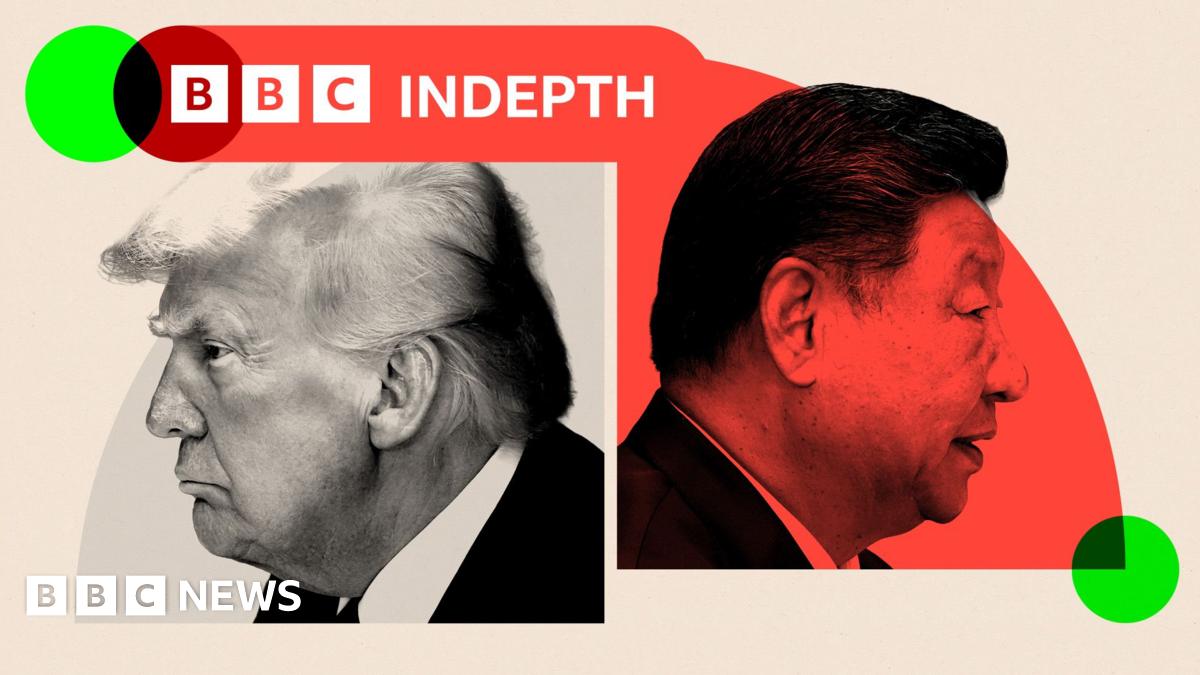
Trump’s Beijing summit with Xi centers on Iran, Taiwan, trade, and technology, with no immediate deal but significant implications for global markets. Key flashpoints include U.S.-China tariffs, rare earths, high-end chips, AI restrictions, and China’s role in easing tensions over the Strait of Hormuz, where Beijing processes around 90% of global rare earth minerals. The visit could influence future policy on Taiwan and supply chains, making it a potentially market-moving geopolitical event.
The market implication is less about a headline deal and more about a temporary truce in three linked arenas: rare earths, AI compute, and Taiwan risk premia. That favors companies with immediate China exposure but clean supply chains, while punishing firms whose margins depend on uninterrupted export-control regimes or China demand. The first-order move is likely a relief rally in megacap hardware and industrials if Beijing signals selective cooperation; the second-order move is a widening dispersion trade inside semis and tech hardware as investors separate “can ship to China” from “can ship only outside China.”
The more interesting lever is asymmetry. China’s leverage is strongest in materials and manufacturing chokepoints, but the U.S. retains the more valuable bottleneck in frontier AI compute and advanced chips. That means any bargain is likely to be tactical rather than structural: a chip-for-rare-earths swap could ease near-term supply pressure without changing the strategic direction of export controls. If that happens, beneficiaries are the firms with near-term China revenue and inventory exposure; losers are those priced for a faster de-escalation than policy reality can deliver.
Taiwan remains the tail-risk catalyst because language changes matter more than optics. Even a soft rhetorical thaw can compress defense and geopolitical hedges for days to weeks, but the absence of enforceable commitments leaves the risk of a snapback high over 1-3 months. Consensus may be underestimating how quickly a “successful” summit can be reversed by one post from Washington or a military drill around Taiwan, making short-dated vol sales dangerous unless hedged with upside convexity. The better trade is to lean into temporary relief while owning protection against a policy reversal.
The contrarian angle is that the biggest beneficiary may not be the obvious U.S. winners but Chinese capex names tied to automation, electrification, and materials processing. If Washington eases even modestly on certain chip flows, Beijing can accelerate domestic substitution faster than the market expects, which could make the eventual competitive pressure on U.S. hardware worse, not better, over 6-12 months.
AI-powered research, real-time alerts, and portfolio analytics for institutional investors.
Request DemoOverall Sentiment
neutral
Sentiment Score
-0.05
Ticker Sentiment
