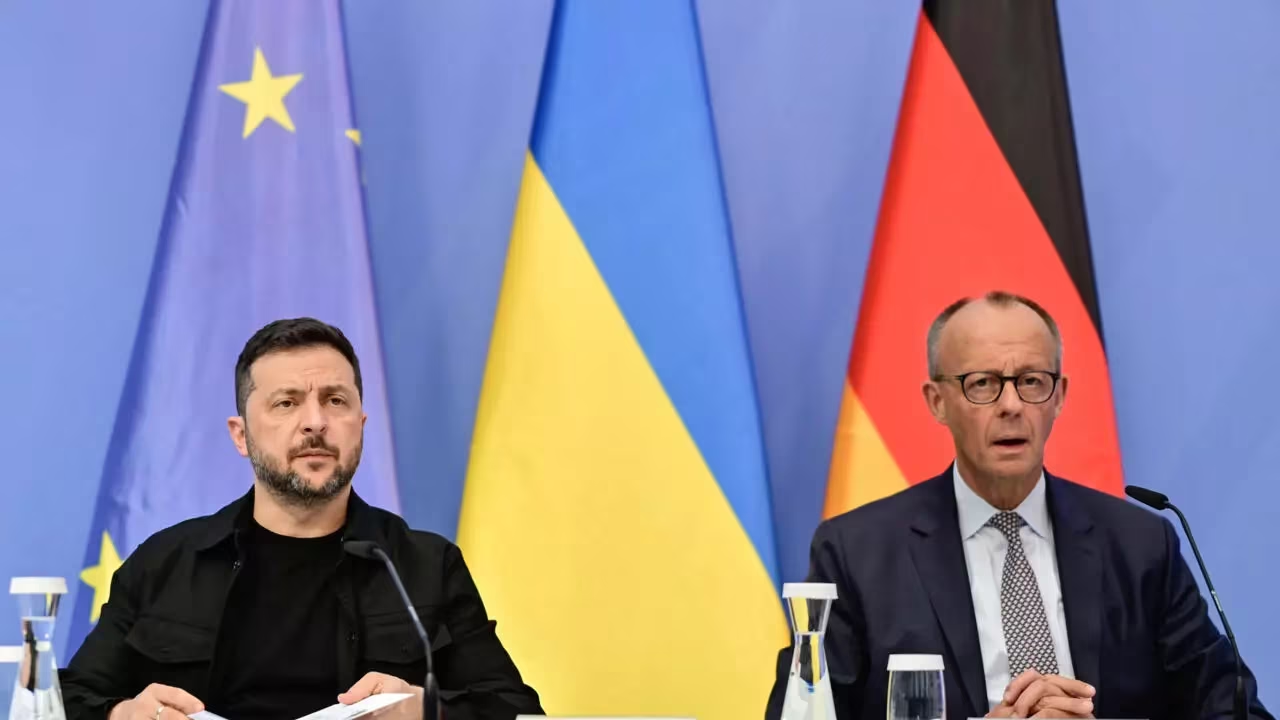
German Chancellor Merz publicly urged President Zelensky on Jan. 6 in Paris to ensure young Ukrainian men remain in-country and perform military service, explicitly calling for Ukraine to prevent men aged 18–22 from leaving for Germany, Poland or France. The comments, a public confirmation of a position Merz previously raised by phone, effectively call on Kyiv to revoke an August exemption that allowed those men to exit, with implications for military manpower, refugee flows and relations between Ukraine and EU states.
Market structure: A public push by Germany to keep Ukrainian men in-country raises the probability of a longer, manpower‑intensive conflict; direct winners are large defense primes with production capacity and order backlog (material suppliers, munitions, armored vehicle builders) while European consumer, travel and migrant‑reliant service sectors are likely losers over the next quarters. Competitive dynamics favor incumbents (Lockheed, RTX, Rheinmetall) that can scale production quickly; smaller OEMs face order‑book pricing pressure and multi‑quarter lead times that support margin expansion for market leaders.
Risk assessment: Tail risks include rapid escalation (Russian strikes on NATO logistics or energy cutoffs) producing >20–30% spikes in oil/gas within weeks and equity drawdowns of 10–20%; immediate (days) impacts center on FX and front‑month energy volatility, short‑term (1–3 months) on sovereign spreads and defense order announcements, long‑term (6–24 months) on sustained rearmament and EU fiscal shifts. Hidden dependencies: remittance flows to Poland/Germany, German coalition stability, and EU parliamentary votes on aid; catalysts are formal Ukrainian policy changes, major EU funding packages, or election outcomes in Germany/Poland.
Trade implications: Expect rotation into defense/energy and into safe‑haven bonds; implement concentrated, time‑boxed exposures (6–12 months) to defense equities and Brent, hedged with FX and travel/leisure shorts. Options are useful: buy 6–12 month call spreads on defense ETFs/tickers and volatility straddles around policy decision windows (30–60 days).
Contrarian angles: Consensus may underprice the duration and size of European rearmament—2014 showed multi‑year upside for defense names; conversely, markets may overreact in the near term, creating buying opportunities in European industrials after an initial risk‑off. Unintended consequence worth watching: reduced migration could tighten European labor markets, lifting wages and core inflation, which would keep ECB policy firmer and pressure European equities independent of war news.
AI-powered research, real-time alerts, and portfolio analytics for institutional investors.
Request DemoOverall Sentiment
mildly negative
Sentiment Score
-0.25
