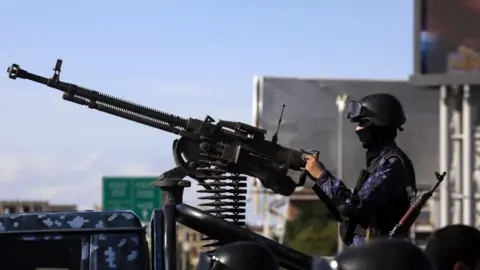
Houthis launched a salvo of ballistic missiles against Israel, marking the group's first direct attack in the US-Israel–Iran conflict and raising risks of wider escalation. From Nov 2023 to early 2025 the Houthis carried out almost 200 attacks on Red Sea shipping, damaging 30+ vessels and prompting major shippers to reroute around southern Africa; roughly 15% of global seaborne trade transits the Red Sea while about 20% of global oil and LNG typically passes through the Strait of Hormuz. Expect upward pressure on energy prices, higher shipping costs and longer lead times if attacks or closures persist, creating meaningful downside risk to global growth and supply chains.
A durable risk premium is being priced into Red Sea / Bab al-Mandeb transit economics: re-routing via the Cape typically adds ~4,000–6,000 nm and 8–14 days per voyage on Asia–Europe and Middle East–Asia lanes, raising bunker burn per VLCC by ~$250k–$450k and per containership by $300–$700/TEU on marginal voyages. That incremental cost quickly flows into spot freight and tanker timecharter rates; every $300k extra bunker on a VLCC is roughly a $10–20k/day increase in required TCE, which supports tanker owner earnings for as long as the route disruption persists.
War-risk insurance and P&I premiums amplify the effect: war-risk spikes of 2–5x standard levels can add an immediate 10–25% to voyage breakevens for container and crude carriers, prompting shippers to either pass cost to cargo owners or pause voyages — both outcomes materially lift spot freight and tanker utilization. If escorts/naval solutions are implemented, credits to the upside compress rapidly because many freight spreads reflect pure transit-time risk rather than fundamental cargo scarcity.
Time horizons matter: in days–weeks expect volatility in container rates (FFAs), tanker TC rates and war-risk premium notices; in months see fixed contract roll-ups, charter re-pricing and container line earnings revisions; in years, persistent insecurity can accelerate long-term modal shifts (nearshoring, pipeline builds, inventory layering) that permanently divert 5–15% of certain trade flows. Reversal catalysts include credible de-escalation, sustained naval corridor protection, or a diplomatic settlement that restores confidence; conversely, escalation into broader Gulf chokepoints (Strait of Hormuz) creates asymmetric upside to energy and shipping-risk trades.
AI-powered research, real-time alerts, and portfolio analytics for institutional investors.
Request DemoOverall Sentiment
strongly negative
Sentiment Score
-0.70
