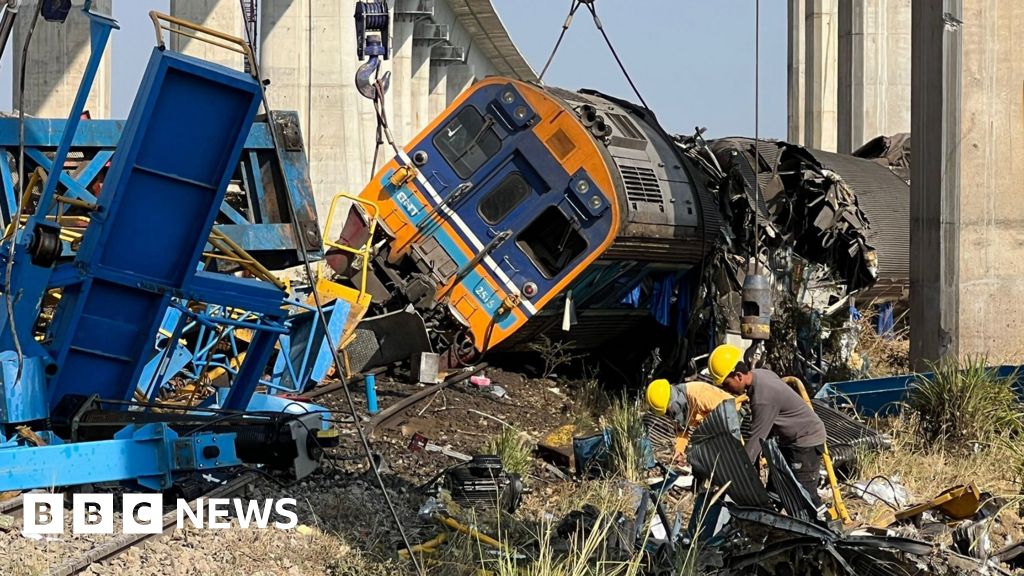
A construction crane collapsed onto a Bangkok-to-Ubon Ratchathani passenger train in north-east Thailand, killing at least 32 people and injuring 66 of about 171 passengers; several carriages derailed and one caught fire. The crane was working on the China-backed US$5.4bn Bangkok-Nong Khai high-speed rail project, and the Italian-Thai Development Company—responsible for the Lam Takhong-Sikhio section—faces legal action from the State Railway of Thailand; initial carriage damage is reported at over 100 million baht (~US$3.1m). The incident raises material legal, regulatory and reputational risks for the contractor, which has prior safety-related controversies, and has prompted calls from the prime minister for accountability.
Market structure: The immediate winners are global insurers/reinsurers (pricing power for project/reconstruction insurance) and large, well-capitalized EPC contractors that can win re‑bids; the direct loser is Italian‑Thai Development (the named contractor) and smaller Thai contractors and sub‑suppliers who face legal, insurance and bonding headwinds. Expect localized demand destruction for heavy‑lift services and precast suppliers for 3–6 months while investigations and safety re‑inspections pause sections of the Bangkok‑Nong Khai HSR; project contractors with >20% revenue tied to that corridor face meaningful cash‑flow risk.
Risk assessment: Tail risks include government suspension/cancellation of China‑backed sections or cascading warranty/claim exposure that could raise project costs by 10–30% and push contractor defaults; legal and reputational fallout could widen Thai corporate CDS by 25–75bp over 3–12 months. Immediate (days) risk is equity/FX weakness and litigation headlines; short‑term (weeks–months) is claim quantification and insurance filings; long‑term (1–3 years) is higher project insurance and capital costs across Thai infrastructure.
Trade implications: Hedging Thailand exposure and taking selective longs in reinsurers make sense: structural winners are large reinsurers and global EPCs with low Thai exposure; losers are mid‑cap Thai contractors and listed local suppliers. Cross‑asset: expect modest THB pressure, +10–50bp widening in Thai credit spreads if incidents multiply, and short‑dated volatility in SET and contractor bonds; use 1–3 month options to express views.
Contrarian angles: The market may overreact to one contractor’s failure — high‑quality Thai industrials and diversified contractors with <15% HSR revenue could be oversold if corrections exceed 10% without balance‑sheet impairment. Historical parallels (major construction accidents) show 6–12 month mean reversion once investigations conclude and insurance reserves are set; the key mispricing is fear of project cancellation rather than predictable litigation and insurance settlement timelines.
AI-powered research, real-time alerts, and portfolio analytics for institutional investors.
Request DemoOverall Sentiment
moderately negative
Sentiment Score
-0.50
