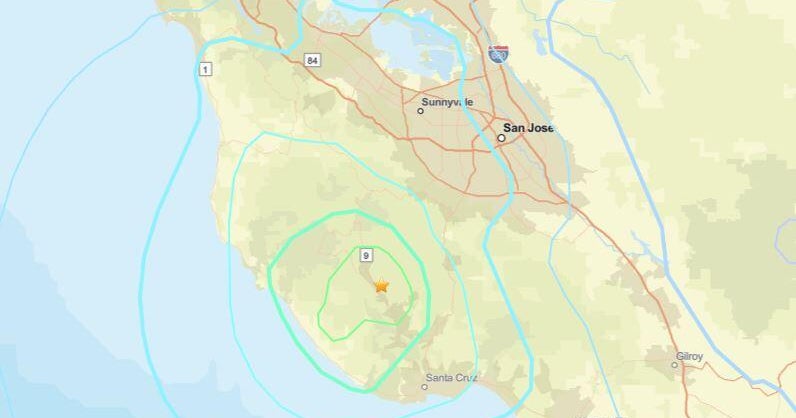
Magnitude 4.6 earthquake struck near Boulder Creek in Santa Cruz County at 1:41 a.m. local, depth ~6.2 miles (initially reviewed as 4.9 then downgraded). USGS forecasts up to nine aftershocks ≥M3 in the next week with probabilities: 60% chance of M≥3, 14% chance of M≥4, and 2% chance of M≥5, and advises residents to expect aftershocks and follow safety guidance (Drop, Cover, Hold on). Strong shaking was reported locally and light shaking across the Bay Area; monitor for localized infrastructure, housing or utility impacts, but event is unlikely to have material market-wide effects.
This event will act as a catalyst to reprice near-term seismic risk and accelerate the latent retrofit procurement cycle in the Bay Area. Expect municipal and private owners to prioritize seismic assessments and small-to-medium retrofit projects that have short procurement windows (3–18 months) and high margin for engineering/aggregate suppliers versus new-build contractors.
Insurance and reinsurance markets will treat this as an information event more than a loss event; absent a larger shock, the primary impact is on risk perception and premium spreads for earthquake coverage and cat-reinsurance renewal terms over the next 1–4 quarters. That perception change can widen secondary effects: higher cost of capital for exposed real-estate owners, potential uptick in localized claims-management staffing, and a reallocation of municipal capex toward resilience rather than discretionary infrastructure.
Market noise over the next week (aftershock chatter, social media, local inspections) can produce short, tradable dislocations in small-cap contractors, materials names, and regional muni bonds; conversely, a quiet outcome will create a reversion opportunity in selectively sold-down insurers/reinsurers. Our dominant operational read: favor liquid exposure to firms that convert retrofit demand into backlog within 6–12 months (engineering + materials) and keep portfolio-level hedges for a low-probability larger event that would pressure regional credit and equity risk premia.
AI-powered research, real-time alerts, and portfolio analytics for institutional investors.
Request DemoOverall Sentiment
neutral
Sentiment Score
0.00
