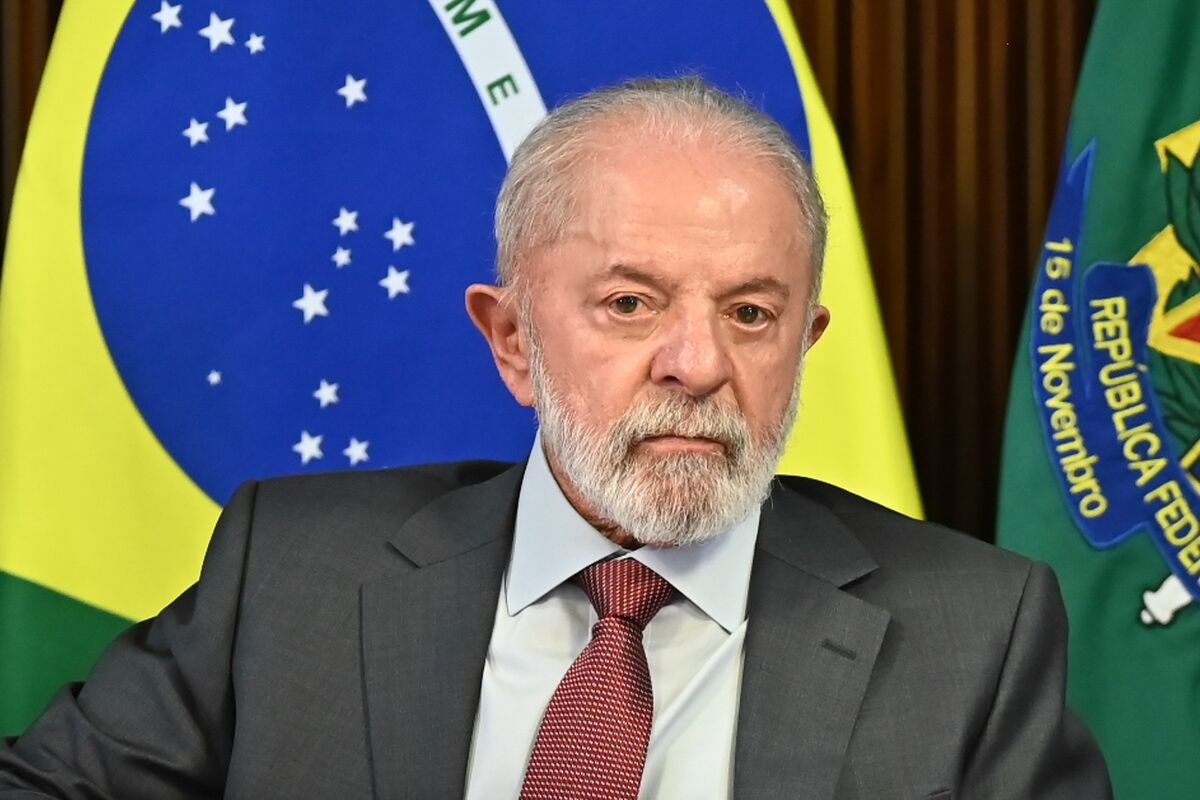
President Trump reported a constructive call with Brazilian President Luiz Inacio Lula da Silva in which they discussed trade and U.S. sanctions previously imposed on Brazilian officials. Trump characterized the conversation as positive, signaling an improvement in bilateral ties that could modestly reduce geopolitical risk and ease trade frictions—an incremental positive for Brazil-exposed assets and trade-sensitive sectors, but unlikely to be market-moving on its own.
Market structure: Easing US-Brazil tensions (talks on sanctions/trade) raises the probability of lower political premia on Brazilian assets — beneficiaries include Brazilian exporters (materials, agri, energy) and the sovereign credit curve; losers are firms/ETFs that currently short Brazil or price in persistent political risk. Expect incremental market-share gains for Brazil in agricultural and mineral exports within 3–12 months if tariff/sanctions frictions fall by >50% relative to today, supporting stronger pricing power for VALE and commodity-linked Brazilian names.
Risk assessment: Key tail risks are a) talks proving cosmetic (no policy change) and b) US domestic political volatility reversing conciliatory stance — either could reprice BRL by >5% in weeks. Immediate impact (days) is likely muted; short-term (4–12 weeks) will be driven by concrete steps (sanctions rollbacks or trade MOUs); long-term (6–24 months) hinges on formal trade agreements and investment flows that materially compress Brazil sovereign CDS spreads by 50–150bps.
Trade implications: Tactical trades favor selective EM/Brazil exposure — targeted longs in EWZ and VALE capture idiosyncratic upside; hedge with shorts in global miners (RIO) to isolate Brazil-specific policy effect. Use FX/option plays (BRL calls or BRL forwards) to express currency view; expect BRL to appreciate 2–6% on confirmed easing, which would boost local-currency bond returns and EM credit spreads.
Contrarian angles: Consensus may underprice implementation risk — markets often rally on headlines but reverse if no legal/administrative actions follow in 30–90 days. Historical parallels: headline-driven EM rallies (e.g., post-diplomatic thaw) have delivered 5–15% equity moves followed by mean reversion if catalysts stall. Unintended consequence: stronger BRL could pressure commodity exporters' USD revenue translation and Petrobras (PBR) domestic-politics sensitivity could introduce idiosyncratic downside despite macro improvement.
AI-powered research, real-time alerts, and portfolio analytics for institutional investors.
Request DemoOverall Sentiment
neutral
Sentiment Score
0.10
