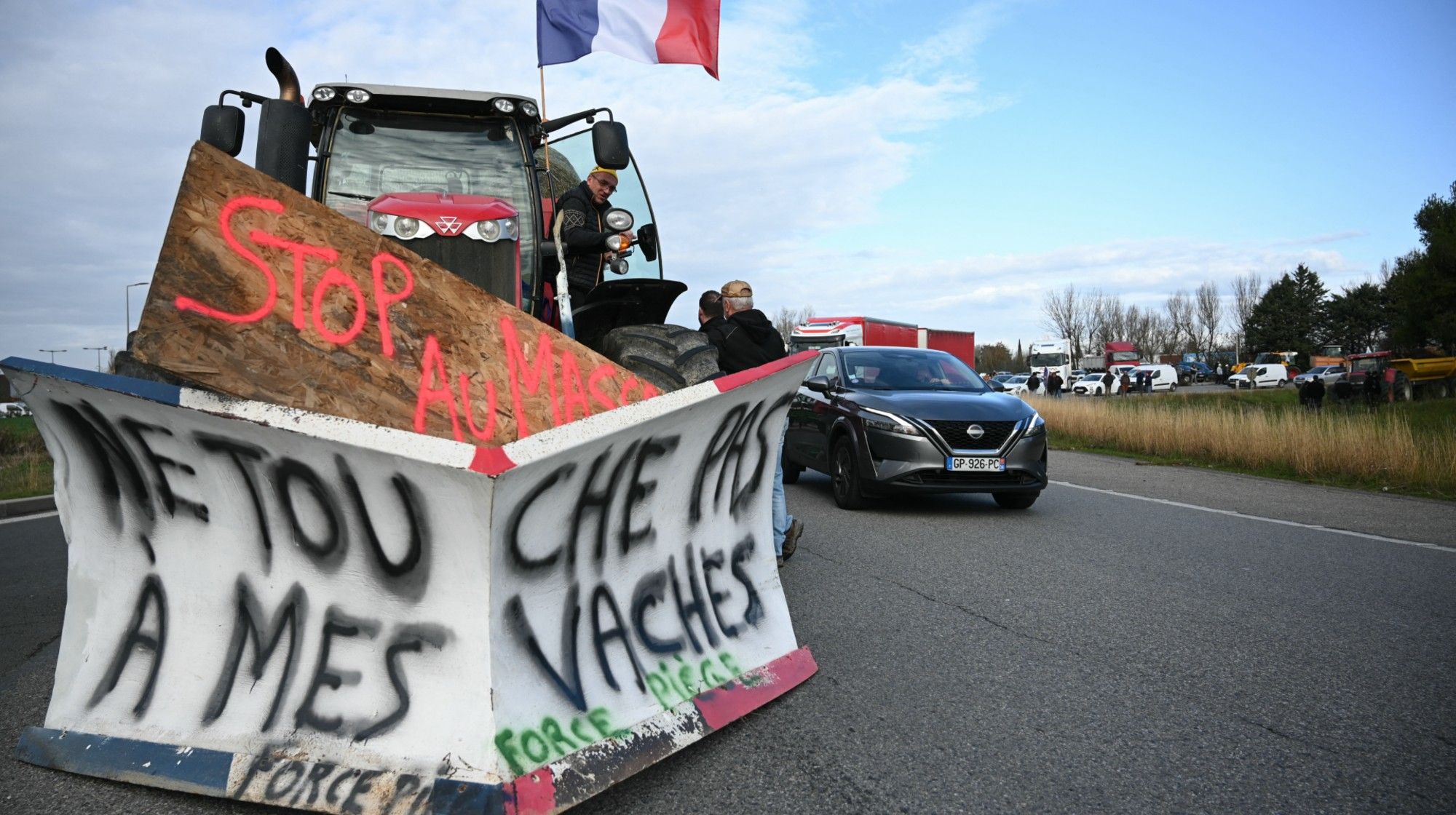
Widespread protests by French farmers against government orders to cull entire herds over lumpy skin disease have blocked motorways and targeted government buildings, heightening political risk and straining veterinary resources. The government is pursuing a mass vaccination drive—aiming to inoculate 1,000 farms in Ariège by Dec. 31 and about 750,000 cattle nationwide—while critics warn the blanket culling policy is excessive; unions and farmers link the unrest to broader trade grievances including opposition to the EU-Mercosur deal now deferred to early 2026. The dispute creates logistical challenges for disease containment, risks localized disruption to cattle supply chains and export flows, and raises short-term downside pressure on sentiment in agricultural commodity and rural-exposed sectors.
Market structure: Immediate winners are animal-health vaccine makers and cold-chain/logistics providers — 750k cattle slated for vaccination implies material incremental demand for vaccines and on‑farm services over 1–6 months. Losers are French cattle producers, regional beef processors and short‑supply wholesalers facing potential herd culls; a localized supply shock could lift French beef prices +5–15% over 1–3 months and raise input margin pressure for retailers. Competitive dynamics favor global animal‑health incumbents (Zoetis ZTS, CEVA.PA) with scale to supply mass vaccination; fragmented local vets and small producers lose pricing power.
Risk assessment: Tail risks include escalation into a national agricultural strike that disrupts road freight and exports (0.1–0.5% GDP shock scenario) pushing French 2s10s OAT spreads +10–30bps and EUR -1–2% within 1–3 months. Hidden dependencies: veterinarian capacity and political pushback could stall vaccination, converting a manageable outbreak into prolonged trade bans (6–12+ months). Catalysts: major court rulings, PM resignation or EU Mercosur votes could rapidly amplify market moves.
Trade implications: Favor long exposure to large animal‑health names: initiate 1–2% position in ZTS (3–12 month horizon) and selective exposure to CEVA.PA (Europe) to capture vaccine premium; tactically long CME Live Cattle (LC) call options for Mar‑2026 (0.5–1% notional) to play potential supply-driven price jumps. Hedge country/political risk with a 3‑month EURUSD put (strike ~1.05, 0.5% notional) and buy EWQ (iShares MSCI France) 3‑month protective puts if protests widen.
Contrarian angles: Consensus overweights political pain; underappreciated is that rapid, centralized vaccination (if achieved in 6–8 weeks) will normalize prices and leave vaccine makers with one‑time revenue boosts, not persistent margins. Consider pair trades: long ZTS (vaccine/scale) and short small-cap French meat processors/retailers (domestic exposure) for 3–9 months to capture normalization vs structural farm stress mispricing.
AI-powered research, real-time alerts, and portfolio analytics for institutional investors.
Request DemoOverall Sentiment
moderately negative
Sentiment Score
-0.45
