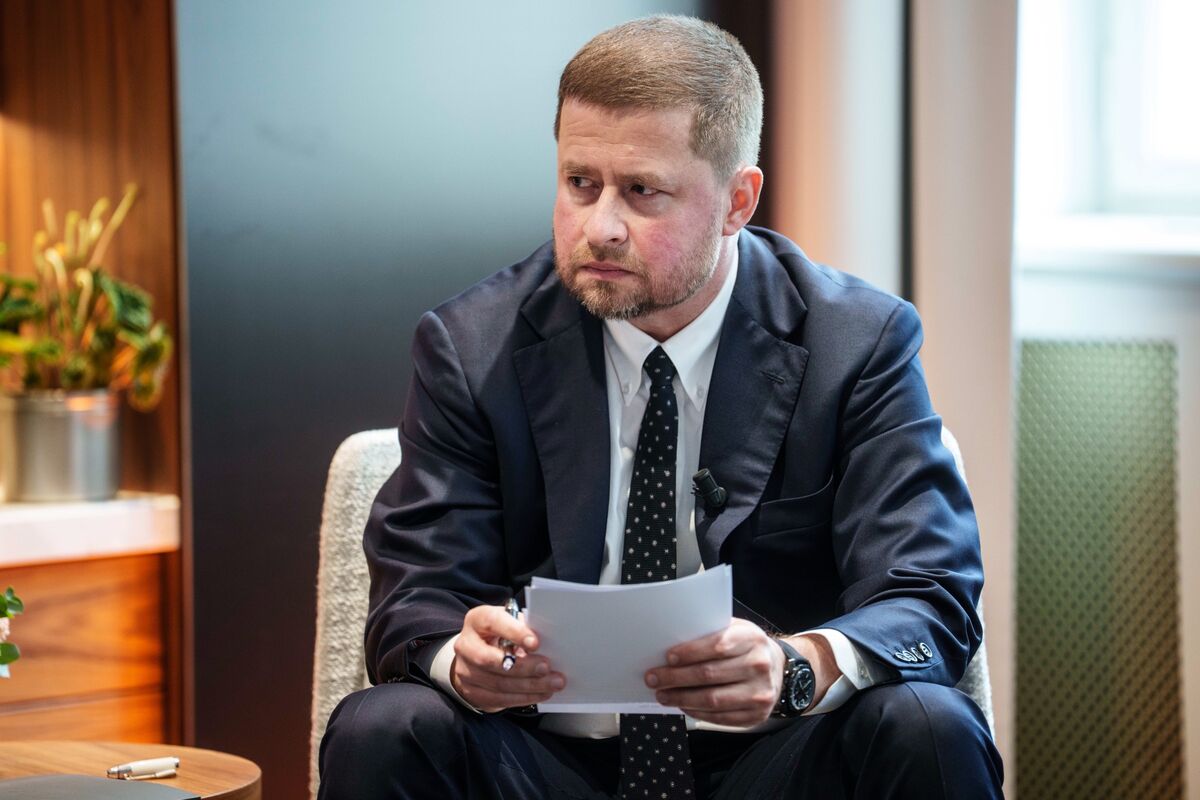
Czech central bank governor Ales Michl stated that the Czech Republic's independent monetary policy and strong koruna enable better inflation control than adopting the euro would. Speaking at a Bloomberg event in Prague, Michl emphasized the koruna's crucial role in taming price growth, suggesting the country will maintain its current currency for the foreseeable future.
Czech National Bank Governor Ales Michl has reaffirmed the central bank's commitment to an independent monetary policy centered on the koruna, asserting its superiority over euro adoption for managing domestic inflation. Michl explicitly stated that the koruna facilitates "very low inflation for a very long time" and serves as a "strong currency" critical in taming price growth. This stance, expressed at a Bloomberg event in Prague, signals a continued go-slow approach to euro adoption, emphasizing the perceived benefits of monetary sovereignty for the Czech economy. The provided sentiment score of 0.3 ("mildly positive") likely reflects the governor's confidence in the current framework's efficacy, while the low market impact score of 0.35 suggests this is a reinforcement of an established policy rather than a new market-moving development. The key themes identified – Monetary Policy, Inflation, Currency & FX, and Emerging Markets – underscore the relevance of this position for understanding Czech economic strategy and its implications for price stability and the koruna's valuation.
AI-powered research, real-time alerts, and portfolio analytics for institutional investors.
Request DemoOverall Sentiment
mildly positive
Sentiment Score
0.30
