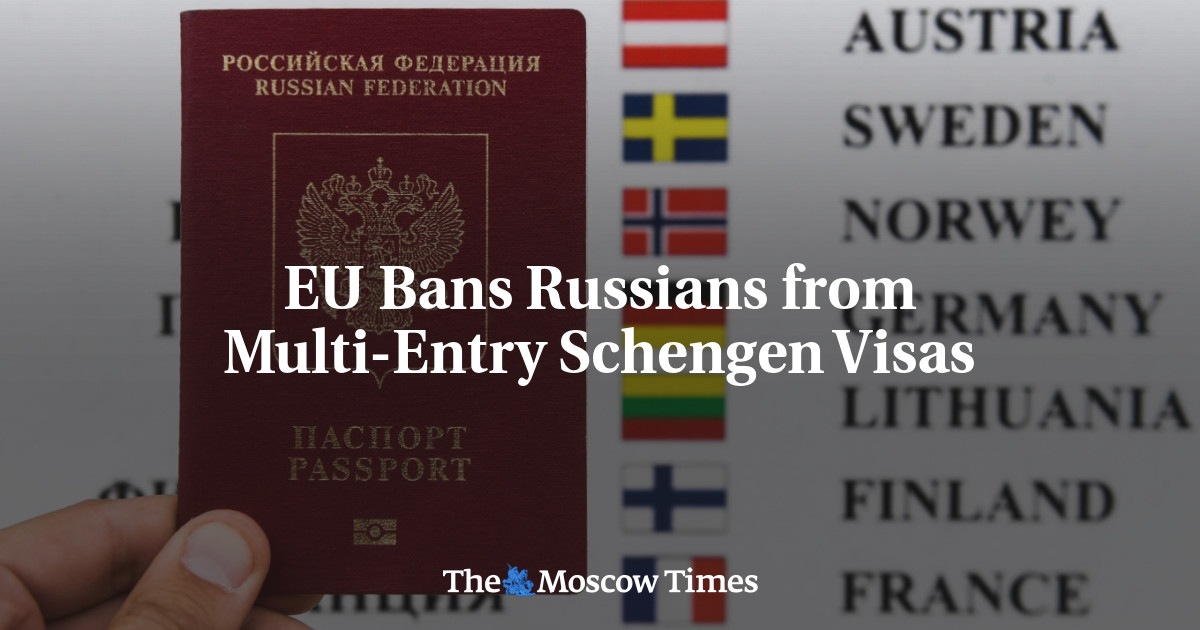
The European Union has ceased issuing multi-entry visas to Russian citizens, now requiring them to apply for a new visa for each trip, a move aimed at mitigating security risks and countering Russian influence. This policy, which subjects Russian visa applications to enhanced scrutiny, builds on previous restrictions and is part of the EU's broader strategy to utilize visa policy as a geopolitical instrument against Moscow.
The European Union has implemented a significant policy shift, discontinuing multi-entry visas for Russian citizens, now mandating individual applications for each trip. This measure is explicitly aimed at enhancing security scrutiny and countering Russian influence, building upon previous restrictions enacted in 2022. The EU cites the need to mitigate potential security risks and curb Russian "sabotage, disinformation and drone incursions".
Despite the restrictive nature, the direct market impact of this policy change is assessed as low (0.1), suggesting limited immediate financial market disruption. Russian Schengen visa issuances have already seen a substantial decline, from 4 million in 2019 to 552,000 in 2025, indicating this action intensifies an existing trend rather than introducing a sudden shock.
This move underscores the EU's strategy to leverage visa policy as a geopolitical instrument, framing travel as a privilege rather than a right. While exceptions exist for humanitarian cases, the policy reflects a continued hardening of the EU's stance towards Moscow, with potential for further non-economic measures.
AI-powered research, real-time alerts, and portfolio analytics for institutional investors.
Request DemoOverall Sentiment
neutral
Sentiment Score
0.00
