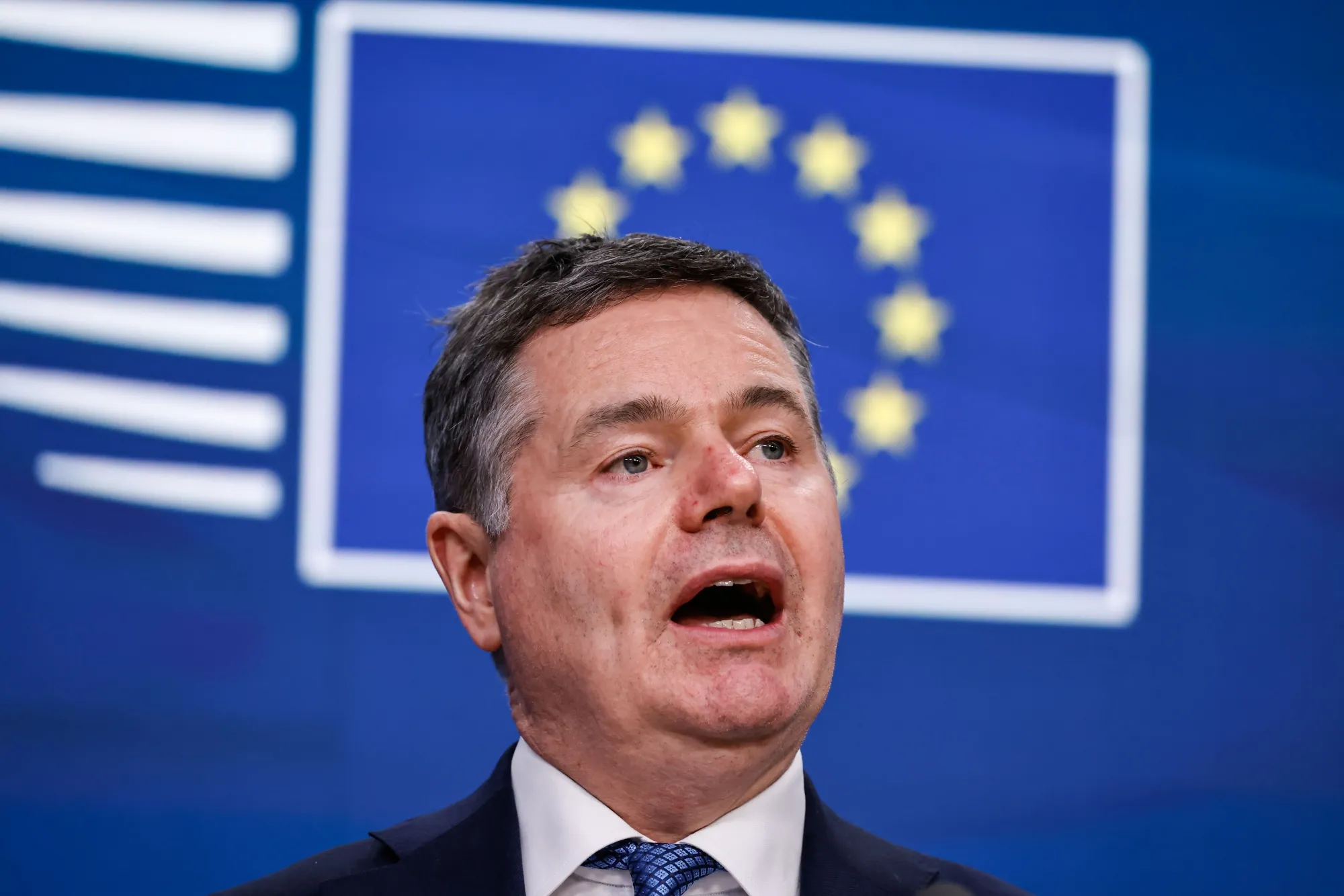
Ireland's Paschal Donohoe is poised for reelection as Eurogroup president for a third term, following the withdrawal of rival candidates. His continued mandate will prioritize strengthening the euro's international profile, advancing capital markets union, and exploring a digital euro. This occurs amidst significant pressure for increased Eurogroup dynamism and decisiveness, as internal divisions persist and the bloc seeks to leverage current geopolitical conditions to enhance the common currency's global standing.
Paschal Donohoe's expected reelection as Eurogroup president ensures leadership continuity for the 20-member currency bloc, however, it occurs amidst significant internal pressure for more decisive action. While his mandate includes ambitious goals such as advancing the capital markets union (CMU), completing the banking union, and developing a digital euro, progress on these fronts remains stalled by entrenched divisions among member states, notably Germany and Italy. Criticism from key countries including France, Spain, Germany, Italy, and the Netherlands highlights a perception that the Eurogroup is effective during crises but lacks nimbleness in normal times. This inertia is particularly critical given the current geopolitical context, which presents both challenges, like funding rearmament, and opportunities, such as leveraging the US dollar's weakness to enhance the euro's international role as advocated by ECB President Christine Lagarde. The proposal by France and Spain to form a 'coalition of the willing' to advance the CMU signals a risk of fragmentation, suggesting that Donohoe's third term will be defined by his ability to forge consensus on these difficult issues against a backdrop of rising urgency.
AI-powered research, real-time alerts, and portfolio analytics for institutional investors.
Overall Sentiment
mixed
Sentiment Score
-0.10
