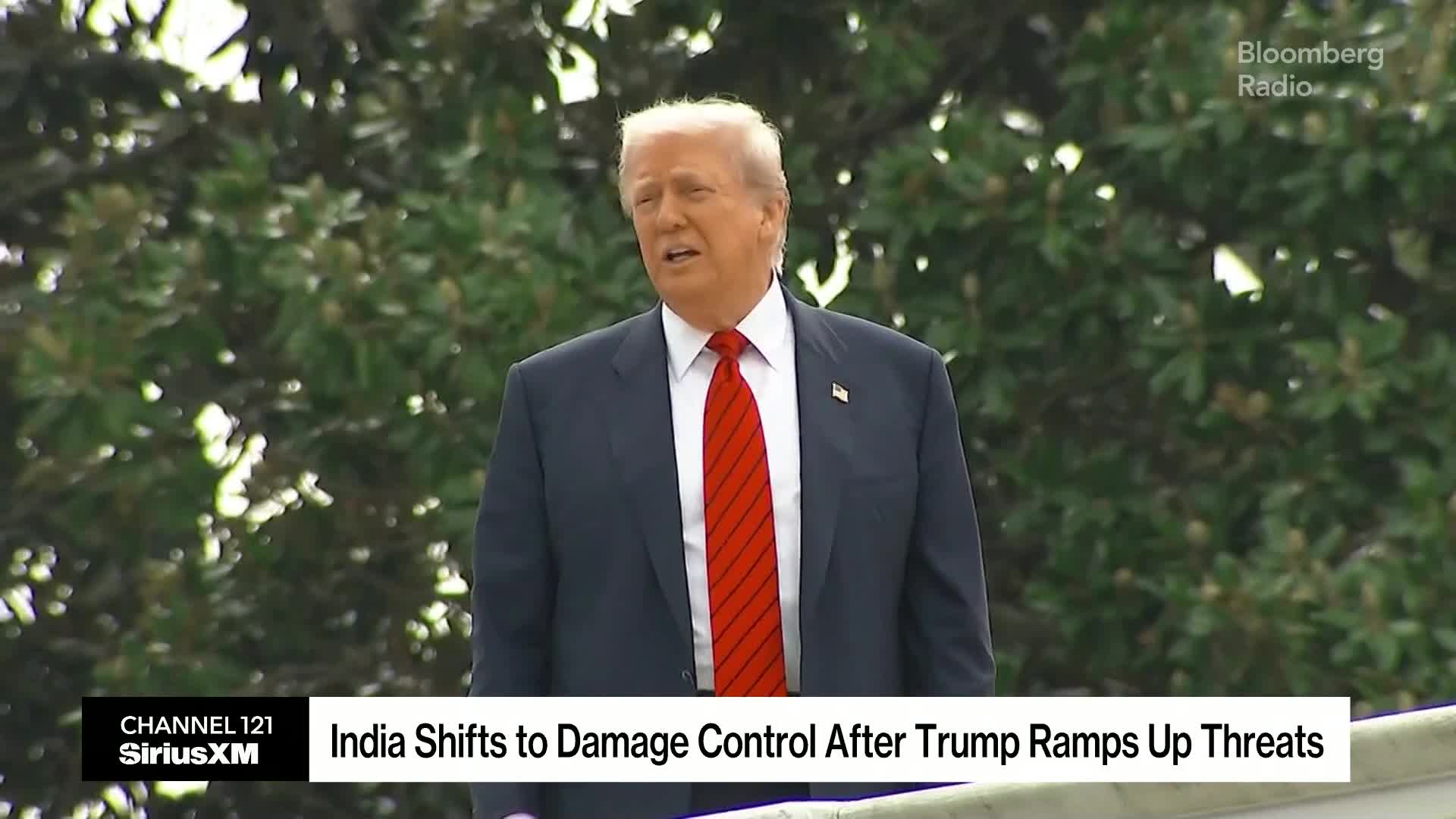
President Trump is escalating tariff threats against India, conditioning a cessation of increased duties on India halting its purchases of Russian oil. This move signals a significant linkage of U.S. trade policy with geopolitical objectives, potentially intensifying trade tensions between the two nations while pressuring India on its energy procurement strategy amid global sanctions against Russia.
The U.S. administration is escalating trade pressure on India by explicitly linking the threat of increased tariffs to India's continued procurement of oil from Russia. This development signifies a direct weaponization of U.S. trade policy to enforce geopolitical objectives, specifically the economic isolation of Russia. The hawkish tone and strongly negative sentiment associated with this news inject significant uncertainty into the U.S.-India trade relationship, which could disrupt critical supply chains and bilateral commerce. For India, this ultimatum creates a complex strategic challenge, forcing it to weigh its energy security and relationship with Russia against the risk of punitive economic measures from a key trade partner. The moderate market impact score suggests that while not yet a crisis, the materialization of these threats could have tangible negative consequences for global trade flows and energy market stability.
AI-powered research, real-time alerts, and portfolio analytics for institutional investors.
Request DemoOverall Sentiment
strongly negative
Sentiment Score
-0.60
