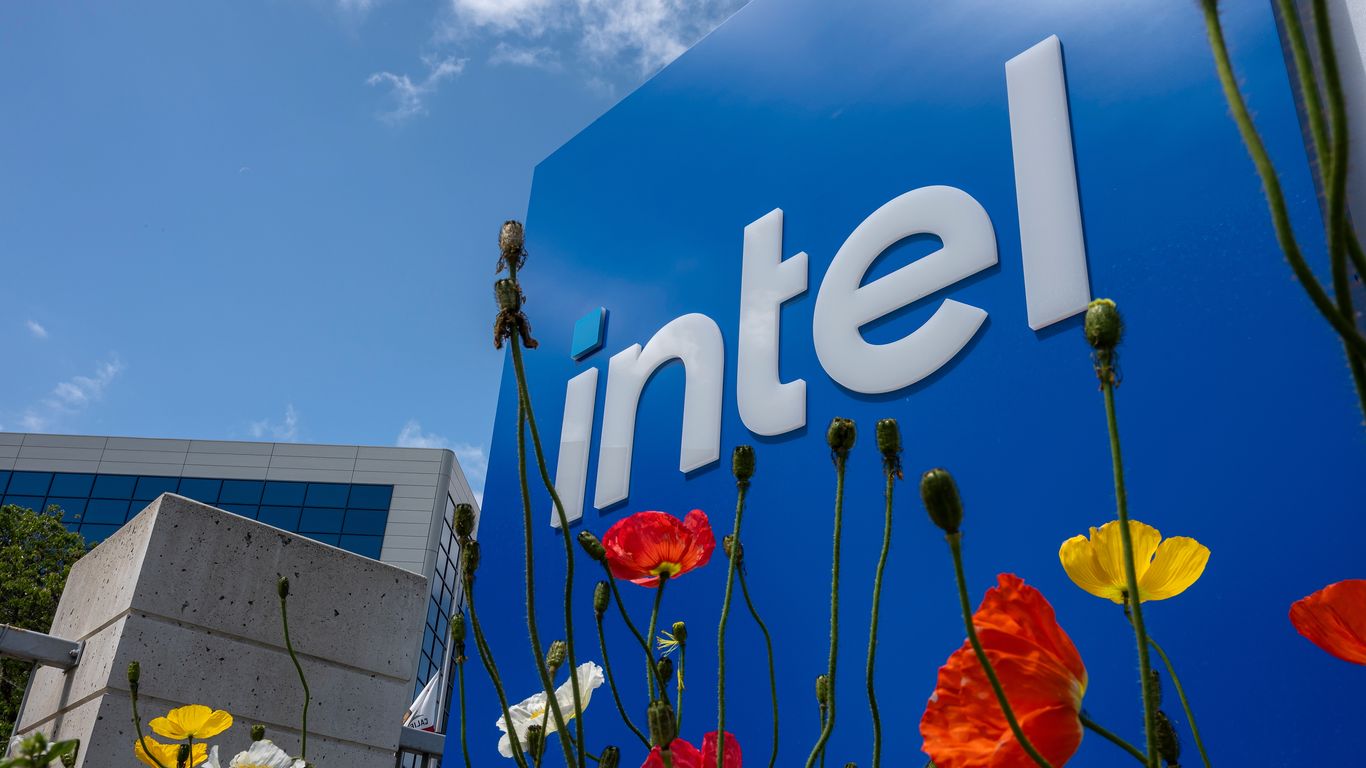
President Trump announced that chipmaker Intel has agreed to sell approximately a 10% equity stake to the U.S. government, a development seen as part of a new 'pay-me capitalism' approach and potentially a conversion of existing CHIPS Act loans. While Intel's stock rose on the news, official details remain unreleased, and significant questions persist regarding the mechanism for this equity conversion, given it was not contemplated by the original CHIPS Act, and whether other recipients of government funding will face similar equity demands.
President Trump's announcement that the U.S. government will acquire an approximate 10% equity stake in Intel Corp (INTC) introduces a significant, albeit uncertain, development for the chipmaker and U.S. industrial policy. While Intel's stock rose on the news, reflecting a positive per-ticker sentiment score of 0.5, no official details have been released by either the company or the government, leading to an overall mixed sentiment and a tone of uncertainty. The prevailing expectation is that this transaction would represent a conversion of loans previously earmarked for Intel under the CHIPS Act into equity. This approach is novel, as it was not contemplated in the original legislation, raising fundamental questions about the mechanism of such a conversion and whether this sets a precedent for other recipients of government funding. Furthermore, uncertainty remains regarding potential political pressure to bolster Intel's foundry business by directing Big Tech clients, a possibility that has received mixed signals from the administration. The lack of clarity on terms and the broader policy implications create a complex situation where the market's initial positive reaction is tempered by significant unresolved questions.
AI-powered research, real-time alerts, and portfolio analytics for institutional investors.
Overall Sentiment
mixed
Sentiment Score
0.05
Ticker Sentiment
