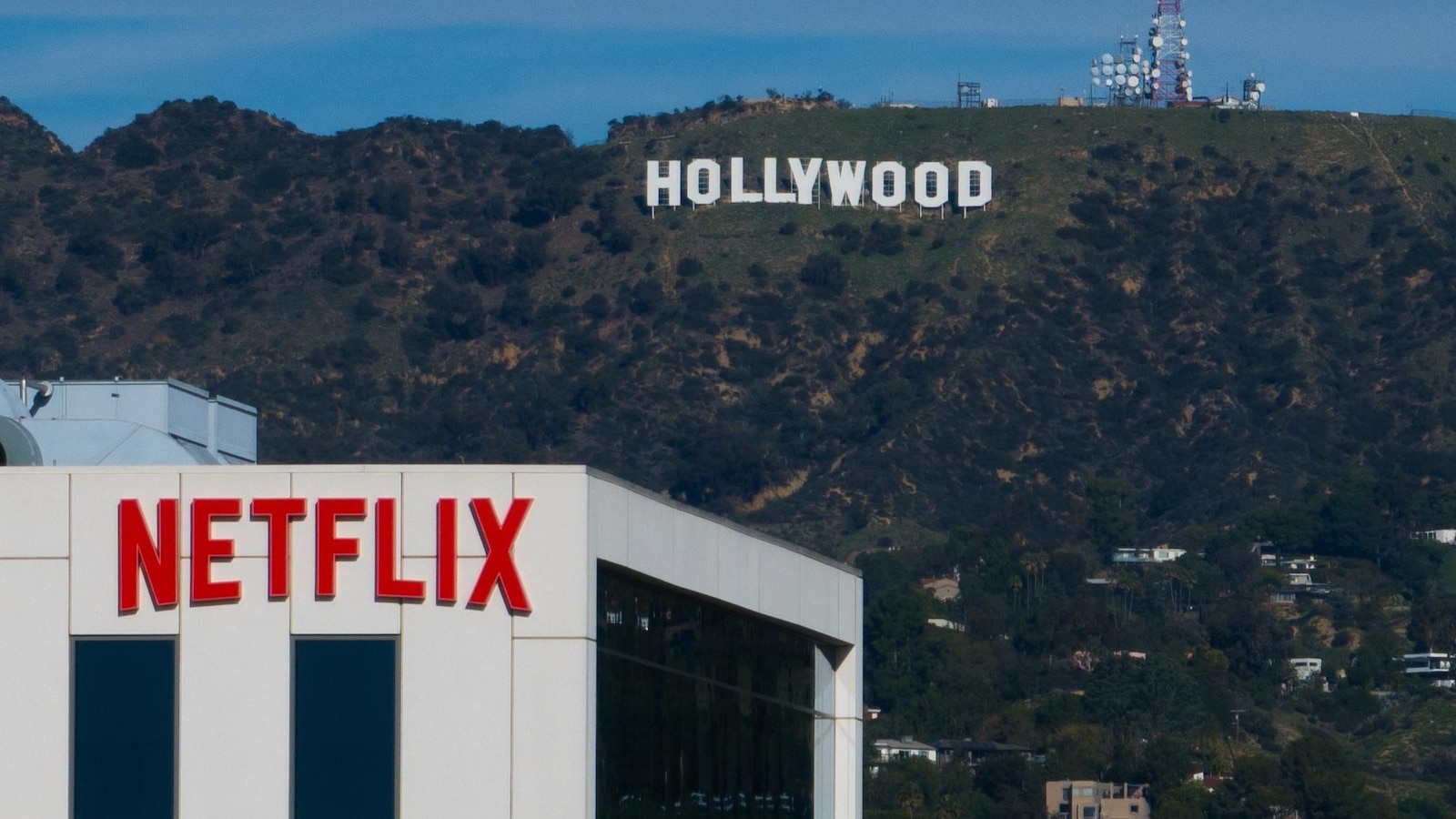
Paramount has sweetened its hostile $30-per-share cash bid for Warner Bros. Discovery — a $77.9 billion equity purchase (roughly $108 billion enterprise value including debt) — by pledging to fund Warner’s $2.8 billion breakup fee to Netflix and adding a “ticking fee” of $0.25 per share (approximately $650 million per quarter in aggregate) for each quarter after Dec. 31. The tender offer deadline was extended to March 2 (the third extension) even as valid tenders have fallen to ~42.3 million shares versus ~2.48 billion outstanding, Paramount has signaled a proxy fight, and the Justice Department is reviewing both the Paramount and Netflix deals amid antitrust concerns. Netflix’s competing all-cash studio-and-streaming offer values the transaction at roughly $27.75 per share (about $83 billion enterprise value including debt) with a sliding-scale valuation the companies say could range $21.23–$27.75 depending on the networks spinoff.
Market structure: Paramount’s sweetened $30 tender and 25¢/quarter ticking fee materially raises the cost of delay and increases pressure on marginal WBD holders; Paramount needs >50% of 2.48bn shares (>1.24bn) and currently sits at ~42.3m tendered, so the fight is still far from decided. A Paramount victory concentrates content + linear networks under a new private owner (scale benefits for advertising and distribution); a Netflix win (studio+streaming only) preserves a standalone networks public company and lowers combined enterprise value (Netflix's $27.75 floor, sliding to $21.23). Market supply-demand tightens for premium content rights under either consolidation scenario, boosting pricing power for surviving streaming giants.
Risk assessment: Tail risks include DOJ litigation/block (high‑impact, low probability but binary), proxy/financing failure for Paramount, or a deal-break litigation triggering the $2.8bn breakup payment. Immediate (days–weeks): tender flows and implied arb spreads will swing around March 2; short-term (weeks–months): regulatory outcomes and proxy fights; long-term (quarters) structural consolidation of content and ad markets. Hidden dependencies: Skydance financing capacity, WBD free‑float dynamics, and union/labor pushback that can delay integration and increase severance/operating costs.
Trade implications: Event‑driven arb is prime: if WBD trades ≤$28.50 (≥5% spread to $30), asymmetric long stock + protective puts targeting 3–6 month hold captures takeover premium; buy WBD credit if bonds widen >200bps. Pair trades: long WBD vs short NFLX (equal-dollar) to capture deal outcome asymmetry while hedging market beta; use options to cap loss (see specifics). Sector rotation: trim ad-dependent cable/network exposure by 2–4% and favor diversified streaming/content owners if regulatory path for consolidation clears.
Contrarian angles: Consensus focuses on a binary winner; less priced is the multi-month drag of proxy litigation and forced divestitures making a completed deal value-accretive but operationally messy. Historical parallel: AT&T-TimeWarner faced prolonged review but closed with conditions — implies a >30% chance of approval with remedies rather than outright block. Mispricing risk: WBD downside >15% if both bids collapse; upside limited if tender fails to reach threshold — asymmetric trade structures (call spreads + puts) preferable to naked positions.
AI-powered research, real-time alerts, and portfolio analytics for institutional investors.
Request DemoOverall Sentiment
neutral
Sentiment Score
0.05
Ticker Sentiment
