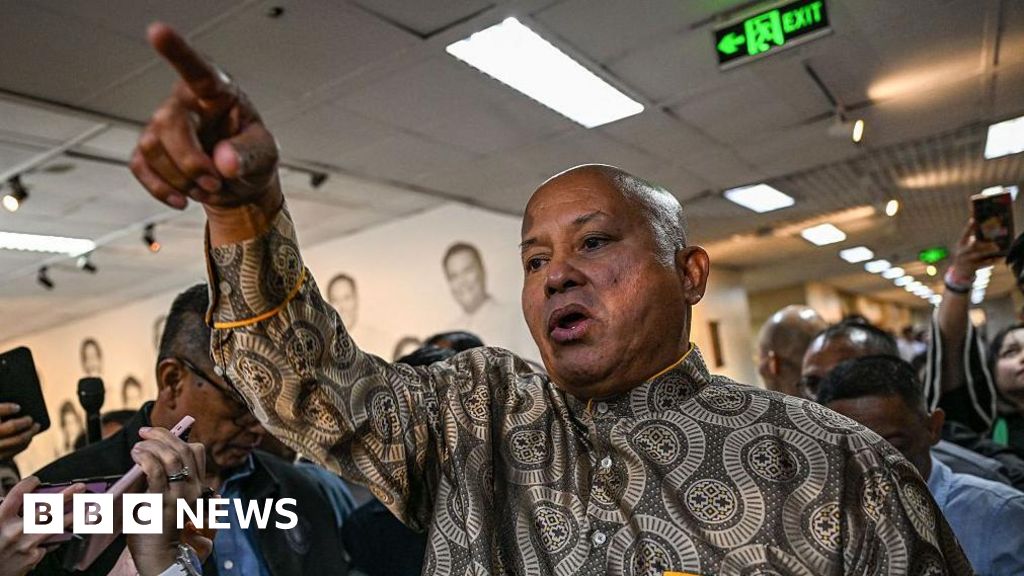
Philippine Senator Ronald dela Rosa faces an ICC arrest warrant tied to alleged killings during Duterte's drug war, while the Supreme Court declined to block enforcement and gave the Marcos government 72 hours to respond. Gunshots at the Senate triggered a lockdown and intensified the already sharp Marcos-Duterte political feud, with the Senate now shifting into an impeachment court for Vice-President Sara Duterte. The episode raises near-term political and governance risk in the Philippines, though it is not a direct corporate market event.
The immediate market read is not about direct economic spillover; it is about institutional fragility. When the Senate becomes both a sanctuary and an enforcement battleground, the probability of procedural delays, emergency rulings, and executive overreach rises, which typically widens the discount rate on domestic political risk rather than changing cash flows. That matters most for local banks, consumer discretionary, and anything levered to public capex or regulatory continuity, because the near-term issue is not regime change but policy paralysis and headline volatility. The second-order effect is a deterioration in governance credibility just as the state is trying to prove it can manage a high-profile international legal fight without triggering unrest. If the standoff lingers for weeks, the risk is less a one-day shock and more a slow bleed in foreign portfolio inflows, peso pressure, and higher required returns for Philippine exposure. In EM terms, this is the kind of event that can produce multiple compression even without a macro recession, especially if it feeds a narrative that succession politics are overtaking institutions. The biggest contrarian point is that the market may overestimate the durability of the current Duterte bloc’s leverage. A failed arrest or delayed enforcement is not the same as a legal victory; it may instead harden the state’s eventual response and raise the odds of a cleaner, more forceful move once the judiciary or executive coalesces. That creates a binary setup: short-term volatility can remain elevated, but the medium-term path likely reverts toward enforcement rather than impunity, which argues for trading the noise rather than assuming the conflict is structurally resolved. NWL is non-reactive here, so there is no ticker-specific fundamental read-through from the structured data. The investable edge is in political-risk expression via country proxies, FX, and any regional assets with elevated beta to Manila sentiment rather than in single-name corporate earnings.
AI-powered research, real-time alerts, and portfolio analytics for institutional investors.
Request DemoOverall Sentiment
moderately negative
Sentiment Score
-0.35
Ticker Sentiment
