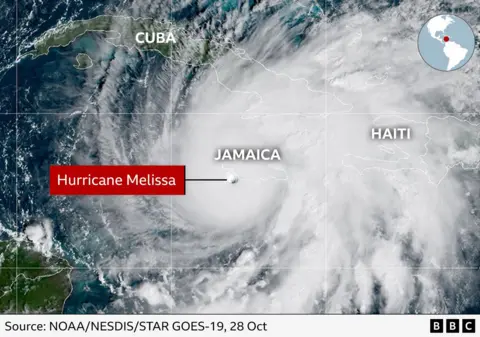
Hurricane Melissa, the strongest storm in modern Jamaican history, has caused widespread devastation across the island, leaving three-quarters of the country without power and resulting in significant infrastructure damage and fatalities. Key economic sectors, including agriculture in St Elizabeth and tourism in Montego Bay, have been severely impacted, with crops destroyed and major tourist hubs incapacitated. While Jamaica possesses a catastrophe bond to aid recovery efforts, the extensive destruction and the storm's rapid intensification, linked to climate change, signal substantial economic disruption and long-term rebuilding challenges for the nation.
Hurricane Melissa, the strongest storm in modern Jamaican history, has inflicted catastrophic damage across the island, resulting in an "extremely negative" sentiment and a high market impact score of 0.85. Initial reports confirm four fatalities and widespread power outages affecting three-quarters of the country, with significant infrastructure destruction evident in towns like Mandeville, which was "flattened," and Black River, described as "totally destroyed." The storm's 298 km/h winds surpassed Hurricane Katrina's intensity.
Key economic sectors face severe disruption. St Elizabeth, known as Jamaica's "breadbasket," has seen agricultural crops submerged and fields destroyed, posing significant financial recovery challenges for farmers. The vital tourism industry, centered in Montego Bay, is also heavily impacted, with the city split by floodwaters and hotels described as "disaster zones," indicating a prolonged recovery for this critical revenue stream.
While Jamaica possesses a catastrophe bond to aid recovery, the scale of "total devastation" reported by the Prime Minister suggests substantial long-term rebuilding efforts and fiscal strain. The storm's rapid intensification, linked to abnormally warm Caribbean waters and broader climate change trends, highlights an elevated and recurring risk profile for the island, necessitating a re-evaluation of future climate resilience investments.
AI-powered research, real-time alerts, and portfolio analytics for institutional investors.
Overall Sentiment
extremely negative
Sentiment Score
-0.90
Ticker Sentiment
