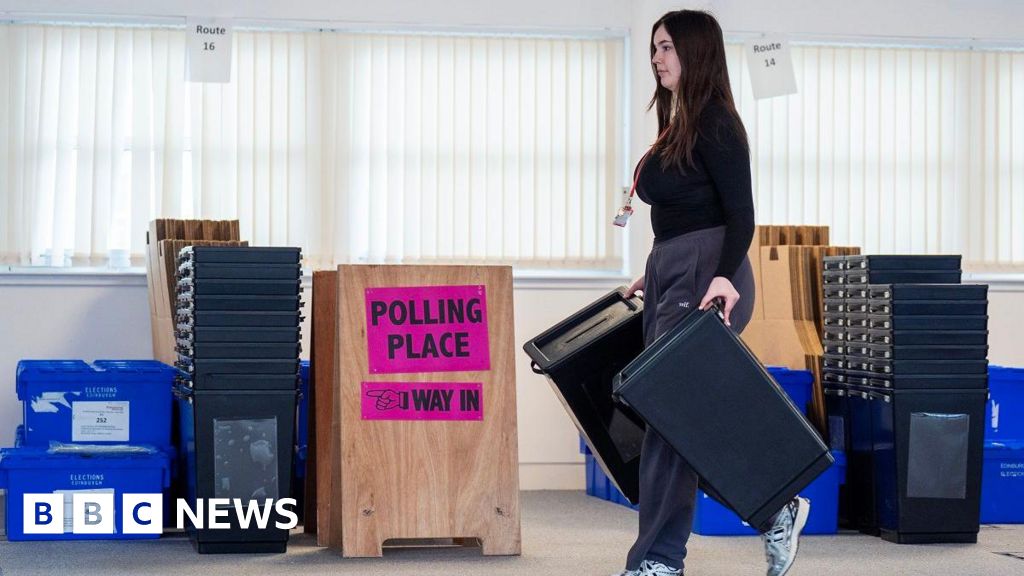
Millions of voters across England, Scotland and Wales are set to vote on Thursday 7 May in the largest set of polls since the 2024 general election. The elections will determine control of the Scottish Parliament, Welsh Senedd, dozens of English councils and six mayors, with results expected on Friday and over the weekend. The article is a broad political update with limited direct market implications.
This is less about immediate policy and more about the distribution of bargaining power inside the UK for the next 12-18 months. A meaningful anti-incumbent swing would not just weaken local governance; it would compress Labour’s room to maneuver on tax, spending restraint, and devolved funding negotiations, raising the odds of a more fragmented fiscal message into the next budget cycle. The market implication is not a generic “political risk” premium, but higher dispersion across domestic UK equities tied to public-sector spending, local transport, housing, and outsourced services. The second-order effect is that any result interpreted as punishment for national incumbents tends to hit names with explicit UK demand exposure even if their operations are globally diversified. Local councils and devolved administrations influence procurement cadence, contract renewals, and project timing, so the real earnings risk is a delay in order conversion rather than outright cancellations. That makes the near-term read-through sharper for small/mid-cap infrastructure, waste, education, and regional transport operators than for broad FTSE 100 exposure. The key tail risk is not one-night volatility but a policy reset in the subsequent 1-3 months if results force the government to sharpen the tax/spend debate. If the opposition narrative hardens, markets could start pricing a less predictable fiscal path and slower approvals for public-private projects, which would matter more for 2025-26 earnings than this week’s headlines. Conversely, if results are muddled and seen as status quo, the move should fade quickly because the event lacks direct central-bank or macro shock characteristics. Consensus is likely overestimating the signal from turnout optics and underestimating how localized these elections are. A noisy headline loss for Labour may not translate into national policy drift unless it is large enough to alter internal party cohesion or spending discipline. The better trade is to fade any indiscriminate UK beta selloff and focus on names where contract timing and public-sector exposure are actually measurable.
AI-powered research, real-time alerts, and portfolio analytics for institutional investors.
Request DemoOverall Sentiment
neutral
Sentiment Score
0.00
