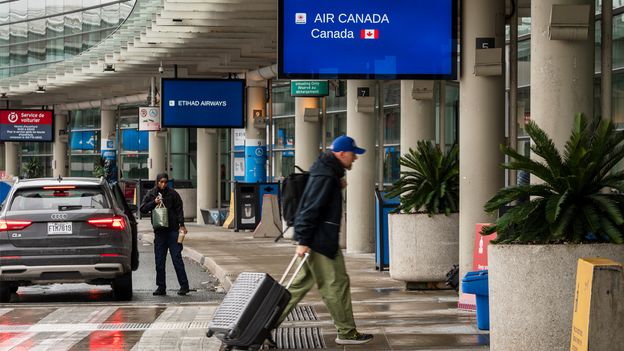
In response to political tensions and tariffs from the U.S., Canadian visits to the United States have fallen sharply — down 23% year-to-date (Jan–Oct 2025), roughly four million fewer visitors and an estimated $4bn revenue shortfall versus last year (Canadians were 28% of foreign tourists in 2024), with the U.S. Travel Association warning the trend could cost the U.S. up to $5.7bn. Border and tourism-dependent regions are feeling the impact (Vermont -30% Jan–Jul; Las Vegas -18% YTD) even as Canadians boost domestic travel and shift to other international destinations—Mexican arrivals are up nearly 12% YTD and spending in cities like Buenos Aires, Osaka and Copenhagen rose over 100% this summer. Airlines and operators are adjusting: Air Canada is adding new transatlantic and Caribbean routes and launching 13 routes in December, suggesting a potential long-term reorientation of Canadian outbound travel that benefits domestic and non‑U.S. markets while pressuring U.S. regional tourism revenues.
Canadian outbound travel to the US has fallen sharply: inbound Canadian visits are down 23% year-to-date (Jan–Oct 2025), equal to roughly four million fewer visitors and an estimated $4bn revenue shortfall versus the prior year, after Canadians accounted for 28% of foreign tourists in 2024. The U.S. Travel Association warns the trend could cost U.S. tourism up to $5.7bn, and several border-dependent regions are already reporting material declines (Vermont -30% Jan–Jul; Las Vegas -18% YTD; Ft. Lauderdale and Upstate New York also affected).
Canadians are reallocating spend domestically and to non-U.S. international destinations: Statistics Canada cites a surge in domestic travel, a near 12% rise in visits to Mexico YTD, and >100% summer spending increases in cities such as Buenos Aires, Osaka, Copenhagen and Curacao versus 2024. Air Canada is responding with route expansion—new transatlantic non-stops and 13 Caribbean/Central/South America routes launching Dec 4–20—targeting snowbirds and bypassing U.S. hubs.
Investment implications are twofold: downside pressure on U.S. regional tourism, hospitality and retail exposures that relied on Canadian visitors, and upside for Canadian domestic tourism suppliers, Air Canada (AC.TO) route monetization and Caribbean/Mexico travel beneficiaries. The duration of the boycott is uncertain and will hinge on political developments and sentiment, so near‑term operational metrics (load factors, route yields) and monthly USTA/Statistics Canada data are the critical monitoring inputs.
AI-powered research, real-time alerts, and portfolio analytics for institutional investors.
Request DemoOverall Sentiment
moderately negative
Sentiment Score
-0.35
Ticker Sentiment
