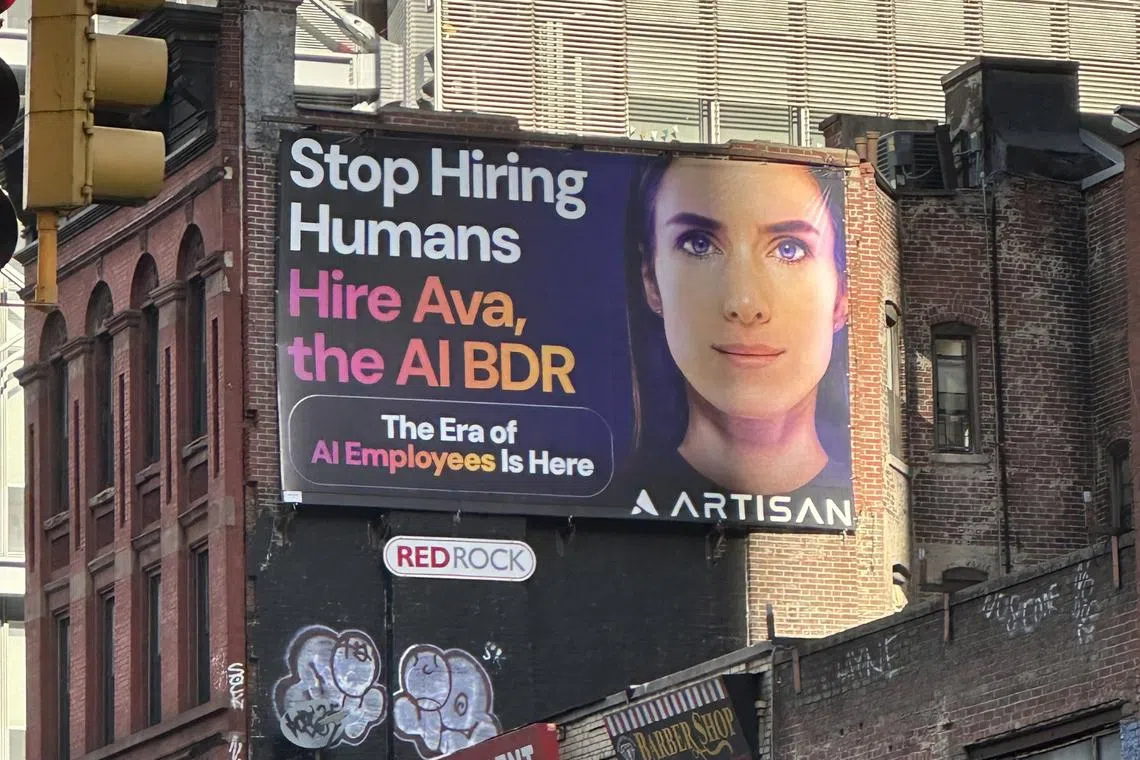
Venture investor David Yin highlights rapid AI progress as startups deploy generative agents alongside licensed professionals to automate accounting and cut costs, while his fund has deployed roughly US$300 million into early healthcare and fintech bets. The wider US labour market shows disruptive signals: over 1 million jobs lost in 2025 with at least 54,694 layoffs citing AI, an MIT study estimates one in nine jobs (≈151 million workers, >US$1 trillion in pay) are already economically automatable, and Stanford finds a 13% employment drop for workers aged 22–25; lawmakers have introduced a Senate bill to force quarterly corporate reporting on AI-driven job displacement, hiring and retraining.
Market structure: AI adoption is a winner-take-most dynamic—chipmakers (NVDA) and hyperscaler cloud providers (MSFT, GOOGL) capture disproportionate revenue as bookkeeping/entry-level roles compress pricing for labor-heavy service providers. Expect margin compression for legacy BPO/accounting firms and staffing firms over 6–24 months as unit labor costs fall, while cloud compute demand and GPU sales rise by an estimated 20–40% above baseline in next 12 months if adoption accelerates.
Risk assessment: Tail risks include rapid regulation (Senate AI reporting bill within 60–90 days) forcing disclosure/taxes on displacement, a semiconductor supply shock, or a high-profile AI failure that triggers liability suits; any of these could cause >30% re-rating in exposed names within weeks. Near-term (days–months) impacts are hiring freezes and sentiment swings; medium-term (3–12 months) is revenue mix shift to SaaS/cloud; long-term (2–5 years) is structural labor repricing and capex reallocation to automation.
Trade implications: Direct plays: overweight NVDA (capital expenditure capture) and MSFT (Azure + enterprise AI), underweight staffing/BPO and small-cap HR SaaS. Use call-spreads on NVDA 6–12 month expiries to control risk, and a relative trade long MSFT vs short GOOGL for superior enterprise ERP/office monetization over 3–9 months. Rotate sector weights toward semis, cloud infra, and industrial automation, trimming consumer-facing and legacy services.
Contrarian angles: Consensus underestimates the demand for AI-adjacent infrastructure (power, copper, industrial robotics) and reskilling services—those equities may be underpriced; conversely, panic about mass unemployment could be overdone short-term, leaving select staffing/education names oversold by 20–40%. Historical parallel: early internet displaced tasks but created new platform monopolies; unintended consequence risk is accelerated, targeted regulation that could quickly compress multiples for the largest beneficiaries.
AI-powered research, real-time alerts, and portfolio analytics for institutional investors.
Request DemoOverall Sentiment
moderately negative
Sentiment Score
-0.35
Ticker Sentiment
