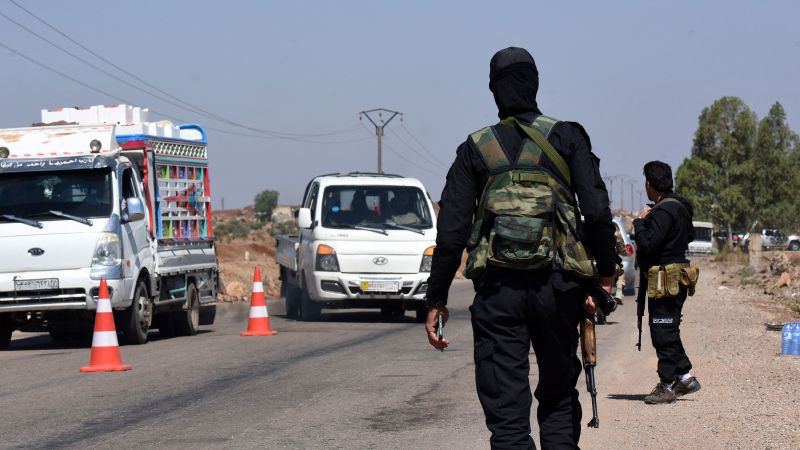
Syrian security forces are deploying in Suwayda province following days of deadly communal fighting between Druze and Bedouin tribes, which has resulted in at least 321 documented deaths and significantly threatens the Damascus government's stability. President Ahmed al-Sharaa declared an immediate ceasefire, labeling the events a 'dangerous turning point' and accusing foreign-backed elements of fueling separatism. Israel, which conducted airstrikes citing protection for the Druze, agreed to a new ceasefire with Syria following US mediation, highlighting the complex geopolitical involvement and persistent sectarian volatility in the region.
A severe escalation of sectarian violence in Syria's Suwayda province, resulting in at least 321 documented fatalities from clashes between Druze groups and Bedouin tribes, poses a significant threat to the stability of the Damascus government. In response, Syrian President Ahmed al-Sharaa has declared a comprehensive ceasefire and initiated the deployment of internal security forces, describing the events as a 'dangerous turning point' for the nation's security. The conflict is complicated by significant foreign intervention; Israel conducted airstrikes, citing the need to protect the Druze minority, and later agreed with Syria to a new ceasefire following mediation by the United States. Despite the ceasefire announcement, the situation remains highly volatile, with geolocated video showing continued clashes and a key Druze faction issuing new demands that could undermine the agreement. While the event carries a 'strongly negative' sentiment score of -0.7, its assessed direct market impact is low at 0.15, suggesting that this localized Syrian conflict is not currently perceived as a systemic threat to global markets, though it represents a major regional geopolitical flashpoint.
AI-powered research, real-time alerts, and portfolio analytics for institutional investors.
Overall Sentiment
strongly negative
Sentiment Score
-0.70
