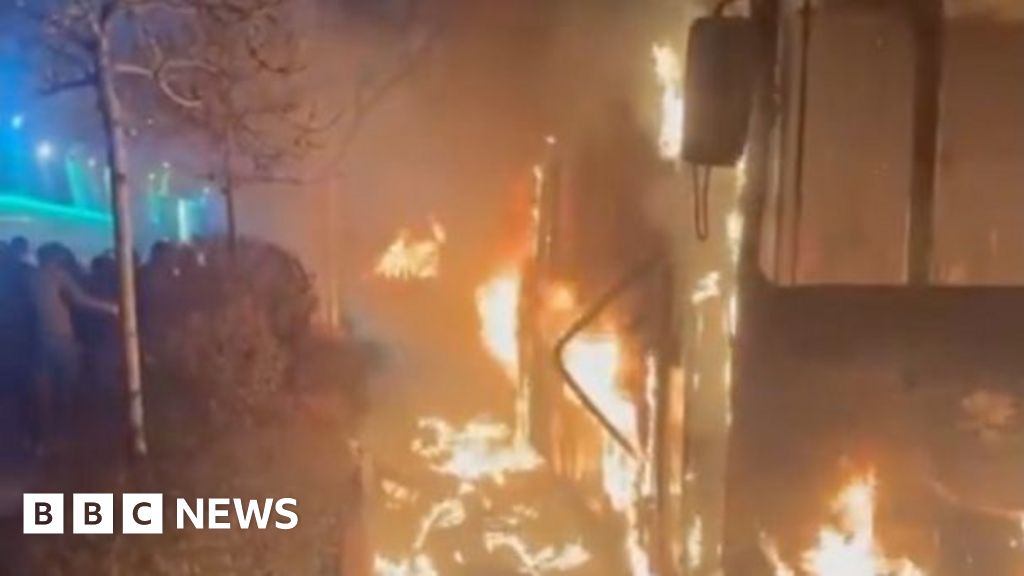
Widespread anti-government protests across more than 100 Iranian cities, sparked in part by soaring inflation, have met a severe state crackdown marked by internet shutdowns and reports of dozens of deaths and hundreds arrested; BBC and human-rights sources have verified multiple violent clashes and hospital influxes (BBC Persian confirmed 26 identities killed, 70 bodies reported at one hospital). The government has tightened domestic data controls and labelled protesters as ‘‘enemies of God,’’ while US political leaders signaled readiness to assist and were briefed on military options, raising regional geopolitical risk. Hedge funds should view this as an elevated political-risk event with potential implications for regional asset prices, capital flows and commodity markets if instability or international escalation persists.
Market structure: Immediate winners are oil producers and defense contractors as risk premia for Middle East supply and military engagement rise; expect tactical Brent/WTI upside of $5–$20/bbl if chokepoints or exports are disrupted, and a 5–15% relative rerating for prime US defense names. Losers are EM sovereigns, regional banks and travel/logistics companies with Iran exposure; expect EM sovereign spreads to widen 100–300bp and local FX to weaken 5–20% in acute stress. Cross-asset mechanics will push USD and gold higher while US Treasuries rally (yields down 10–30bp) and equity volatility spikes 20–50% in days.
Risk assessment: Tail scenarios include a direct US-Iran military exchange producing >$20/bbl oil shock and 400–600bp EM spread widening (low-probability, high-impact). Time horizons: days—risk-off shocks and liquidity squeezes; weeks–months—sustained higher oil/inflation and fiscal/monetary drift; quarters+—persistent sanctions and re-routing of energy flows, modest structural uplift to defense budgets. Hidden dependencies: China’s willingness to substitute Iranian oil and covert trade channels limit upside shock; cyberattacks or internet blackouts can obscure data and amplify volatility. Key catalysts: any US strike, closure of Hormuz, or confirmation of large-scale oil export stoppage.
Trade implications: Tactical trades favor small, time-boxed long energy and defense with EM hedges. Use call spreads on oil (3-month) rather than outright longs to control drawdowns; buy protection on EMB/EEM for EM credit/fx exposure. Rotate from EM cyclical names into US quality defensives, gold (GLD) and short-dated volatility protection; initial actions should be taken within 48–72 hours, sized 1–3% per idea, with profit targets of 20–30% and strict stops (10–15%).
Contrarian angles: The market may overprice permanent supply disruption—histor precedents (2019 tanker attacks, Jan 2020) show oil spikes often mean-revert in 4–8 weeks absent infrastructure damage. Cyber and satellite comms beneficiaries (e.g., PANW, CRWD) are underappreciated because Starlink-like solutions are operationally risky; small, ~1% asymmetric longs in cyber names for 6–12 months capture structural upside if unrest prompts sustained cyber investment.
AI-powered research, real-time alerts, and portfolio analytics for institutional investors.
Request DemoOverall Sentiment
moderately negative
Sentiment Score
-0.60
Ticker Sentiment
