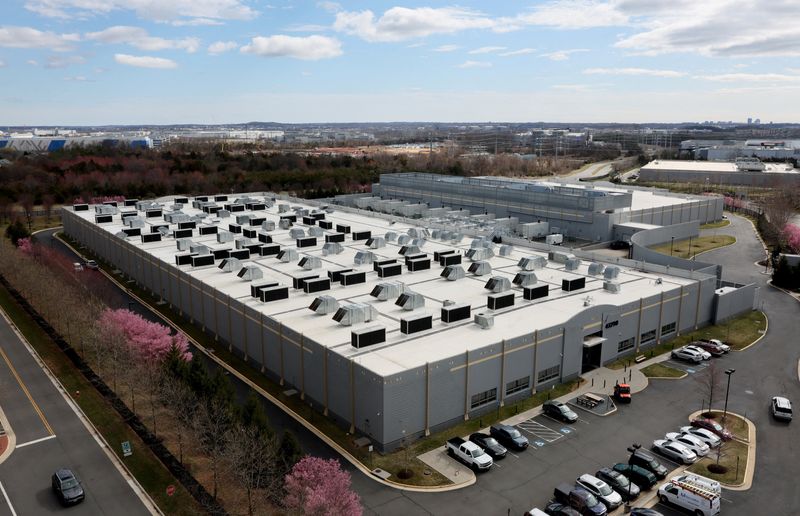
Bernstein initiated coverage across the U.S. multi-industrials and electrical equipment sector, with Vertiv and nVent rated Outperform and price targets implying 30% to 40% upside. Trane Technologies, Johnson Controls, Emerson, Parker-Hannifin, and Otis were also initiated at Outperform, while Carrier, Rockwell Automation, Honeywell, and 3M were rated Market-Perform or Underperform. The note highlights data center power, cooling, and automation as key tailwinds, but flags company-specific headwinds at Carrier, Honeywell, and 3M.
This is less a broad industrials call than a capital-allocation map: the market is rewarding companies with direct exposure to the data-center capex stack and penalizing businesses whose growth is still tied to cyclical end-demand or unresolved liability overhangs. The strongest second-order winner is not just the obvious power/cooling names, but the entire uptime ecosystem — switchgear, thermal management, controls, and service-heavy electrical distribution — because hyperscaler buildouts tend to pull forward multi-year retrofit and maintenance spend after the initial rack deployment. The key divergence is between names with pricing power and technical differentiation versus “good businesses” with slower organic growth. Companies with high content per MW of data-center load can keep compounding even if hyperscaler unit growth moderates, because the mix shifts toward higher-density racks and more liquid cooling, which raises dollars of equipment per deployed IT watt. By contrast, firms exposed to legacy HVAC or general industrial end-markets are vulnerable to margin compression if data-center demand normalizes while the rest of the cycle stays soft. The contrarian miss is that the best risk/reward may sit in the names not explicitly framed as AI winners but that benefit from the same electrification bottleneck: power quality, electrical testing, and adjacent controls. That creates a longer-duration earnings tail than the headline buildout cycle, which matters because the install base becomes monetizable through aftermarket and upgrades over 12–36 months. The major bear case is that hyperscaler capex reacceleration stalls faster than consensus expects; if AI spend pauses, the premium multiples on the “data-center pure plays” can de-rate quickly even if fundamentals remain intact. The 3M call is more than idiosyncratic legal risk — it is a signal that capital is migrating away from conglomerates with impaired internal innovation engines toward narrower operators with visible reinvestment ROI. That relative-value rotation should continue as long as the market pays for execution quality and not just scale. In that regime, the winners are the firms that can convert industrial complexity into recurring high-margin content, while the losers are the ones still stuck proving they can self-help before they can re-rate.
AI-powered research, real-time alerts, and portfolio analytics for institutional investors.
Request DemoOverall Sentiment
mildly positive
Sentiment Score
0.20
Ticker Sentiment
