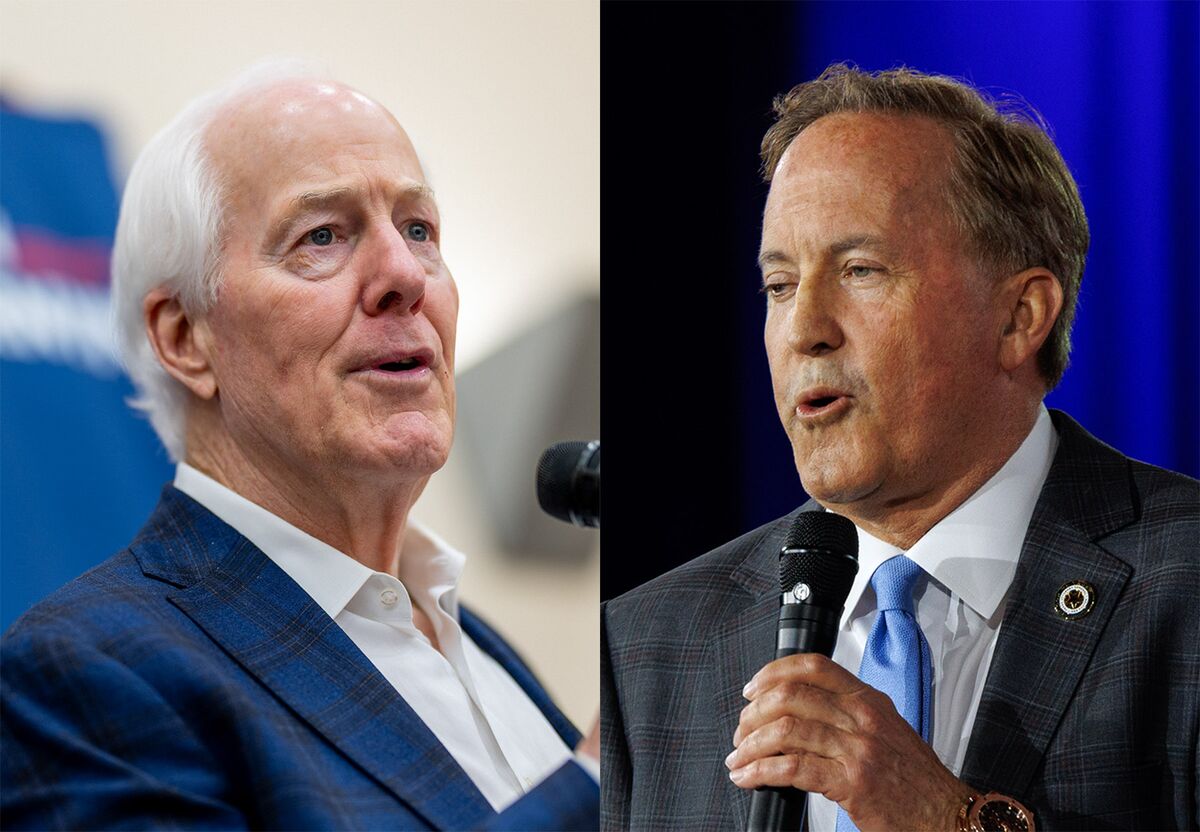
Texas Republicans are heading into a runoff that could end John Cornyn’s 24-year Senate tenure, with the incumbent trying to position himself as fully aligned with the MAGA wing of the party. The article is centered on intra-party political positioning and voter sentiment rather than any economic or market-moving event. No direct financial or corporate impact is indicated.
The market implication is not the runoff itself but the signaling value of a weakening party gatekeeper. A long-tenured incumbent being forced to rebrand as ideologically interchangeable with the base suggests primary politics are now punishing institutional incumbency faster than general-election fundamentals can offset it. That matters for Texas because it raises the probability that future statewide or congressional candidates will optimize for intra-party purity rather than business continuity, increasing policy noise around fiscal priorities, energy permitting, and federal contract allocation.
Second-order effects are more relevant than the headline race. If the broader GOP learns that seniority is no longer protective, expect more turnover in committee relationships and less predictability on appropriations, antitrust, telecom, and defense procurement timelines over the next 6-18 months. The immediate risk is not a market-wide repricing, but a higher variance environment for companies whose outcomes depend on stable Senate relationships and bipartisan dealmaking.
The contrarian take is that the consensus may be overestimating how much the seat-level outcome matters versus the process signal. Even if the incumbent survives, the incentive shift is already visible: politicians will spend more capital on purity signaling, which is negative for legislative efficiency but can be positive for name-recognition challengers and media-adjacent fundraising ecosystems. The real tradeable insight is volatility in governance expectations, not directionality of policy on day one.
Tail risk is a deeper-than-expected institutional fragmentation within the party over the next election cycle, which would extend uncertainty into committee chairmanships and budget negotiations. The reversal case is a fast consolidation around a consensus nominee, but that would only reduce headline risk; it would not restore the old seniority premium unless the base clearly rewards institutional experience in multiple races.
AI-powered research, real-time alerts, and portfolio analytics for institutional investors.
Request DemoOverall Sentiment
neutral
Sentiment Score
0.00
