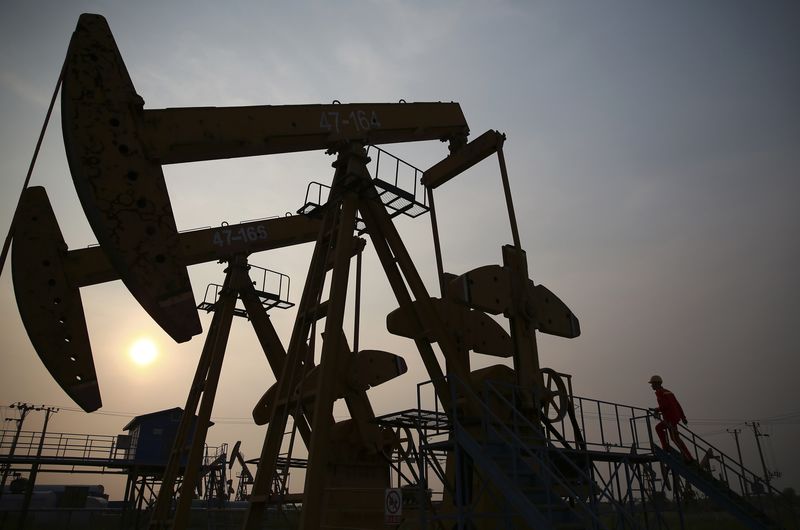
The U.S. will begin enforcing a blockade of Iranian ports and the Strait of Hormuz from 10:00 ET Monday after ceasefire talks with Iran failed, sending Brent crude up 8% to $102.93 a barrel. Iran had already effectively disrupted roughly 20% of global oil supplies, and the escalation points to further supply shocks in energy markets. This is a major geopolitical shock with broad implications for oil, shipping, and global risk assets.
This is a classic short-duration geopolitical shock with an unusually high probability of second-order spillovers into freight, chemicals, airlines, and industrials before it fully shows up in physical balances. The market will initially price the headline through front-month energy, but the more interesting trade is the widening of regional crack spreads and the repricing of route risk for tankers moving through the Gulf and adjacent chokepoints. If enforcement is credible, the constraint is less about total global supply today and more about the optionality cost embedded in inventories, insurance, and working capital across the entire energy complex.
The immediate winners are upstream producers with low lifting costs and rapid cash conversion, but the asymmetry is better in infrastructure-adjacent names that benefit from bottlenecks without being directly exposed to commodity price reversals. Expect marine insurers, tanker owners, and U.S. midstream/pipe operators to outperform on volume rerouting and higher freight premia; conversely, airlines, petrochemical feedstock consumers, and freight-intensive transport should underperform as fuel and routing costs reprice almost instantly. A less obvious loser is emerging-market importers in Asia: they face both inflation pressure and a deterioration in current accounts, which can feed into FX weakness and forced policy tightening within weeks.
The contrarian question is whether this becomes a buy-the-dip energy spike or the start of a policy-induced demand shock. Above $100 Brent, political pressure for de-escalation rises quickly, and any credible backchannel talks can compress the risk premium faster than physical barrels can adjust. If the blockade is narrow or leaky, the market may realize within days that this is an insurance event rather than a lasting supply loss, making outright long crude vulnerable to a sharp retracement while volatility remains bid.
Positioning should favor convexity and relative value over outright direction: the setup rewards assets that monetize uncertainty, not just higher spot prices. The best risk/reward is in names with exposure to freight, storage, and energy infrastructure, paired against fuel-intensive end users that cannot pass costs through quickly. Watch for steep contango/backwardation shifts and tanker rate spikes as the clearest confirmation that this is translating from headline risk into tradable bottlenecks.
AI-powered research, real-time alerts, and portfolio analytics for institutional investors.
Request DemoOverall Sentiment
strongly negative
Sentiment Score
-0.75
