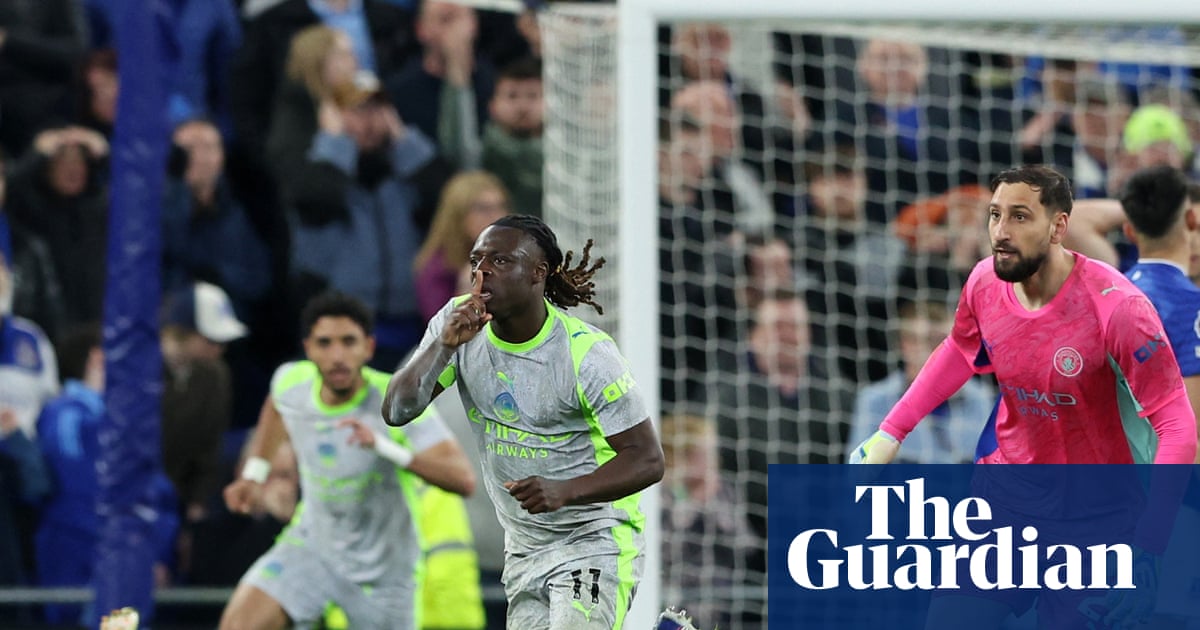
Manchester City salvaged a 3-3 draw at Everton with a 97th-minute Jérémy Doku equaliser after trailing 3-1 by the 81st minute. The result keeps City’s title hopes alive, but the article frames the match as a setback relative to Arsenal, who are now three wins from the league title. This is sports news with no direct financial-market implication.
The immediate market read is not about one game, but about the asymmetry in the title race: one side still controls its destiny, the other no longer does. That matters because teams under pressure tend to leak win probability in the margins — selection conservatism, increased reliance on set pieces, and higher variance late-game decision-making — which historically shows up over the next 2-4 league matches rather than in a single result. The current setup therefore favors the team with a simpler path and punishes the one that now needs rivals to cooperate. A subtler second-order effect is on player pricing and narrative premium. A late rescue preserves the premium on City-linked assets with high involvement rates in chaotic matches, while simultaneously reducing the appeal of the broader defensive stack, which is now exposed to game-state volatility and transition risk. In fantasy/market terms, players whose returns are concentrated in final-third touches and set-piece participation should continue to out-earn more “secure” minutes profiles if the title race remains compressed. The contrarian view is that the emotional takeaway may be overstated: a draw that feels like a loss can actually be a healthier outcome for a side that has been winning too cleanly, because it forces tactical adaptation before knockout-style pressure mounts. For the market, that means shorting the “collapse” narrative outright is risky; the better expression is to fade overreaction in the immediate aftermath and watch whether the next two matches show any change in chance creation or late-game resilience. If the team can stabilize quickly, this episode becomes noise; if not, the psychological tax compounds fast over the next 10-14 days.
AI-powered research, real-time alerts, and portfolio analytics for institutional investors.
Overall Sentiment
neutral
Sentiment Score
0.05
