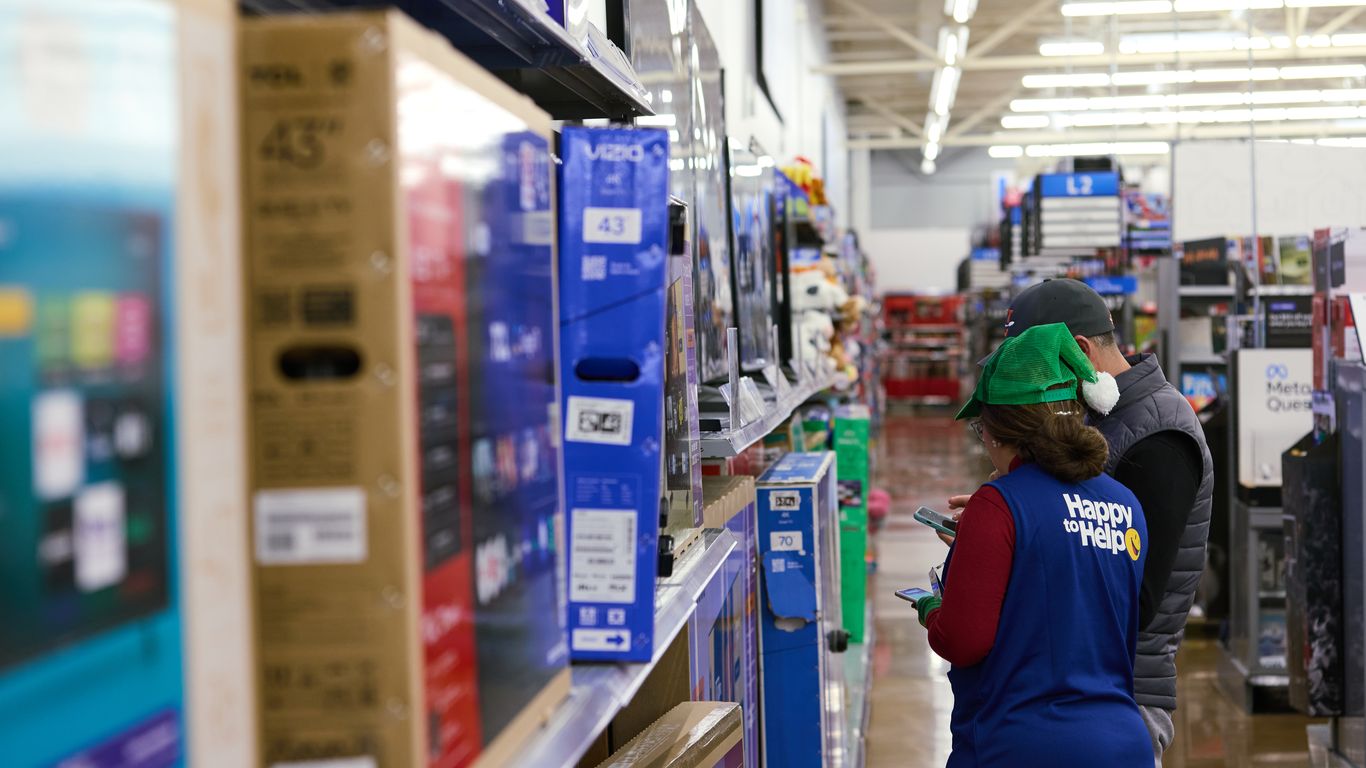
Walmart reported robust Black Friday week performance with 57% more orders year‑over‑year and 44% more orders delivered within three hours, supported by a same‑day delivery network covering 95% of U.S. households. Digital channels powered growth—nearly 10 million shoppers used the app in stores and spent 25% more, Marketplace set a single‑day purchase record, and AI assistant Sparky aided millions of gift decisions—helping drive Q3 sales up ~6% YoY and prompting a raised full‑year outlook. Management plans to extend Cyber Monday deals through Dec. 7, signaling continued promotional activity to capture late holiday demand.
Market structure: Walmart (WMT), its Marketplace sellers, last-mile logistics partners and digital ad stack are direct beneficiaries — 57% YoY Black Friday order growth and 95% same-day reach increase effective scale and pricing power for convenience. Losers: mid‑tier mall retailers, specialty apparel chains and regional grocers face share losses and promotional pressure as Walmart converts app users (≈10M; +25% AOV) into higher spend. Cross-asset: stronger consumer spending and lower liquidity needs for households should mildly tighten credit spreads (corporate IG narrower by 10–30bps potential) and support USD; electronics commodity impact is marginal but freight/fuel sensitivity remains for margins.
Risk assessment: Tail risks include logistics outages/cyberattack disrupting same‑day delivery, FTC scrutiny of Marketplace data practices, or a consumer credit shock driving decelerating discretionary spend (>$250bn of card balances at risk). Immediate (days): holiday cadence and Cyber Monday extensions; short (weeks–months): Q4 comps and margins; long (quarters–years): durable share gains and ad monetization. Hidden dependencies: inventory build-up from extended deals could force markdowns, compressing gross margin by 50–150bp if unresolved. Catalysts: Dec 7 deal extension, January sales cadence, and Walmart’s Q4 earnings/guide.
Trade implications: Favor long WMT exposure via equity and structured options to capture continued share gains and ad growth; prefer defined‑risk call spreads to limit downside. Consider relative value vs. Target (TGT) and small‑cap retail (XRT) where Walmart’s scale and logistics advantage should outcompete peers over 3–12 months. Use options to monetize seasonally elevated implied vol for short premium on weaker retailers and buy protection on longs.
Contrarian angles: Consensus may overstate sustainability of 57% order jump — it can be promotional and seasonally concentrated, risking margin dilution. Market may underprice upside in Walmart’s ad network and Marketplace take rates, which can expand EBITDA margins by 50–150bp over 2–3 years if retention holds. Historical parallel: Walmart’s 2010s e‑commerce pushes often drove durable share after initial promo cycles; failure would stem from execution, not demand.
AI-powered research, real-time alerts, and portfolio analytics for institutional investors.
Request DemoOverall Sentiment
moderately positive
Sentiment Score
0.48
Ticker Sentiment
