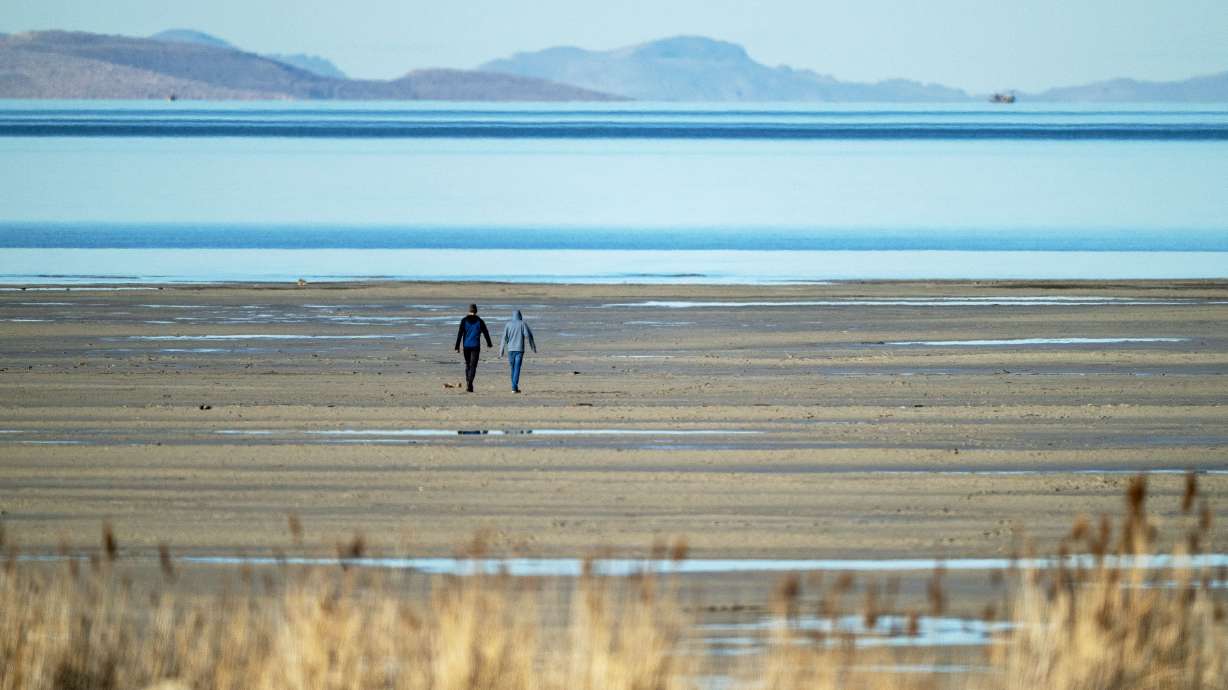
University of Utah geophysicists used airborne electromagnetic surveys to locate freshwater-saturated sediments beneath Farmington Bay to depths of roughly 10,000–13,000 ft; the study was published in February in Scientific Reports after ~800 sq mi of Great Salt Lake playa became exposed. The reservoir could potentially be pumped to wet toxic dust hotspots or for irrigation, but authors stress extensive follow-up studies, safety assessment, and funding/legislative action are required before any extraction or regional water-planning deployment across the lake's ~1,500 sq mi footprint.
The detectable freshwater opportunity should be priced as a services-and-capex market, not an immediate new municipal supply source. Expect a two-stage commercialization path: (1) a near-term (3–12 month) wave of airborne and ground surveys funded by state/federal grants and environmental consultants, and (2) a multi-year (1–5 year) rollout of targeted pilot wells, conveyance and treatment systems where cost-per-acre-foot and permitting are acceptable. Capital intensity will be front-loaded (survey + pilot wells + monitoring), so engineering/consulting firms and niche geophysical vendors will capture outsized margin early while utilities see only incremental O&M revenue.
Key reversal risks are legal and hydrogeologic: contested water rights, slow permitting, and geochemical surprises (metal mobilization, saline upconing) can stop extraction before CAPEX is recouped. A mid-case shows pilots proceed but large-scale pumping is capped by regulatory limits and recharge constraints — that outcome favors firms selling surveys, monitoring and low-capex misting/wetting solutions over those betting on mass groundwater harvest.
Secondary markets include exporters of rugged drilling equipment, mobile treatment units, and temporary water storage systems; their revenue cycle is short and lumpy and will track grant announcements on 0–18 month lags. If state legislature or federal funding materializes within 6–12 months, expect a clustering of contract awards that will re-rate small-cap specialists; absence of funding will concentrate upside into private contractors already positioned for remediation work.
Contrarian point: the narrative of a cheap new water source is overoptimistic — sustainable yield and legal transferability are the real constraints. Position for services exposure with low balance-sheet capital intensity rather than utility-scale production bets until multiple independent hydrogeologic basins validate sustainable extraction rates over 3+ years.
AI-powered research, real-time alerts, and portfolio analytics for institutional investors.
Request DemoOverall Sentiment
mildly positive
Sentiment Score
0.20
