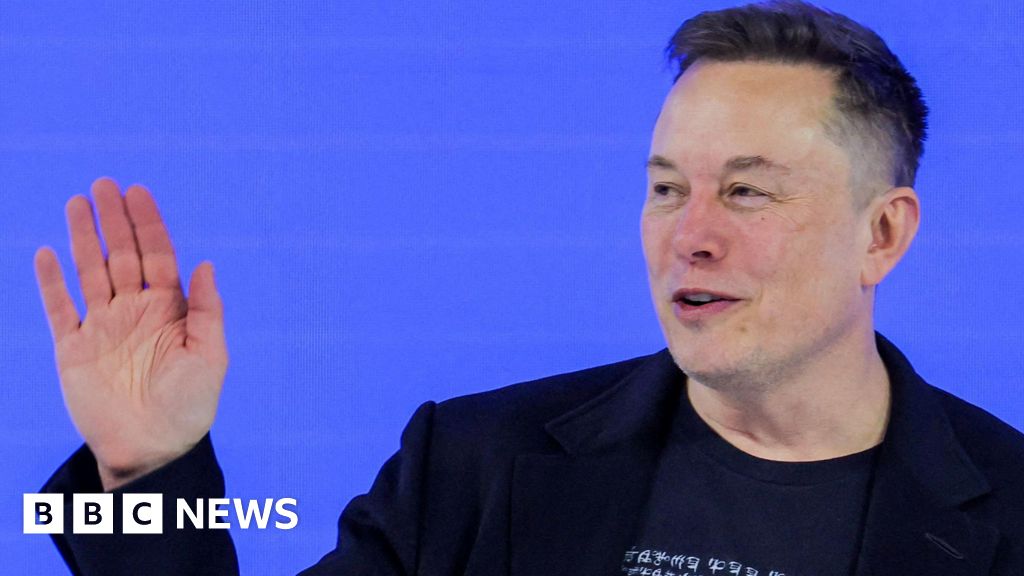
SpaceX has acquired Elon Musk's AI start-up xAI (terms undisclosed) in a deal that a source values xAI at $125bn and SpaceX at $1tn, creating what Musk calls an "innovation engine" uniting AI, rockets, space-based internet and media. The move follows Tesla's $2bn investment in xAI and is being framed as consolidation ahead of a potential SpaceX IPO to present scale and capital efficiency; regulators in the EU and UK are probing xAI's Grok image features, adding near-term regulatory risk while management emphasizes long-term plans for space-based data centers and AI scaling.
Market-structure: The SpaceX–xAI consolidation concentrates AI compute, telemetry and distribution under a deeply capitalized private entity, advantaging GPU/cloud infrastructure suppliers (NVDA, AMZN, MSFT) via higher long-run demand for exascale compute and satellite comms. Public small-cap “NewSpace” and consumer AI/media plays (SPCE, small ad-tech) face pricing pressure as SpaceX’s vertically integrated stack can undercut margins and distribution; incumbent defense primes (RTX, LMT) gain negotiating leverage for government contracts tied to space-based infrastructure.
Risk assessment: Tail risks include heavy regulatory action in EU/UK over Grok (fines, forced model limitations) and US antitrust or national-security scrutiny of cross-ownership — each could erase >20% valuation premia quickly; an operational failure (satellite loss or launch accident) is a 1–2 year growth derail. Immediate market moves (days–weeks) will be sentiment-driven; medium-term (3–12 months) depends on IPO signaling and capital raises; structural impacts play out over 3–10 years. Hidden dependency: xAI’s compute economics assume cheaper space power; delays in space-based energy/storage materially raise capital intensity.
Trade implications: Favor overweight in NVDA (infrastructure) and AMZN/MSFT (cloud) sized 1–3% each for 6–12 months; underweight or hedge TSLA exposure by 10–25% given cross-company capital allocation risks and shareholder pushback. Implement options: buy 6–9 month NVDA call spreads 20–30% OTM (size 0.5–1% portfolio) to capture compute acceleration while selling nearer-term realized vol. Rotate from speculative public space names into defense primes (RTX/LMT) and hyperscaler cloud providers.
Contrarian angles: Consensus prices in a heroic long-term moon/Mars payoff; market may underprice near-term regulatory and reputational drag on X/Grok — creating short windows in ad-dependent media/consumer AI. Historical parallel: vertically integrated tech consolidation (Amazon+AWS) produced decade-long moat after heavy early losses — but only after regulatory and capital milestones. Unintended consequence: tighter private control could postpone public liquidity (delaying IPOs), compressing short-term alpha for public investors and creating multi-year private-public arbitrage opportunities.
AI-powered research, real-time alerts, and portfolio analytics for institutional investors.
Request DemoOverall Sentiment
mildly positive
Sentiment Score
0.30
Ticker Sentiment
