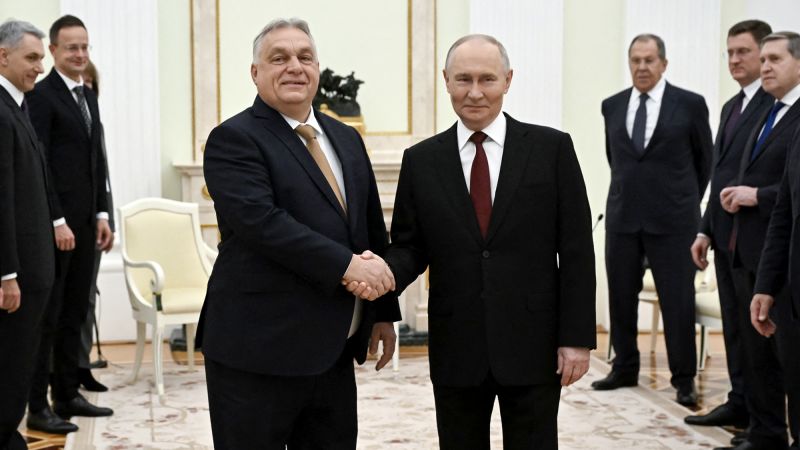
Hungarian Prime Minister Viktor Orbán secured a one-year U.S. exemption from sanctions on Russian energy and traveled to Moscow to ensure uninterrupted crude deliveries, amid deepening reliance on Russian oil (Russian crude comprised 86% of Hungary's purchases in 2024, up from 61% pre-2022; year-to-date imports were 92% Russian). Analysts warn the exemption risks funneling over €1 billion (~$1.2bn) into the Kremlin's war chest and highlight that neighboring Czech Republic, also landlocked, has phased out Russian crude. The move reduces near-term energy disruption risk for Hungary but raises geopolitical and sanction-enforcement risks that could influence regional energy pricing and policy uncertainty.
MARKET STRUCTURE: The US exemption materially reduces an immediate energy shock for Hungary and Central Europe, benefiting Hungarian refiners/exporters (MOL), banks (OTP) and the HUF through preserved cashflows; Russia also captures ~€1bn/y in continued crude receipts, solidifying Urals’ market share in landlocked Central Europe. Pricing power shifts toward suppliers able to deliver inland (rail/pipe), compressing regional risk premia for Brent by a few dollars/ bbl in the near term while leaving Urals differentials structurally supported.
RISK ASSESSMENT: Tail risks include rapid policy reversal (US/EU rescinds exemption within 30–180 days), sabotage/transport disruption, or EU punitive measures—each would spike Central European spreads and crude volatility >30% realized over weeks. Immediate effects are visible in days-weeks (FX, sovereign spreads), medium-term in 3–12 months (corporate earnings for MOL/OTP), and long-term in 1–3 years if Hungary remains geopolitically isolated and investment inflows reverse.
TRADE IMPLICATIONS: Favor concentrated, size-controlled exposure to Hungary (2–4% portfolio) and short-duration HUF forwards to capture expected 4–8% appreciation over 3–6 months; hedge with 6‑month HUF puts at ~3–5% OTM. Commodity/energy plays should focus on refiners with inland feedstock access (long MOL.BU, avoid sea‑dependent refiners), and consider modest exposure to Russian commodity cashflows via commodity futures positioning that captures narrowing Urals‑Brent spreads.
CONTRARIAN ANGLES: Consensus understates political backlash risk—short-term relief can be followed by long-term sovereign premium widening if EU cohesion fractures, so crowding into Hungarian assets is a two‑edged trade. The market may underprice the option value of a future sanction reversal: keep asymmetric hedges (puts on HUF/Hungarian equities) rather than naked longs.
AI-powered research, real-time alerts, and portfolio analytics for institutional investors.
Request DemoOverall Sentiment
moderately negative
Sentiment Score
-0.32
