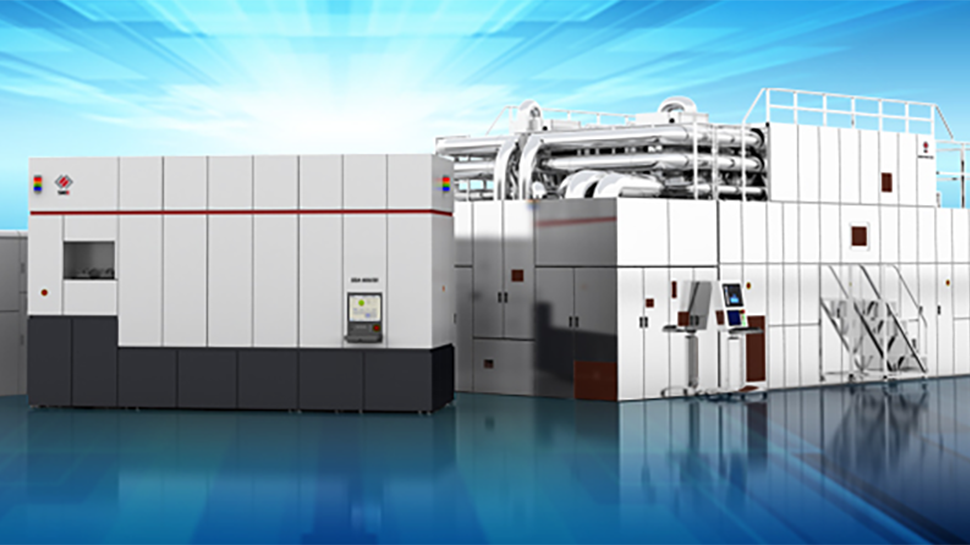
Chinese authorities have been informally instructing chipmakers seeking approvals for new or expanded fabs to spend at least 50% of equipment budgets on domestically produced tools, with waivers for advanced nodes where local options are unavailable. State-linked buyers logged 421 orders for domestic lithography machines and parts this year worth ¥850 million (~$121.3 million), a sum that equates to only a small number of low-end KrF/dry ArF steppers compared with ASML’s multi‑dozen unit production and much higher per-unit prices (KrF ~$14.5M, ArF dry ~$27.9M, immersion ArF ~$82.5M). The policy could accelerate local tool adoption and squeeze foreign suppliers in mature-node production, but current domestic gaps—especially in advanced lithography—plus case-by-case exemptions limit near-term disruption to advanced-node supply chains.
Market structure: The informal 50% domestic-equipment quota mechanically benefits Chinese tooling firms (e.g., SMEE/688981.SS and local optics/subsystems suppliers) and state-backed mature-node fabs while pressuring foreign vendors (ASML, LRCX, AMAT) for new Chinese capex. Expect a reallocation of mature-node tool spend toward local suppliers over 12–36 months; a conservative estimate is a mid-teens reduction in addressable Chinese revenue for foreign vendors if enforcement tightens, but advanced-node exemptions cap near-term losses.
Risk assessment: Tail risks include a formal hardline law banning selected foreign tools or reciprocal Western export controls, which would cause a >20% shock to foreign-equipment revenues into China and spike volatility in 3–12 months. Hidden dependencies (foreign optics, lasers, materials) mean domestic substitution will be slow — realistic mass-replacement timelines are 24–60 months; catalysts to watch are publication of formal rules, waiver counts, and quarterly Chinese bookings for litho/etch tools.
Trade implications: Establish concentrated asymmetric positions: play domestic upside (selective longs in Chinese toolmakers) and hedge foreign exposure with time-limited options — e.g., buy 6–12 month ASML puts (10% OTM) sized to cover 1–2% portfolio risk; consider pair trade long SMEE vs short LRCX for 12–18 months. FX risk: add 0.5–1% USD/CNH long exposure for potential RMB weakness if capital flight accelerates.
Contrarian angles: The market overestimates near-term domestic capacity — Chinese-produced lithos are low-value and low-volume today, so foreign incumbents’ advanced-node pricing power (EUV/ArF immersion) stays intact; a 6–18 month sell-off would offer tactical buy-the-dip opportunities in ASML. Unintended consequence: capacity slowdowns if fabs delay builds due to tool shortages, which could support semiconductor prices and equipment order pacing globally.
AI-powered research, real-time alerts, and portfolio analytics for institutional investors.
Request DemoOverall Sentiment
moderately negative
Sentiment Score
-0.35
Ticker Sentiment
