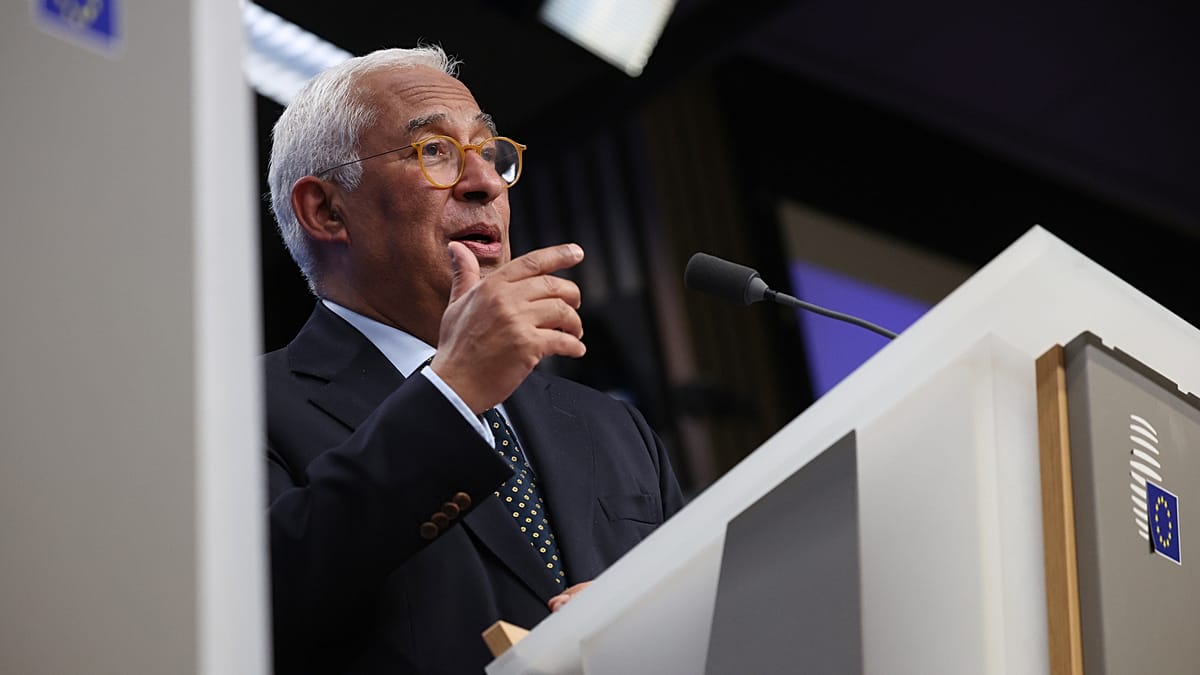
The EU and India signed a landmark free-trade agreement in New Delhi that will slash tariffs across a range of goods—saving EU firms an estimated €4 billion per year—and provide tariff relief for Indian services and pharmaceuticals; tariff and regulatory reductions will be phased in over up to 10 years. The deal, hailed as both an economic opportunity and strategic signal amid rising protectionism (notably recent US tariffs on Indian crude), must still undergo legal revision, translation and ratification by EU institutions and India before entering into force, creating a multi-year implementation horizon and sector-specific winners (EU autos, wine; Indian services/pharma).
Market structure: The EU–India FTA structurally favors EU goods exporters (autos, luxury, wine) via an estimated €4bn/yr tariff saving and Indian services/pharma exporters via tariff relief; expect incremental market-share shifts in EU-to-India goods over 1–5 years and accelerated Indian services penetration into EU professional markets over 2–7 years. Pricing power: European OEMs and luxury brands gain ~50–200bps margin tailwind on EU→India sales where tariffs were meaningful; Indian pharma/service firms gain competitiveness versus US/EU peers on European market entry costs.
Risk assessment: Key tail risks are parliamentary rejection or harsh amendment (probability ~15–30% within 12 months) and escalation of US protectionism spilling over via secondary sanctions or tariffs (low-probability, high-impact). Near-term (0–3 months) uncertainty centers on legal text and tariff schedules; medium-term (3–18 months) risk is phased implementation up to 10 years that mutes near-term upside; hidden dependency: regulatory mutual-recognition and non-tariff barriers could negate tariff gains.
Trade implications: Tactical trades favor India exposure and select EU exporters — long INDA (iShares MSCI India) and tactical longs in INFY (Infosys, exposure to services) and RDY (Dr. Reddy’s, pharma export play) vs short broad EM (EEM) to isolate bilateral benefit; consider VGK (European equity ETF) overweight to capture EU export gains but with selectivity for autos/luxury. Use 6–18 month call spreads (buy 6–12 month ITM call, sell higher strike) to limit cost ahead of legal-text publication, and scale positions: initial 1–3% NAV, add to 3–6% on ratification milestones.
Contrarian angles: Market may over-price near-term gains — the 10-year phase-in and regulatory approval process mean >60% of economic benefit could accrue after 2 years, so immediate re-ratings are vulnerable. Also Indian pharma/service gains increase competitive pressure on incumbent EU/US firms (margin erosion), creating short opportunities in select European generic makers after implementation. Historical parallel: EU trade deals (e.g., CETA) produced slow but persistent reallocation rather than immediate growth spikes; treat this as a multi-year structural trade, not a quarter-driven event.
AI-powered research, real-time alerts, and portfolio analytics for institutional investors.
Request DemoOverall Sentiment
moderately positive
Sentiment Score
0.45
