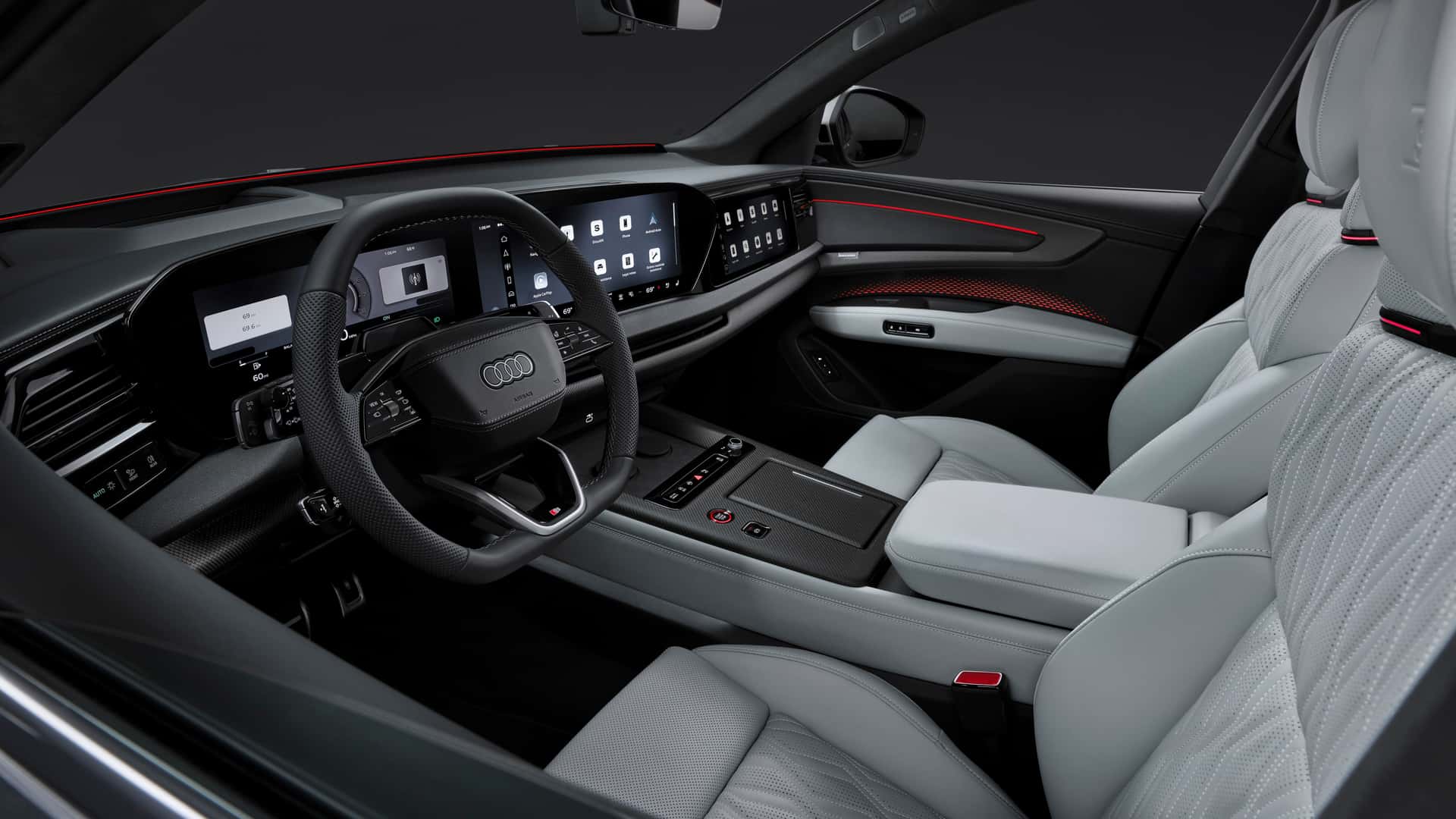
Audi unveiled the 2027 Q9 SUV prototype interior, highlighting captain’s chairs, automatic doors, a 22-speaker base audio system with 1,300+ watts, and an optional 4D premium setup. The flagship also features an advanced panoramic roof with adjustable opacity and ambient lighting, plus a move away from piano-black plastics toward more premium materials. The piece is broadly positive for Audi’s brand and product pipeline, but it is a pre-launch interior preview with limited near-term market impact.
This is less about a single SUV and more about Audi signaling where the next battleground in premium autos is shifting: the cabin as a software-defined, high-margin profit center. Features like door automation, configurable glass, and embedded audio/haptics are exactly the kind of options that expand transaction prices without materially changing drivetrain complexity, which is important in a sector still fighting EV mix pressure and weak unit growth. The competitive read-through is that legacy luxury OEMs are trying to defend pricing power by turning interiors into a subscription-like upsell stack.
Second-order benefit accrues to suppliers of display, ambient lighting, acoustic, glass, and actuator content rather than traditional powertrain vendors. If this feature set migrates across Audi’s portfolio over 12-24 months, it should raise BOM content per vehicle and improve mix for tier-1 suppliers exposed to infotainment and interior electronics, while pressuring brands that still lean on hard-touch minimalism and lower-feature cabins. The risk is that these features are expensive to warranty and certify; any early reliability issues would quickly turn a premium gimmick into a brand tax, especially if automated doors create safety headlines.
For TSLA, the signal is mixed: premium German OEMs are narrowing the perceived interior-quality gap, which can blunt one of Tesla’s historical advantages in the luxury EV conversation. But the broader effect may actually favor Tesla on product velocity—if Audi’s differentiation is now mostly hardware-rich cabin theater, Tesla’s software iteration and cost structure remain the cleaner value proposition if it can close interior perceived-quality further. Over the next 6-18 months, watch whether these features drive real order conversion or just press-cycle buzz; if take rates are low, the market will treat this as theater, not margin expansion.
AI-powered research, real-time alerts, and portfolio analytics for institutional investors.
Request DemoOverall Sentiment
moderately positive
Sentiment Score
0.40
Ticker Sentiment
