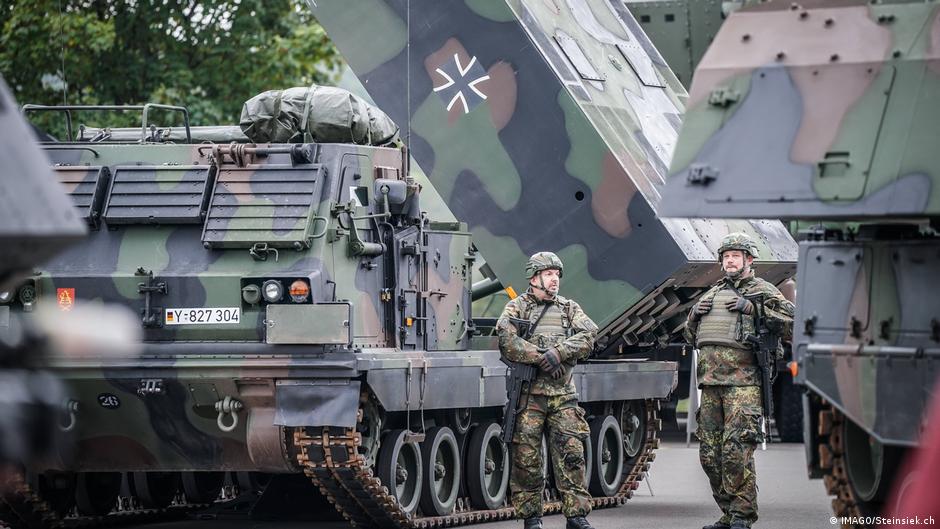
Global military spending hit a record $2.887 trillion in 2025, rising for the 11th straight year, with Europe up 14% to $864 billion and the global military burden climbing to 2.5% of GDP, the highest since 2009. The US spent $954 billion, down 7.5% as Ukraine aid fell, while Germany raised defense outlays 24% to $114 billion and crossed the NATO 2% of GDP benchmark. The data points to a continuing rearmament cycle driven by wars in Ukraine, Gaza and Sudan, plus rising tensions in Asia and Europe.
The key equity implication is not “higher defense spending” in the abstract, but a re-rating of the entire procurement stack: munitions, air defense, electronic warfare, secure communications, propulsion, and the capex-heavy industrials that can actually scale output. The first-order winners are prime contractors, but the second-order winners are the bottleneck suppliers with long qualification cycles and pricing power in energetics, specialty metals, semis, and test/measurement. That matters because the spending is now broad-based across Europe and Asia, reducing reliance on any single government cycle and making order books more durable than the market typically models. The more interesting signal is fiscal permissiveness. When large economies change budget rules to exempt defense from prior constraints, defense spending becomes less cyclical and more like a structural entitlement, which should support multi-year backlogs and higher terminal multiples for the supply chain. The risk is that headlines overstate near-term earnings: capacity expansion, labor shortages, and certification lags mean revenue conversion will likely trail budget announcements by 12-24 months, creating a classic “order growth ahead of profit growth” setup. The contrarian angle is that the market may be underpricing the impact on non-defense sectors from crowding-out effects. Rising military burden tends to suppress social spending and development outlays, which can pressure domestic-growth names, infrastructure tied to civilian budgets, and parts of European consumer demand. At the same time, if geopolitical rhetoric de-escalates without a spending unwind, defense multiples may stay elevated; the real reversal catalyst is not peace talk but a credible reduction in threat perception or a hard fiscal constraint, neither of which looks imminent. Near term, the most likely catalyst is guidance season from primes and electronics vendors showing backlog conversion, margin expansion from pricing, and raised multi-year capacity plans. Over the next 6-18 months, the best risk/reward is in the less obvious beneficiaries that can lever fixed capacity into higher utilization. The main tail risk for the theme is policy-driven export restrictions, procurement delays, or a sudden ceasefire framework that compresses order momentum before factories have scaled.
AI-powered research, real-time alerts, and portfolio analytics for institutional investors.
Request DemoOverall Sentiment
mildly negative
Sentiment Score
-0.15
